
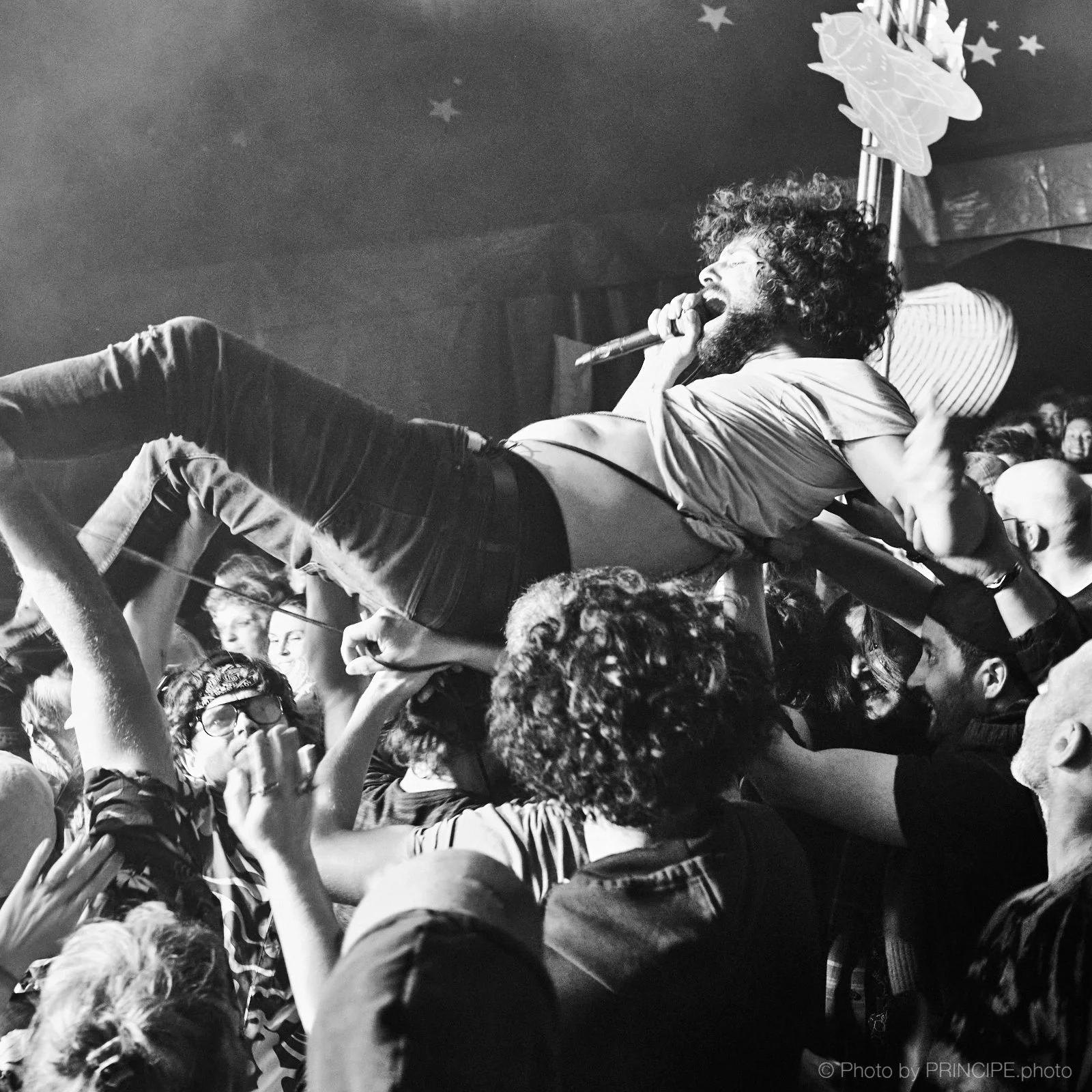
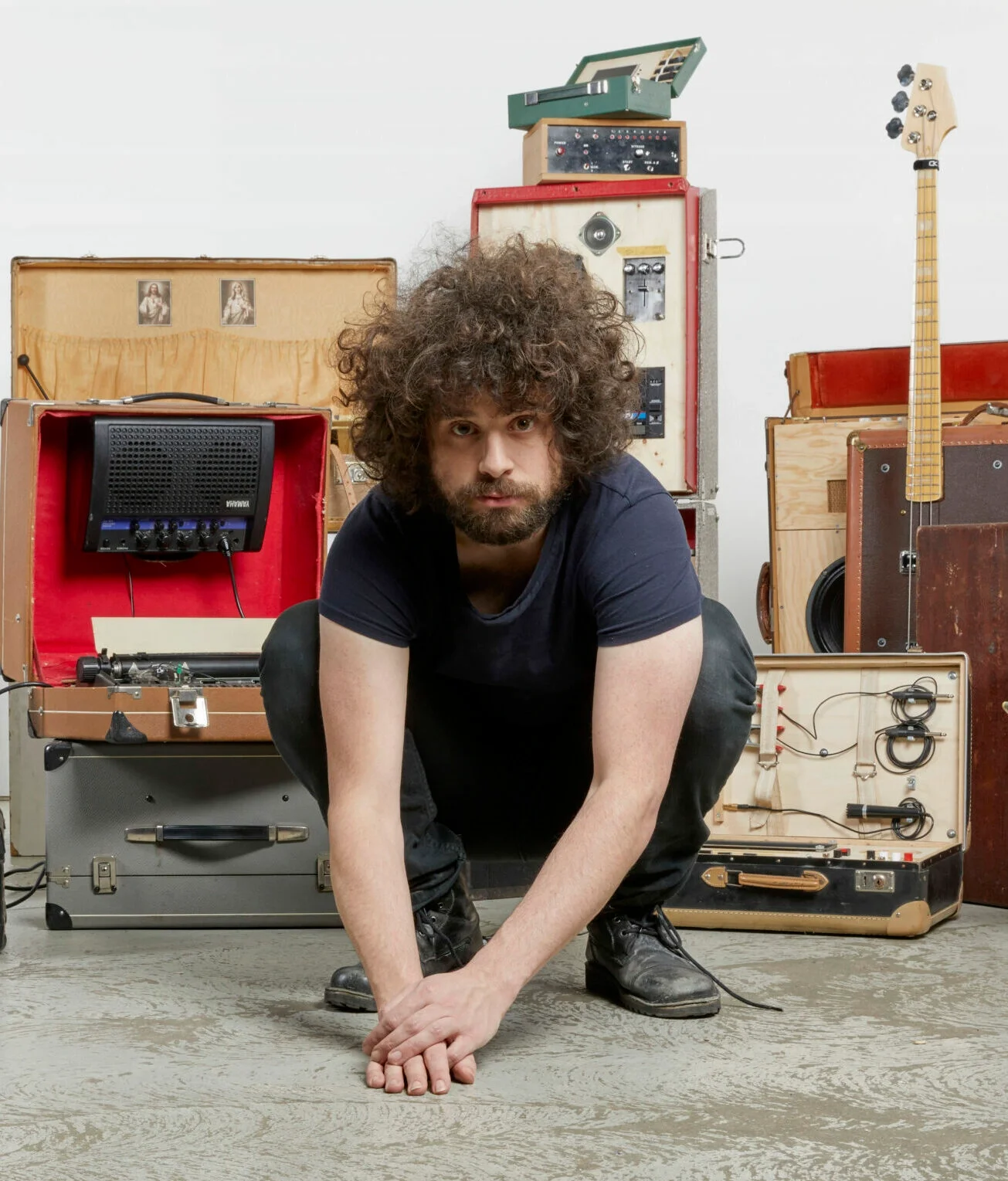
(Photo copyrights: (left) Patrick Principe, (right) Prune Simon Vermot)
The idea for this interview was born at the Humus Fest in 2024 at the Usine à gaz in Nyon - over a year about now. It was later used in the interview with Walter Frosch/YC-CY where I had thought the two members, Mike Saxer and Rune Dahl Hansen, were the only two members in both of the bands. I wanted to know how that would work in their creative process and how they separate the projects. It would turn out that YC-CY were a four-piece band and the duo are also quite active in other bands such as Spear Flower, Cosmic Vomit and more. However, I thought it was an interesting interview to find out more about their approach to writing and recording as well as their backgrounds.
Going back to the Humus Fest, there I saw an artist who I have been following since the start of the blog - Louis Jucker. Not only would he be performing The Suitcase Suite, a touching, intimate performance with the Nouvel Ensemble Contemporain (NEC) and his customer-made suitcase instruments, he would also be on stage as the singer of Coilguns, an energetic, hard-hitting band making waves in Europe at the moment. Throughout the evening, he would act as a host to the evening, presenting what was in store for the evening.
Both performances were memorable in their own way and I was intrigued how he was able to perform with two projects completely which are completely different from each other. I had already known him for more for his “calmer” projects and work - producing the Elie Zoe album, hello future me, his solo work, most notably with the aforementioned Suitcase Suite and seeing him appear in the documentary about his life in La Chaux-de-Fonds. The latter showed some of his approach to music and his need to push the boundaries of creation. The evening left me with a lot more questions than answers, not only was it impressive on a musical level but also on a psychological level as to how he was able to “switch” between these two sides of his personality.
It was before the Coilguns concert at the Bogen F in Zurich in September that I got to interview Louis in person. Straightaway he was able to break the ice and put me at ease and the conversation and interview flowed really well. There was also a moving movement in which a concert-goer was persuaded to come to the show because of the band’s humanitarian decision to donate the fee for their performance to support the Global Sumud Flotilla. During the interview, it was hard to imagine him being the ringleader of the upcoming whirlwind of a concert, bringing the audience together and making the crowd feel connected. It was also impressive to see these two sides again as I had experienced in Nyon.
I would like to thank Louis for taking the time before the concert for the interview and the insight to how he approaches music and performing. Louis also recently released his latest record, A Pharmacy of Songs, on Humus Records and collaborating with Grand Voyage Records to make “mix and match” 7” records.
How do you decide which project you want to write for? Do you need a certain atmosphere, a certain environment? How do you choose?
I have many projects, bands such as Autisti, I write my own songs which I play solo, with friends or with a backing band, and sometimes there are different projects that I write music for. When the idea comes, it has a certain DNA. I make a quick recording, so I don't forget about it, either on a file on my computer or on a tape with a note saying this is a possible idea for a song for that project. So it's more that it comes and then I identify which project it could belong to.
When it comes to Coilguns, it’s a completely different process since there will be Jona writing guitar riffs, Luc adding drums and Kevin adding bass. When they have the recordings of the instruments together, they send me the files and then I can start to piece the whole puzzle together: remove the guitar for a while, do little tricks with my computer, arrange things differently, copy-pasting riffs that I like, and making things longer or shorter and then adding vocals to it. I do that when I have to. I would be informed when a new Coilguns song would be released and the timeline to work on it. I would isolate myself, go to a place where I feel comfortable, with the files of the instrumental parts, which are very unorganized on my computer, and then I will put the pieces together like a puzzle.
Do the songs change dramatically when you play around?
From my perspective, yes. From Jona's perspective, it's the same song. The goal is that he actually recognizes what he put into the song. I have him on the phone, sending him the first tryouts, asking if it is going in the right direction. Usually, if he happens to have the same feeling about the song as I do then it ends up on the album.
I would also have some ideas for lyrics which have already been written. Each time I have an idea or a sentence that's in my head which I feel could be a theme for a song, a starting point or a hook, I would write it down somewhere on the file. I would open up the file and think what my idea for the next song could be and sometimes I already have one that fits.
Do you need to be in a certain environment or setting when you're writing for Coilguns or your own projects? Do you have a specific routine for writing?
I used to need complete intimacy, which is now not the case anymore for Coilguns. I need focus, to be myself and in a place that feels comfortable to use a screen. I need a bunker so I can really isolate myself from the world and be in my own weird place to write my own music. I've been writing songs and recording songs and so many different kinds of environments.
What I like to do is find a friend who has a cabin or rent one somewhere in the mountains, not too far away, so I can bring some gear and just be surrounded by nature. Going at my own rhythm is the best luxury I can ever dream of: waking up when I feel like waking up, going to bed when I feel like it and only having to think about writing music.
Do you have a certain routine, warm-up or rituals before shows?.
There are different rituals. If I do a solo show, the entire day is focused on that show and I need to have space for myself. I really appreciate being alone. I used to travel by train with just my guitar, be alone backstage and be this guy who’s going to play some songs at one point during the evening. I truly appreciate this as it puts me in front of my songs and in front of people with my songs, which I think is a good way to learn because it really makes the songs and the music the focal point of the day.
I like to put intention into every show that I play. I ask myself several questions like: What's this place about? What is my mood about? What am I about in this place? What's the meaning of the soul? Why do music? Why would people want to listen to me? What are my songs about? Just putting a little intention into it. I’m making sure it’s not about daily life and that it's something special that I have to give or share. I’m not saying that it's amazing what I'm doing, but if it was not very special, why should I do it?
It's a massive privilege to be able to be on stage or just being in front of an audience as the centre of attention and being able to share something that you actually care about. There's no reason not to make it special. It needs a little bit of concentration before you go and I try to make that happen.
With Coilguns, it is pretty much the same. We're stuck in a van all day long, we are in close proximity and in our minds we are trying to be as far away as possible from each other during the day just to breathe a little. When it comes to playing a show, it’s an important moment to get together, at least a group hug with the four of us, and to know that we are giving the upcoming show a lot of attention. We make sure everyone is all on the same page and if somebody has something to share or a special feeling about it, that could be discussed.
It's a way to put everything that happened in our day a little bit to one side or to make it part of the upcoming performance.
It is very important for me to make sure that what I'm going to do tonight is play another show with those members. There's a limited amount of shows that we're going to do together in our lives, and the concert is one of them.
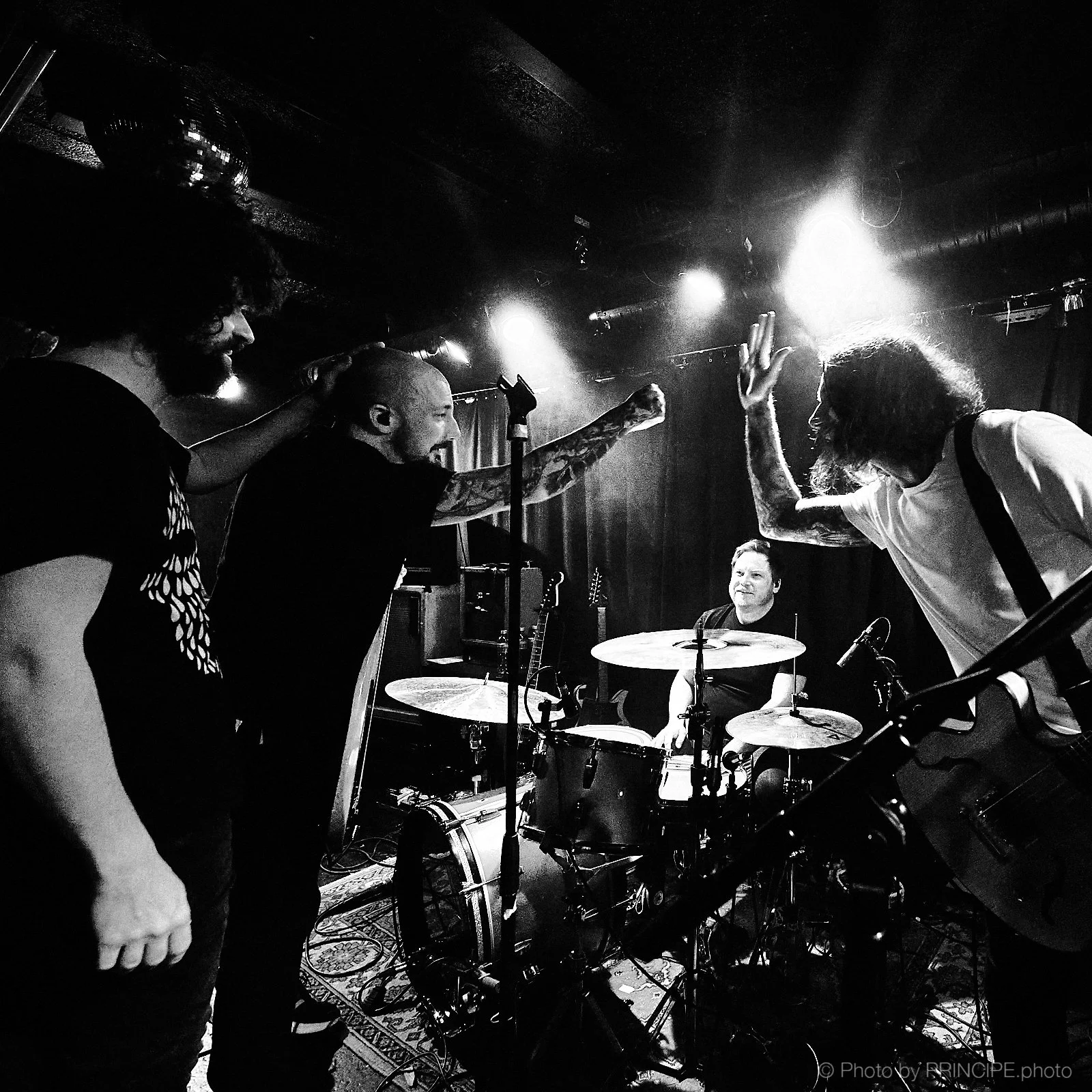
(Photo copyright: Patrick Principe)
Do you notice a difference in how you feel when you’re on stage with Coilguns and performing solo?
It's a different game. When I'm performing solo, it's a very fine art of being who you are and being an artist that's on stage. It's dealing with all those different perspectives and trying to make it special while still normal at the same time. It's also an encounter with who you were when you wrote the songs that you are playing now, which also brings a lot of versions of yourself from different periods on one stage.
With Coilguns, it's more about a tribe and being yourself at the service of the tribe. It’s about the tribe feeling good and not being impacted by what's happening in the tribe at the same time.
It could be that Jona has a technical problem with his guitar and me trying to not be swallowed by his mood or Jona being super happy about playing a song and I’m not feeling the song at all and feeling guilty about it.
There's like a whole network of brains that are connected and there's a lot of brain cells that are emitting those weird frequencies. There's a lot of frequencies, cymbals, snares, bass and energy coming from the audience. So it's a team effort and it's probably much closer to a football game.
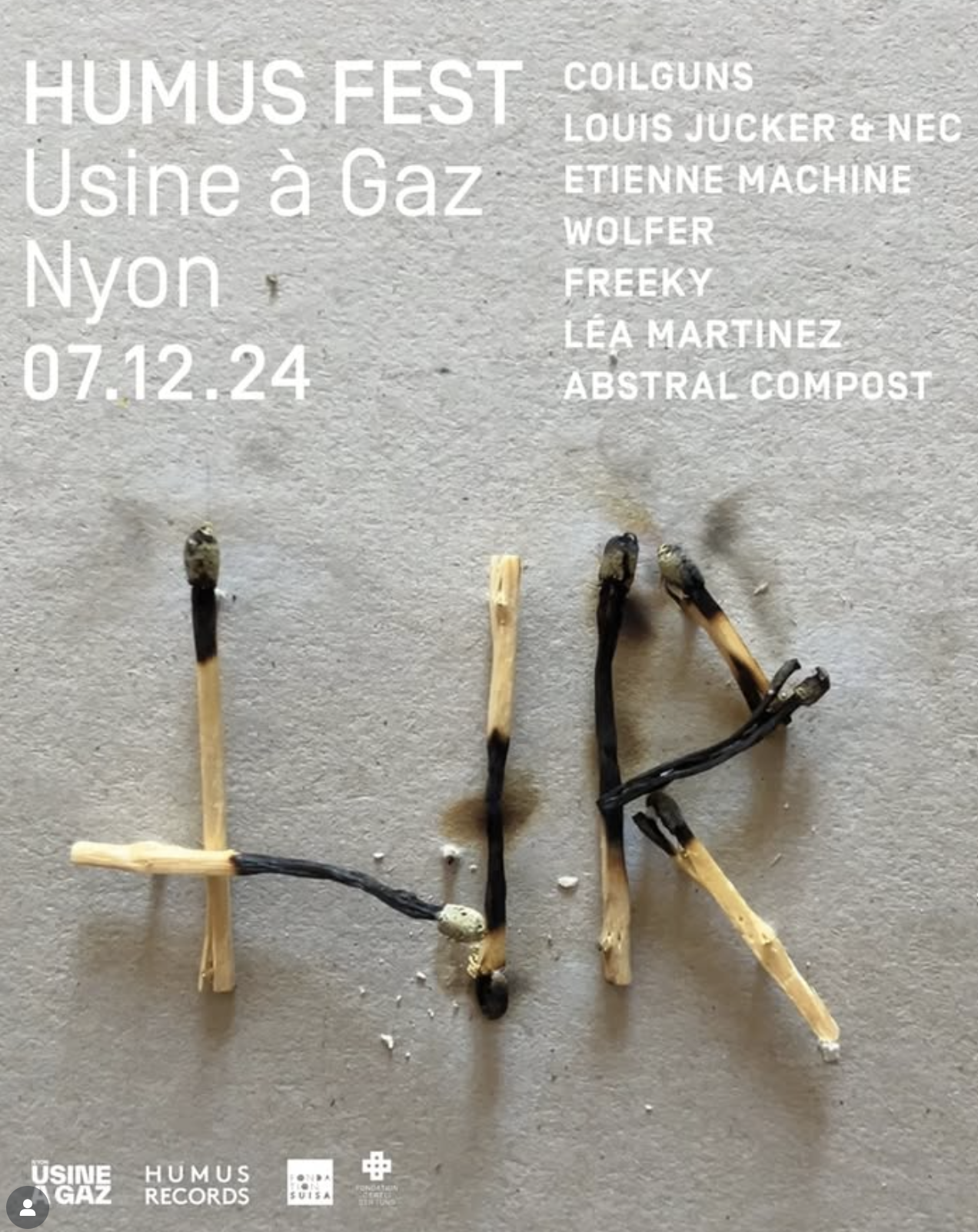
What are your memories of the Humus Fest last year?
It's very pleasant to be able to share the whole range of who we are as a person and with the whole range of people with whom we talk to. It’s a good mixture of human beings and music styles. Inclusivity is definitely something that we stand for. We are made of different aspects and we have multiple sides, and when people with multiple sides get together, it makes it a multiple event. Maybe it's a little bit too overwhelming but we like it. We like to work with the highest possible density that we can aim for and that puts me in a mood where I get a lot of adrenaline and a lot of happiness.
A solo show, a concert, hosting other artists and the audience, being part of the organisation team - you are in a movie where you need to be little, different human beings at the same time, and that is just very cool. You need some days to rest after that. I will never do like two new shows in one night. If I feel like the organisation part is too much, then I will try to find someone else to do it. But if I can combine everything, it feels like when you open the fridge on the last day at home and you need to empty this fridge so you will just make a meal out of whatever is left in it. It feels good to combine the things, you feel so happy, your belly is full and your stomach is happy.
And have you done that before where you performed twice in one evening or was that the first?
Yes, but I do it less and less because it's confusing for people. It's not confusing for me.
What have you noticed on a human level being involved in different projects? Have you noticed something over time with your personality or has it helped you grow in a way?
Yes. The answer is yes. It’s the best school. I believe in the tribe as an organizational mode - not a family, not an association, nothing official other than human beings who are bound by a project, feelings, music and passion. That is the best thing that can happen to you, because if you want to keep that thing going, you're going to have to learn about yourself and other people. I definitely think it's a good school. Being part of a band and meeting people in our rehearsal space has had a major influence in my life.
The most important thing that I've done in my life is playing in a band. That doesn't bring in any money but it takes me to places and to people. Music is part of my identity and my identity is part of this band and I just feel that it's the best thing that can happen. Maybe if I were part of a motorcycle racing team, I'd be happy as well. It's just a different style, the same passion.
There's nothing you can do by yourself. Even as a solo artist, there's nothing that I do by myself. It needs to be carried by other human beings. I need to be trusted by friends, I need to be supported by professionals, I need to have an environment around me that's safe and I need my actual blood family to believe in it and I need my friends and my lovers to support it. My entire life revolves around being in a band, part of a label, part of a music project and it's a good excuse to meet new people.
How does it feel to have this sort of alter ego with Coilguns that you're able to go on stage and put on such an energetic performance
You'd be amazed by what music other people from this band are listening to or making by themselves. Amongst the members of the band, I'm the one whose solo project has had a little bit more exposure but each one of us has a solo project or other projects or are part of other bands. There’s Kevin's solo albums, if you think of what Luc is doing with other bands, or what music Jona is writing or listening to or promoting as a label manager. We are all made of different influences and this band is what comes out when we meet together in a special environment, in a tour van with gear for rock and roll music.
For me, there's no alter ego. There's an alter ego of you when you meet other people. I am myself, but myself is defined by what all the other people that I meet think of me or the way they perceive me. I don't like to chase for a fixed identity that is easy to define. Of course, I'm very sensitive. I question a lot about how media, our phones, social networks and our email inboxes are confining us into a very specific identity that is easy to describe as hashtags, filters and everything. I believe we are human beings and that each time we change our environment, we are someone different.
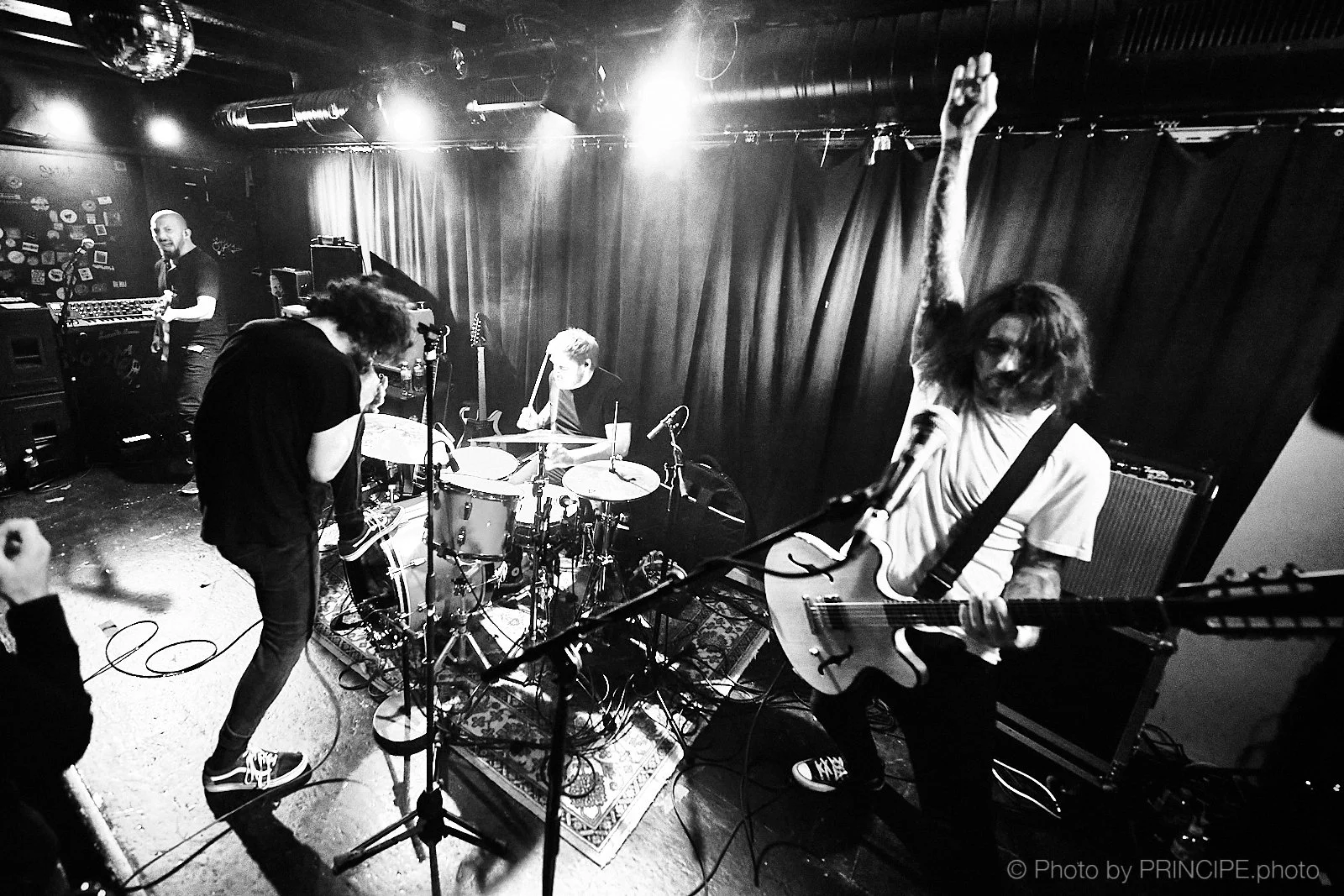
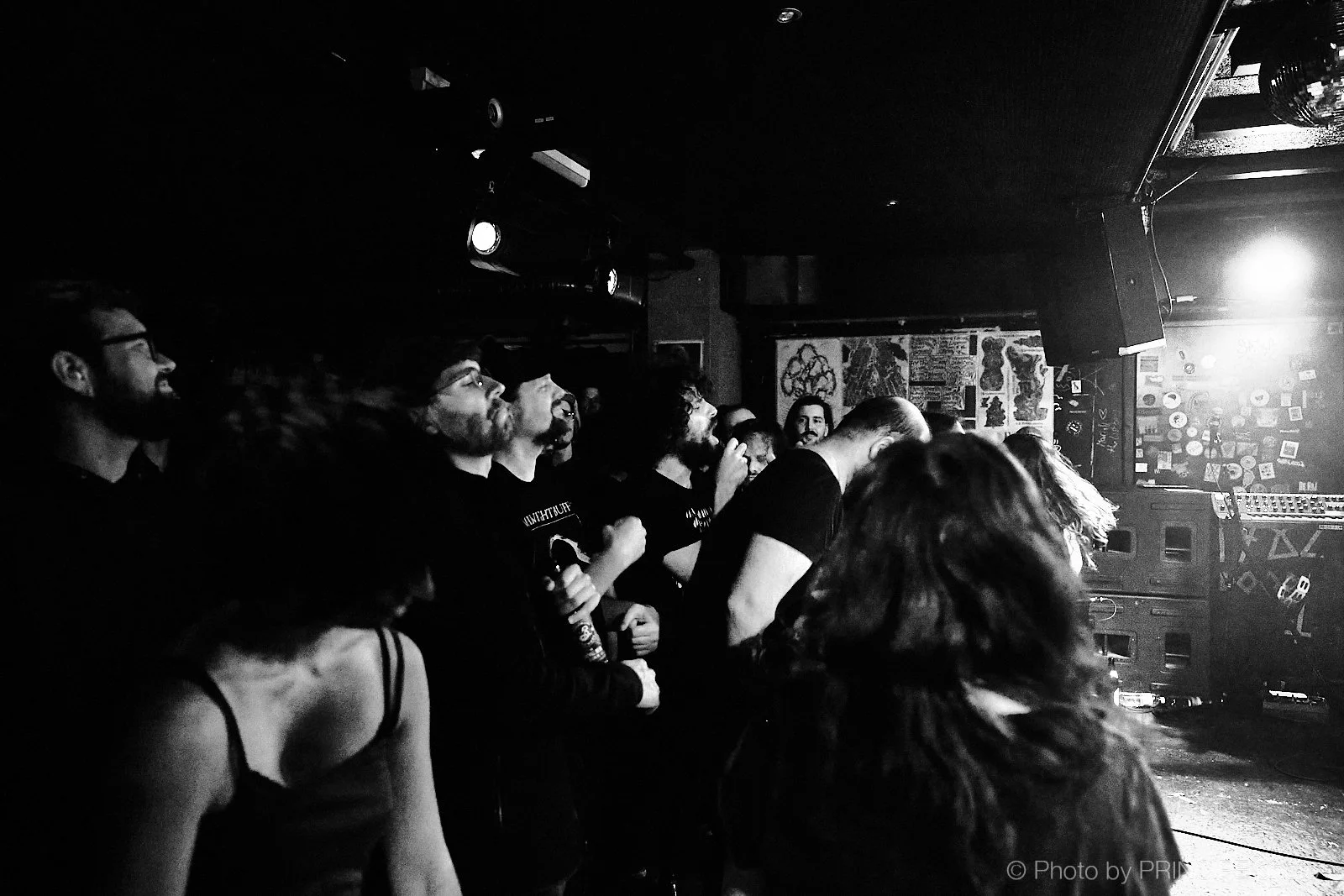
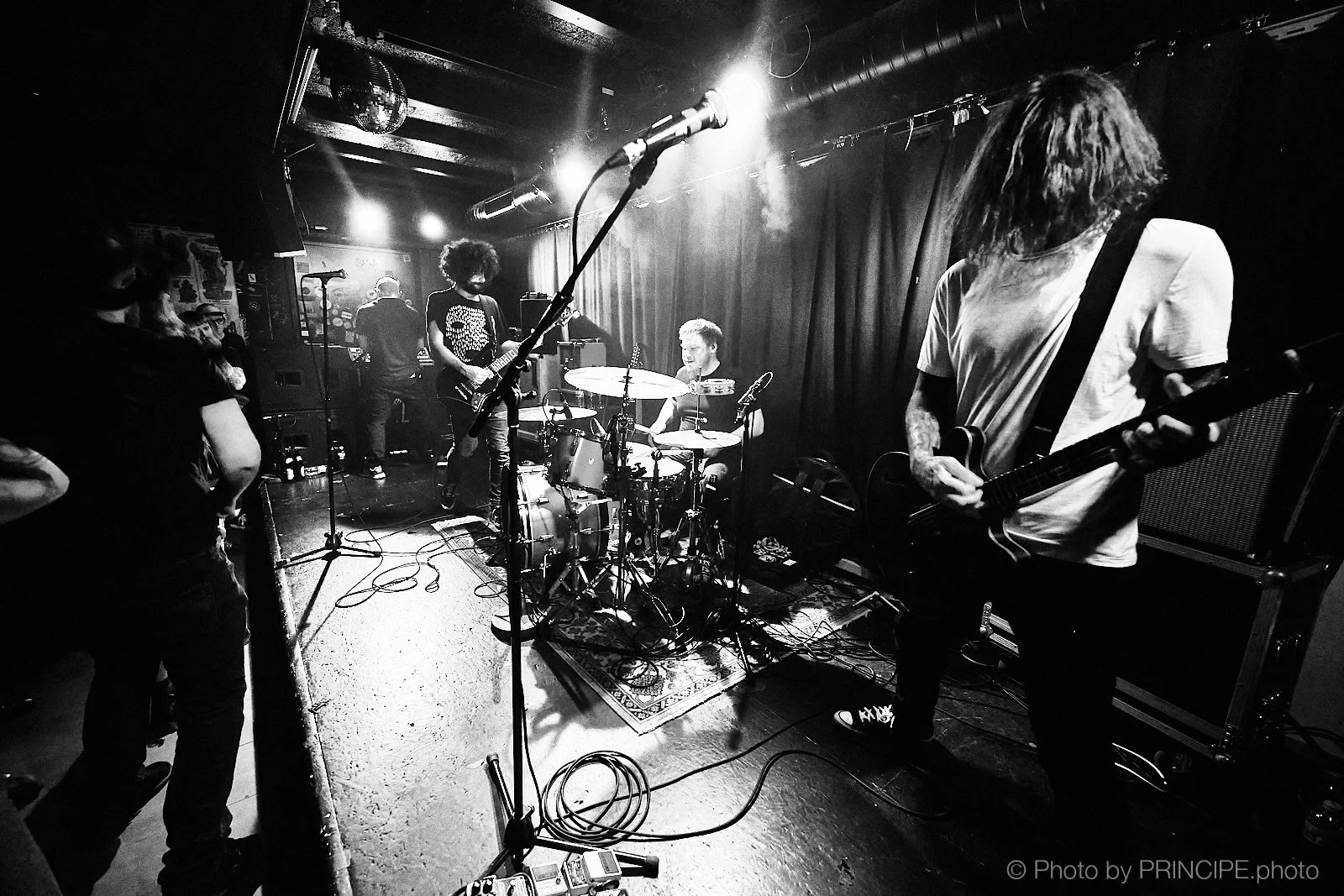
(Photo copyrights: Patrick Principe)
Being a touring musician in a heavy music scene for 15 years now, I noticed that there's very few bands that are actually listening to the same kind of music they're doing. I've seen heavy metal musicians into old school bebop, black metal musicians into soft pop music and I don't think anything of this makes sense. There's like your personality that's on stage and that has a certain reason. There are certain reasons that put you on stage and make you perform a certain type of music, but I don't think it has to do with anything to do with what your normal life is about. It doesn't have to collide.
Do you think that being a part of Coilguns for the last 15 years and performing live with the band on a regular basis has had an impact on your personality?
Being part of this band has shaped my social life, my body, my health and my brain. It has a major influence on my life because that's what I'm mostly doing this year. For example, when we play 80 shows a year, plus all the rehearsals, the days travelling, the residencies to write the next record and the studio time doing the next record, that means it's a full-time job. It's the best job I can dream of, except it doesn't bring in any money for me. It has a major influence on my life and the rest of my life has to deal with it. It's a very cool experience. This is how the music sort of sinks into you and you become the music. Especially for such music which is very physical for me because it's played loud. I use my entire body to perform on stage and not just my throat or my mouth. I really need to dive into it, and I really love being in a tour van and being in close contact with the people I'm playing with to make sure I become a part of the music and the music becomes a part of me.
The fact that Coilguns has more success than your more intimate solo projects - is it something that you think about?
No, there is no competition among myself. It wouldn't make any sort of sense. No, I'm focusing a lot on Coilguns’ music that we're playing now because I feel this is the right moment for it and we've been investing a lot of time to make it happen with this band. This is my chance to be part of this band now. I don't know what's going to happen to my other bandmates, I don't know how long this project will go on for and there are a lot of unknowns. I know with my music, I can do it until I die. That's the best I wish for myself. There’s no rush.
There used to be some sort of a competition between our two agendas and I just stepped back because it really didn’t make any sense. It actually feels very comfortable to not be in a position where I need to have success for my own music. I can do my own music because I like my music and it's coming out of me anyway. I'm sweating my music out and it's good that there's Jona running a label to take all the drops from my sweat and turn them into a record and make people listen to it.
There's nothing I need to fight about and it doesn't make sense to fight for any recognition or to compare, for example, monthly listeners on Spotify or whatsoever. It actually feels nice enough to not be in this position to be compared because the music industry now is so much focused on comparison and numbers. I feel very lucky that I can be a musician all year long, tour in a band, do my own stuff, have a label that's still willing to release my music and still have people showing up to my solo shows and band shows. I don't have to choose between those two things. If I do them correctly, I can combine them in a way that's creative and fun and which gives me a lot more freedom for my own solo thing. For example, to experiment with those suitcase instruments, which I would have never done if my goal was to have success on the modern day folk rock music scene, that only equals suicide. I feel very, very lucky and the fact that things are on different levels makes me happy.
What do you think about the music scene in Switzerland? What are your thoughts?
We have a lot of money. We have a very good quality of life. We have, at least we had until now, a lot of support from the state. Compared to other countries, like the UK for example, where there's basically no support from the state, no consideration for what it could mean to be a musician. That feels amazing but there's still a lot of pressure and the state has been supporting a lot of the artists, which makes our artist being, I think, from my perspective, very rich and very good,
There's a lot of very interesting artists with a lot of personality just because they're not fighting for monthly listeners. They can send a file to their hometown, get support and funding to be able to finance a new record and record it the way they like it in a cool studio. That is very important, that is very nice.
Now we need to support the structures more. The clubs and the labels are dying, the booking agencies are dead already. It's cool to be an artist and it feels amazing to be supported by your own state, to have the feeling that somehow what you're doing has value. It is very important. The artist should always be in the central focus in the music scene but we need to make sure that the clubs are not dying and we need to make sure that the booking agencies are booking shows. We need to make sure that the entire network that's making the artist go somewhere is alive because I only see people in a sort of zombie state. The ones who have not yet had a burn out are just close to it and are next in the queue. We need to take care of those people because the recognition they get is not coming from playing. At the end of the day, they're not on stage playing a show. Same goes for all the people involved, such as technicians, those hosting artists and everything. So, of course, we need more money, but we also need more consideration and we need more help.
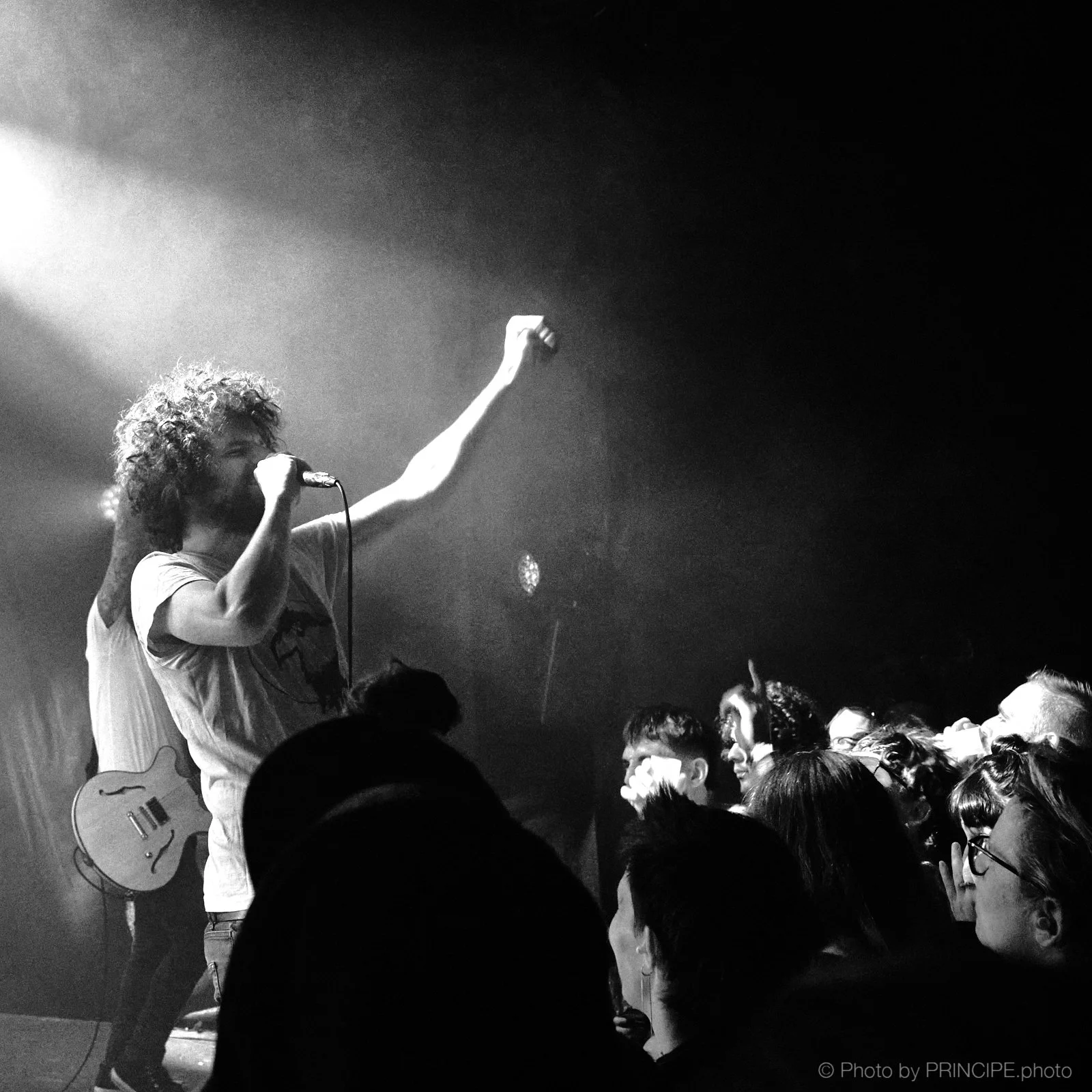
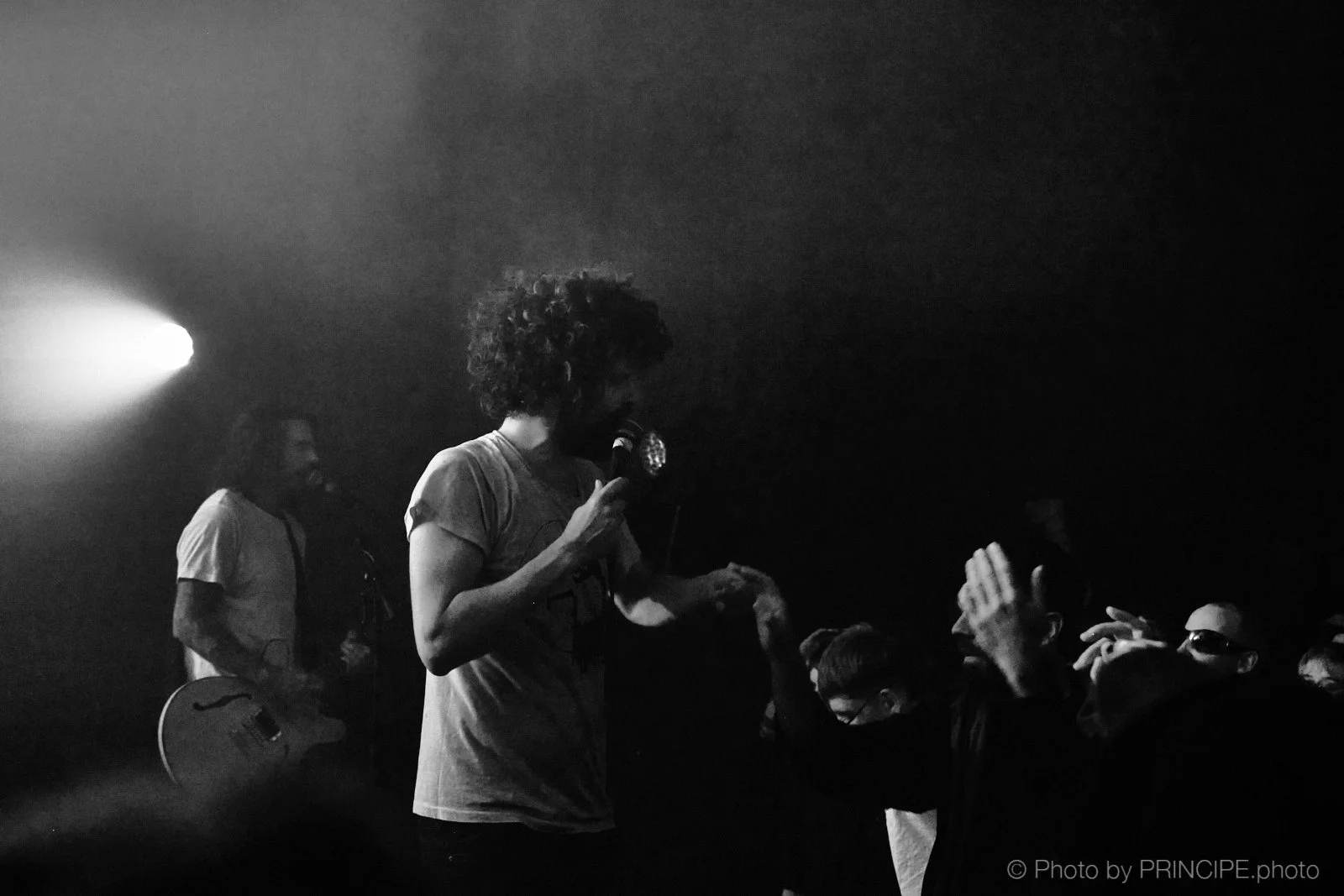
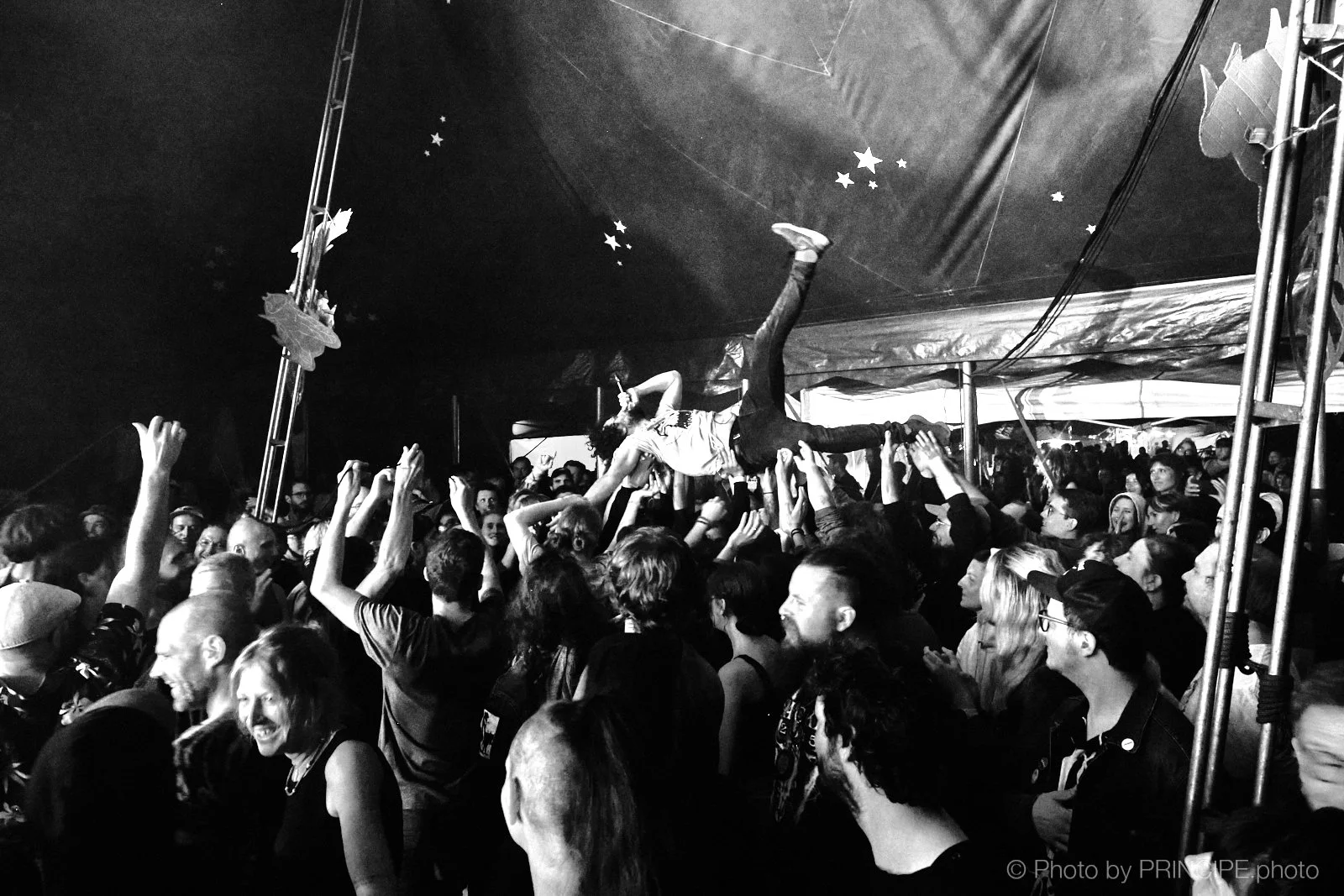
(Photo copyrights: Patrick Principe)
Since that music has become something free, we need to make sure that the audience, the people that actually care about this scene or the music, put their money in the right spot and are conscious of where this money is going. We need to make sure that if they want to have our support, be part of the scene or make sure it is sustainable, we need to inform them well what it actually means. Right now, we end up having agents who are having trouble with clubs that are not going through agents to book bands because they feel the agency is taking a lot of money from the artists. We need to think of it as an ecosystem, and we need to make sure that every aspect, every part of this system is sustainable and that people are happy to wake up in the morning and do their job in the right conditions to do it. If one side of this ecosystem is not feeling well, then everyone has a problem.
I have a lot of admiration for all the people that are getting involved in promoting and booking shows, hosting artists, making music happen because it feels so hard now to get an audience for an artist that you actually love and an artist that you know is going to fill up the place. I just want to make sure that this is where the money should go.
Links:
Related articles:
Related to Coilguns and the members’ side-projects:
Collaborators
Interviews with other musicians in several bands/projects: