
Track by track: Typhon - L’OR
On a dark Tuesday evening in November, I interviewed John Silvestre to know more about his project, Eckhart, his interesting background including his journey from France to Vevey via Belgium and his involvement in the town’s music scene. During the preparation, but unfortunately shortly before our video call, I had discovered the excellent album, L’OR released on Bleu Lagon Reords, by his long-term solo-project turned five-piece band, Typhon.
From the very first listen, I was drawn into the album - I was impressed by the soundscapes, the compositions and the arrangements, his passion for post-rock and his previous experience in making soundtracks for films have a strong influence across the five tracks too. Directly afterwards, I found myself going back to the track, 13-8, which also appeared on the Autumn 2025 Playlist. I have put the album on since several times and my stand-out song seems to change with each listen. The video for the title track also sees John team up with his filmmaker father to create stunning visuals to accompany the song.
Having not been able to have any questions about Typhon ready for the interview, I wanted to find more about their latest album. For this latest edition of Track by track, here is L’OR by Typhon.
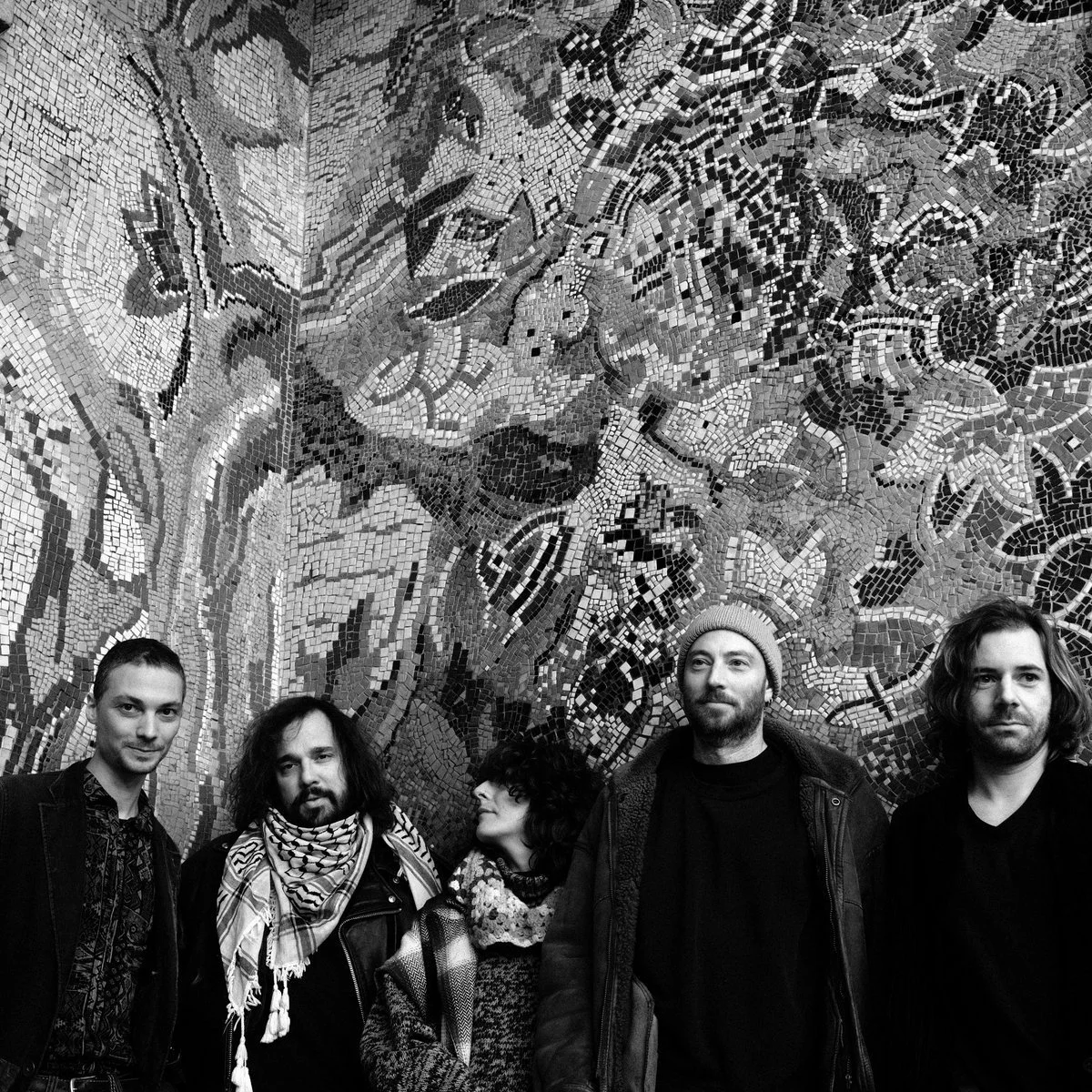
Photo copyright: Mehdi Benkler
Introduction from John Silvestre
L’OR is the 7th record by Typhon, which I started as a solo, lo-fi, post-rock/alt rock project in 2013. It started its journey as a band in 2021 with Cleopatre, Simon Genoud (Swear I love you), Luca Manco and Gabriel Goumaz (both from Service Fun and GoGo Talco). In 2022 we were supported by the city of Vevey to record this album during a residency in Auvergne, in a country house in France that belongs to my family. It was a great and lovely time, making music for two weeks in the summer with friends and recording songs in a remote location.
L’Or is the name of the second track and it’s also a reference to Blaise Cendrars’ first novel. For those who haven’t read it (which I recommend) it’s about the Swiss General, Johann Suter, who was a colonizer in America during the first half of 19th century, built a farm there and earned a living with it. His business failed and his life was ruined by the discovery of gold (which he didn’t really care about) on his land. He died of misery because of it.
Blaise Cendrars was a French/Swiss poet and L’OR was published exactly a century ago, so it all made sense to me. It’s kind of an hommage and a declaration of love to poetry, to the relationship between France and Switzerland, but mostly about vanity. This is an album about human vanities, and the beauty in our (sometimes desperate but devoted) attempts to make sense in our lives.
I hope you enjoy it!
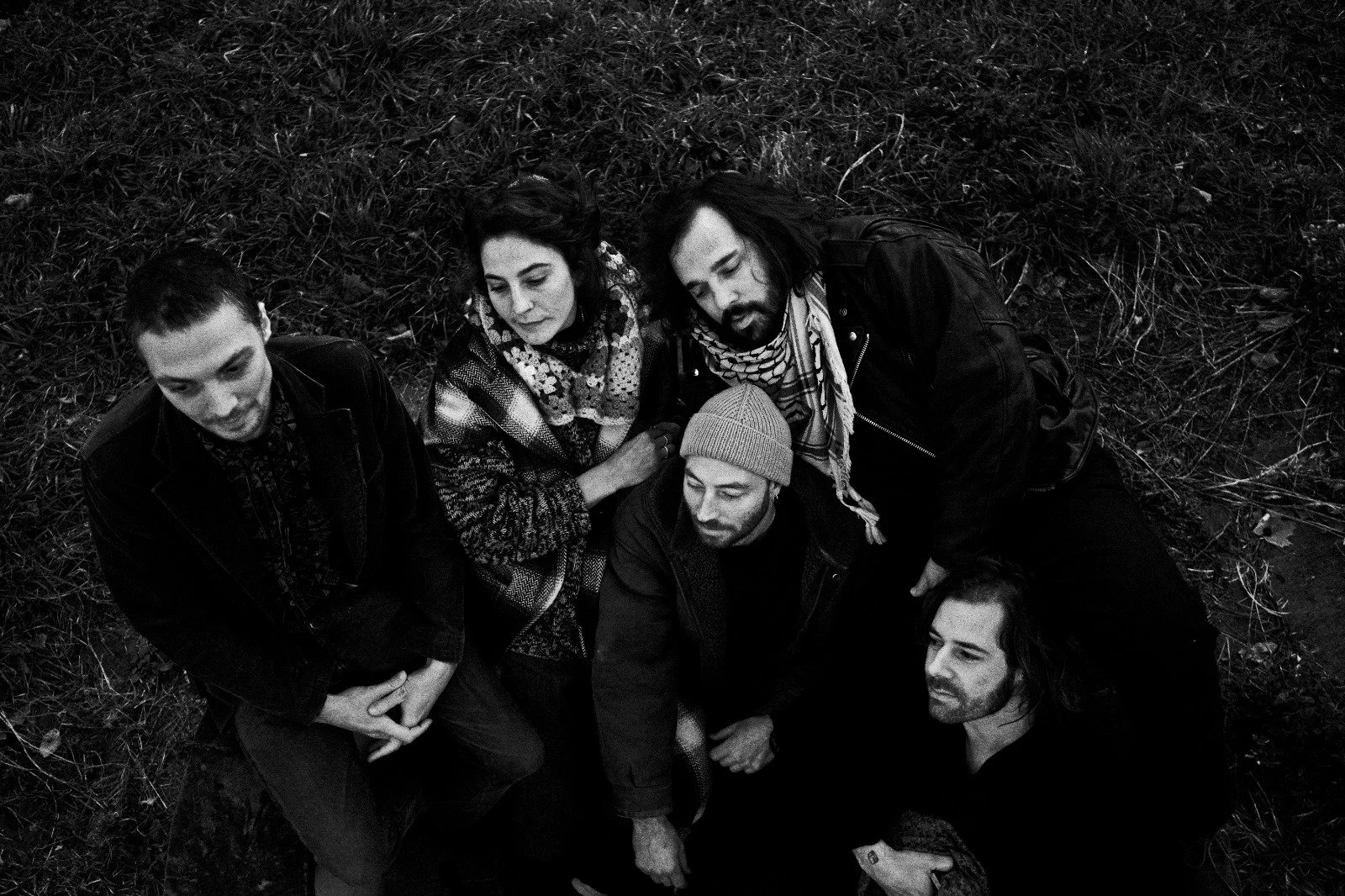
Photo copyright: Mehdi Benkler
FOOLS’ TOMORROWS
This one was composed during COVID. I found the open tuning to the song by following the main melody that came in my mind. I think I was mostly listening to A Silver Mt Zion and a lot of Vic Chesnut at the time. The lyrics follow the dialectic mood of the track. It starts lightly but progressively evolves with the fierce rock energy in the instrumental bridges.
The lyrics at the beginning are full of delusion and sadness, “You’ve been left behind, History’s path is full of blood and it doesn’t make a lot of sense”. I was really in a bad place, like many of us in this period, and despaired by the way governments and social engineering were “managing” human beings. I was disillusioned as well when I witnessed how Western society in general seemed ready to be enslaved and to follow any kind of fascism and dictatorship. There is a term for that, “manufacturing consent”, which is the purpose of any social engineering institute.
But the end of the song is also a path toward hope and action, as the last words are an invitation to build something better as a collective. It has always been a really moving song for me... Full of angst and forgiveness at the same time, similar to real life. The path toward inner peace often goes through overcoming our inner contradictions.
L’OR
Just like Fools’ Tomorrow, I found another open tuning by following a theme that I had in mind. I like to proceed that way when I compose with guitars. To me, a melody, a theme, is a radical thing you can pursue in music, if you think of it as a proposition. With two or three notes, you can leave a lot of space for interpretation, subliminal information and more. But the more notes and chords arrangement you align, the more you engage and the more precise you get in your proposition. It’s something you have to “assume”, like a “parti pris”.
That’s why I’ve always been in love with guitar arrangements from a band like Television, or records like the first Godspeed You! Black Emperor albums: the counterpoints, the density and generosity of the arrangements, the movements and original structures of the “songs”...
Of course there’s another form of commitment and radicalism in noise, industrial and no-wave music, which often played with the economy of notes, like Cabaret Voltaire, Throbbing Gristle or Einsturzende Neubauten, this kind of stuff, but that’s another story... I almost mentioned krautrock, but it’s interesting if you compare bands like Neu! who can make a hit with two notes, and Can who explored both sounds and contemporary arrangements... It’s like night and day.
I digress.
So, usually, I have a melody that comes to mind. Then I try to find a tuning where I can play both the theme and the chords at the same time, playing with open strings and original chords transpositions. L’OR still has this conventional structure in the first part (verse-chorus-verse-chorus), then it evolves mid-song into something else. I like to see how far I can push a melody and a mood until I feel like I’ve exploited it enough. I like to go all in. It makes quite a journey.
The lyrics can be received as a symbolic interpretation of what’s in Blaise Cendrar’s novel, as well as a call for renouncement, the recognition of our vanities and ambitions, the acceptance of the loss and the need of true love, as a universal feeling, as something you never own, like quite often are the most precious things we encounter in life: we can’t own them. We can only experience them.
DEMANDE A LA POUSSIERE
Another reference, to John Fante’s Ask The Dust, even though I don’t talk about it in the lyrics. I was jamming with the same tuning from the title track, L’Or, and found this melodic progression.
The lyrics came easy, vanity is still the theme. And getting old. The end speaks for itself “One day, I may get old and there may be no one around to lift me up again, so I’ll go and ask dust: what did I truly lose, what did I truly give?” I get moved just by thinking about it. But at the same time, the music is kind of uplifting and bright, with this melodic solo at the end and the drum going halftime, it reminds me of old Mercury Rev albums like Deserters Song or The Butcher Boy, the bonus track on All Is Dream.
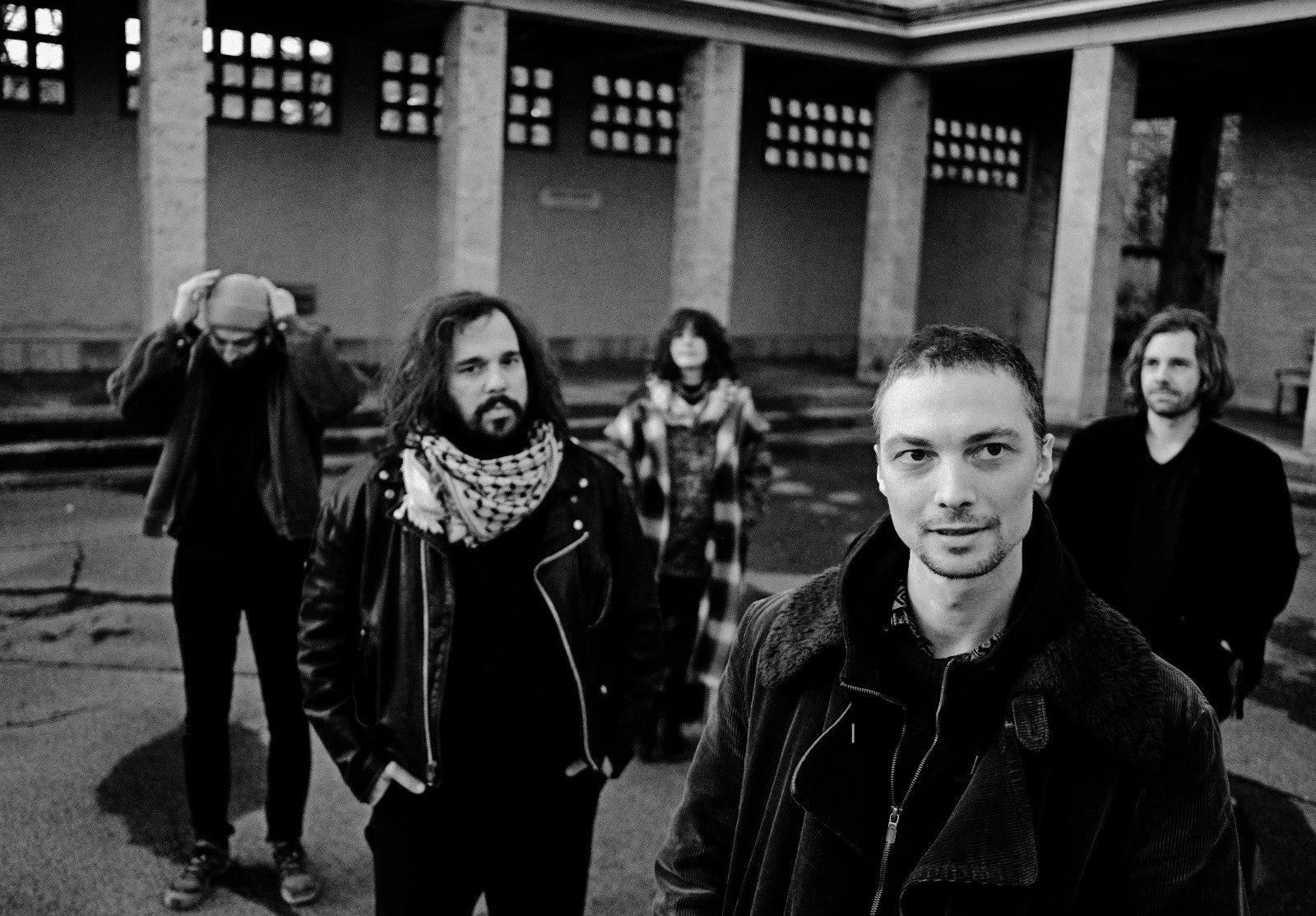
Photo copyright: Mehdi Benkler
13-8
Originally, this is a guitar part I composed a while ago when I used to play solo with a loop station and drums on top.
Same, another specific tuning, open B, like B B D E A E or something. I play it by putting a screwdriver through the neck of my guitar, half of the metal piece below half of the strings, the other half on top, and by bending the screwdriver I do this weird metallic sounding open chords and slide it through the neck to modulate Sonic Youth/Glenn Branca’s style.
The rhythmic is 13-8 but it wasn’t really calculated. It was organic and natural to play the screwdriver by bending it on this rhythm, then I understood the rhythmic signature and we jammed around it.
No lyrics for this one (yet). Inspiration hasn’t come, but I feel like the instrumentation holds the track by itself. It’s a fun song to play and to listen to.
NOUS NOUS LEVERONS ENCORE
This one is really really old. I think I composed it ten years ago. My girlfriend and I had split up at the time and this was a song I wrote as a prayer for our relationship to end lightly, with hope and joy. A bit cheesy. But I’m not the first nor the last to do so. And, of course, things didn’t turn out that smoothly haha. But it was a nice attempt. We were young. This track followed me for years. It was the first one we played with Typhon as a band, ten years later. I met Cleopatre while we were jamming on this one with Simon.
My idea in the composition was to challenge myself with a chromatic progression. Like A major, A minor, A flat major, A flat minor, G major etc... and to find a theme that would fit and unite all these chords, like reuniting a broken family.
Album credits:
composition, lyrics, guitar, vocals: John Silvestre
vocals: Cleopatre Malpeli
guitar: Simon Genoud
bass: Luca Manco
drums: Gabriel Goumaz
producer: John Silvestre
recording and mixing engineer: Paul Alkhallaf
mastering: Sebastien Politi
Links
Related articles
Track by tracks:
Soundtracks:
Vevey