
Interview with Mouche-Miel
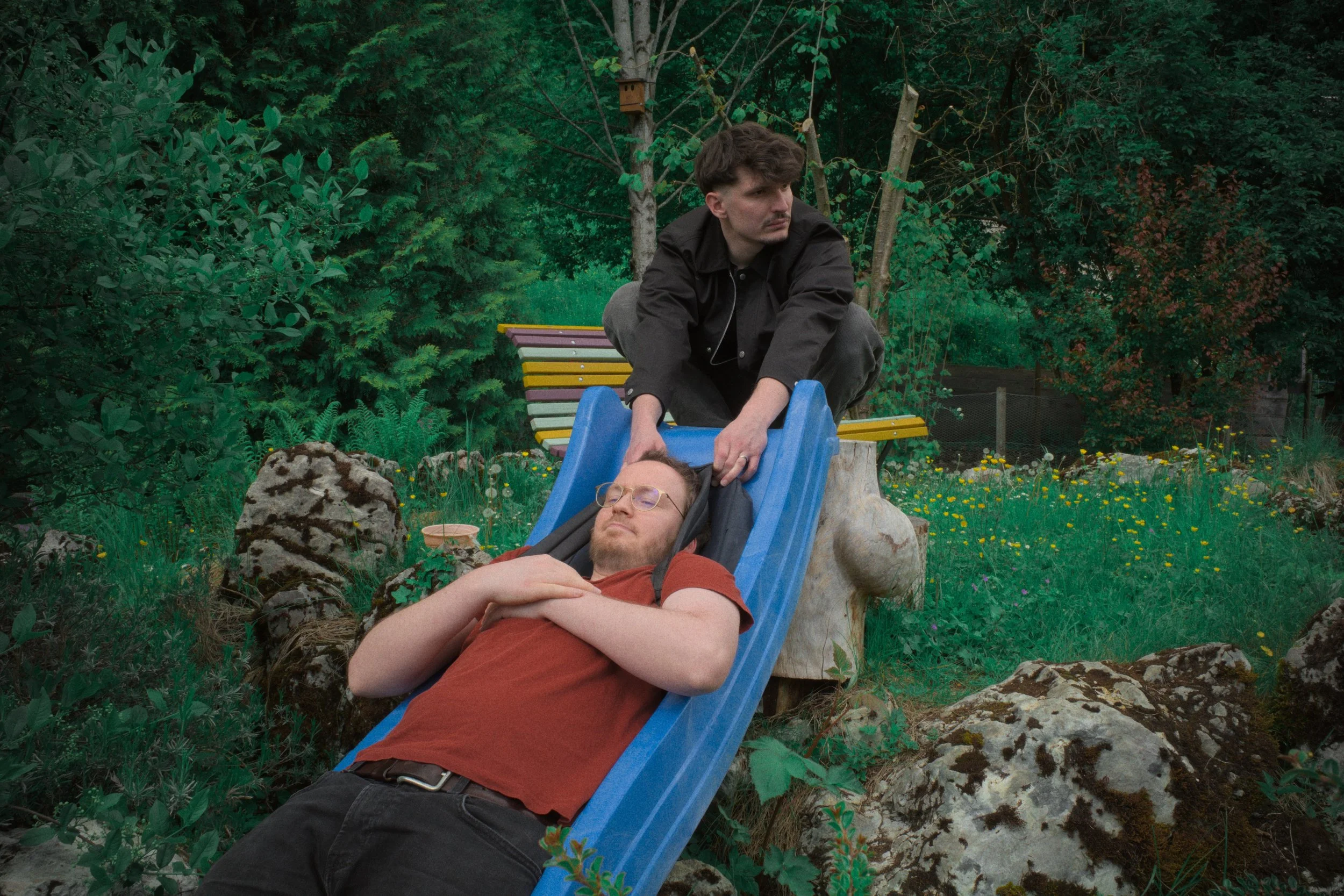
Introduction:
Around the beginning of Reverb Dream, I quickly discovered the instrumental math-rock duo Mouche-Miel through their debut album, Satellites. They unleashed wave after wave of explosive riffs across tracks packed with unexpected shifts, taking the listener on a real adventure.
I found their story quite inspiring. Growing up in the village of Saint-Imier, they started making music together at the age of 10. Their journey led them to put out a few EPs before releasing the aforementioned Satellites on Humus Records. Their live shows caught the attention of Les Docks in Lausanne, where they opened for Jane's Addiction, the cult 90s band (whom I saw the following day in Zurich, though sadly without Mouche-Miel).
It was also a treat to catch the duo at Bad Bonn in Düdingen, especially seeing how they play off each other and the glances they exchange during the performance. You quickly realize just how much fun they have sharing the stage together.
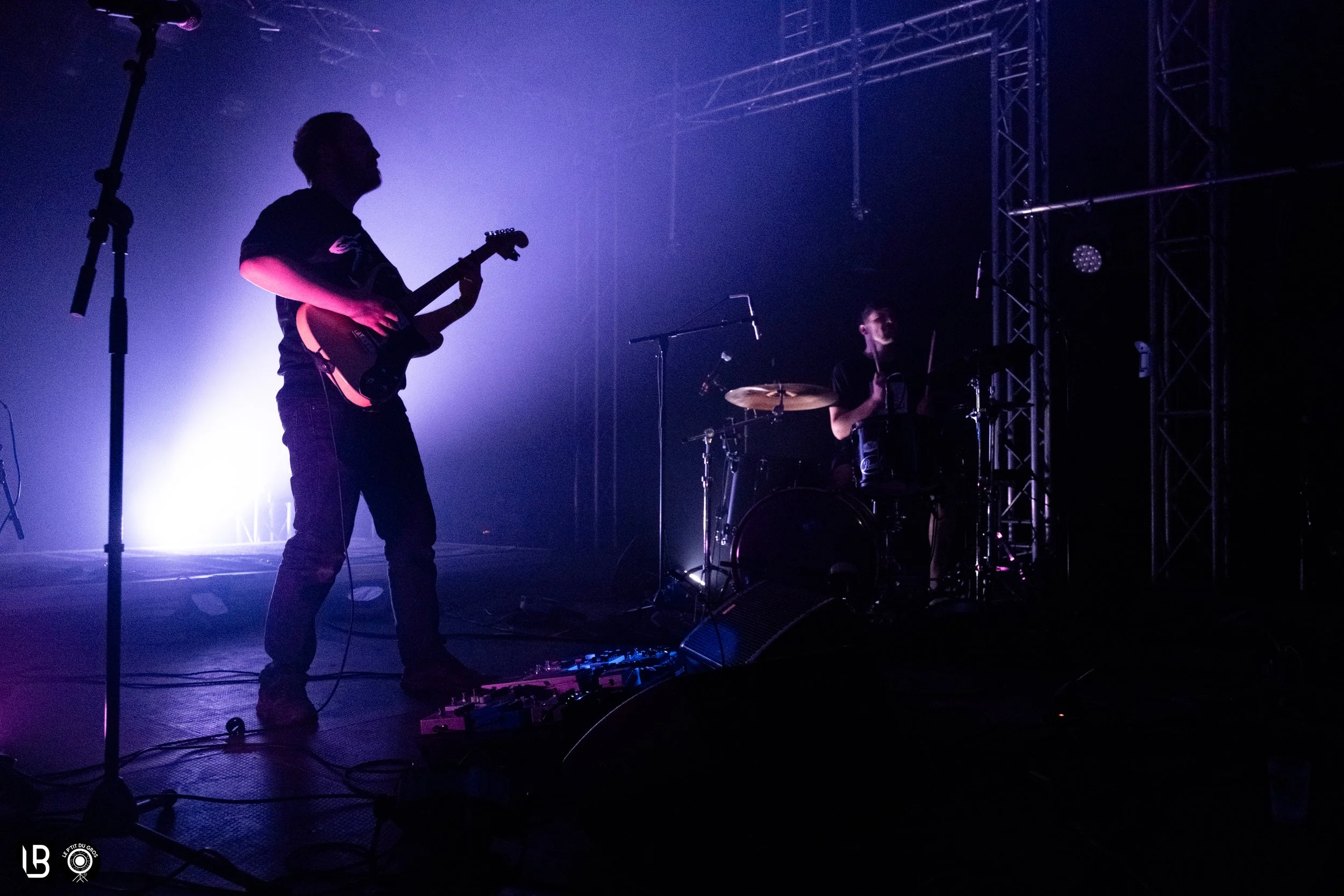
At Alles Post this year, I heard they would be releasing their second album on the Table Basse Records label. They had read the interview on the blog and reached out to Table Basse. I was able to listen to the album in advance, and it’s a wonderful evolution. According to them, the parts are "simpler and longer," while still holding onto their experimentation and their warm, full sound built through loops and effects.
I saw the band a second time at my home away from home, the Boschbar in Zurich, to celebrate 30 years of live shows there. It was great to see them again and hear the new tracks live (including an unrecorded track slated for a later release). The show was fantastic!
After two failed attempts at setting up an interview, we finally made it happen this time! Read on to learn more about the band, their journey, their songwriting approach, Tabasco Flash, and much more. Thanks to Mouche-Miel for their answers, and to Petros for the translation (for the replies and, for some reason, my intro from French to English).
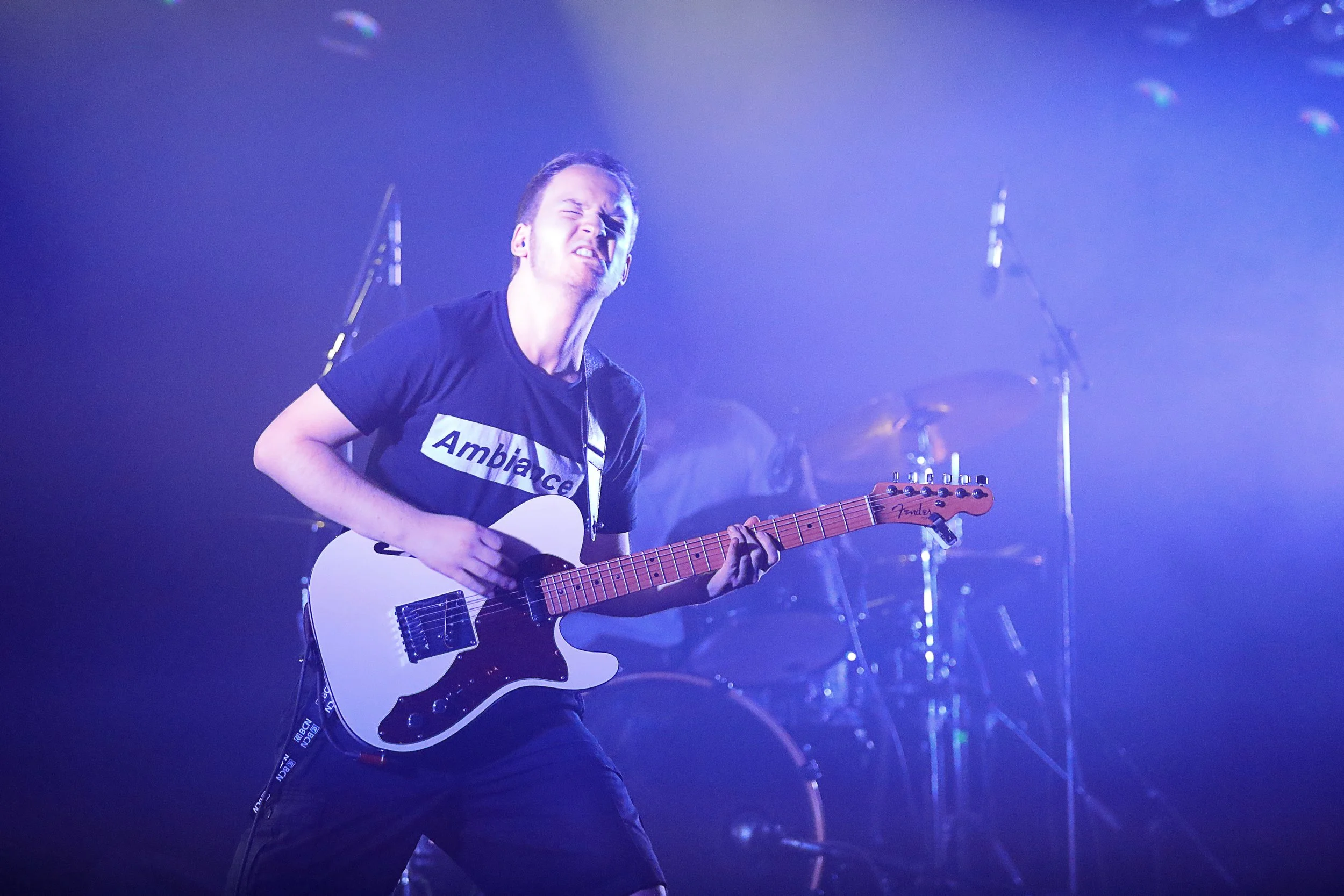
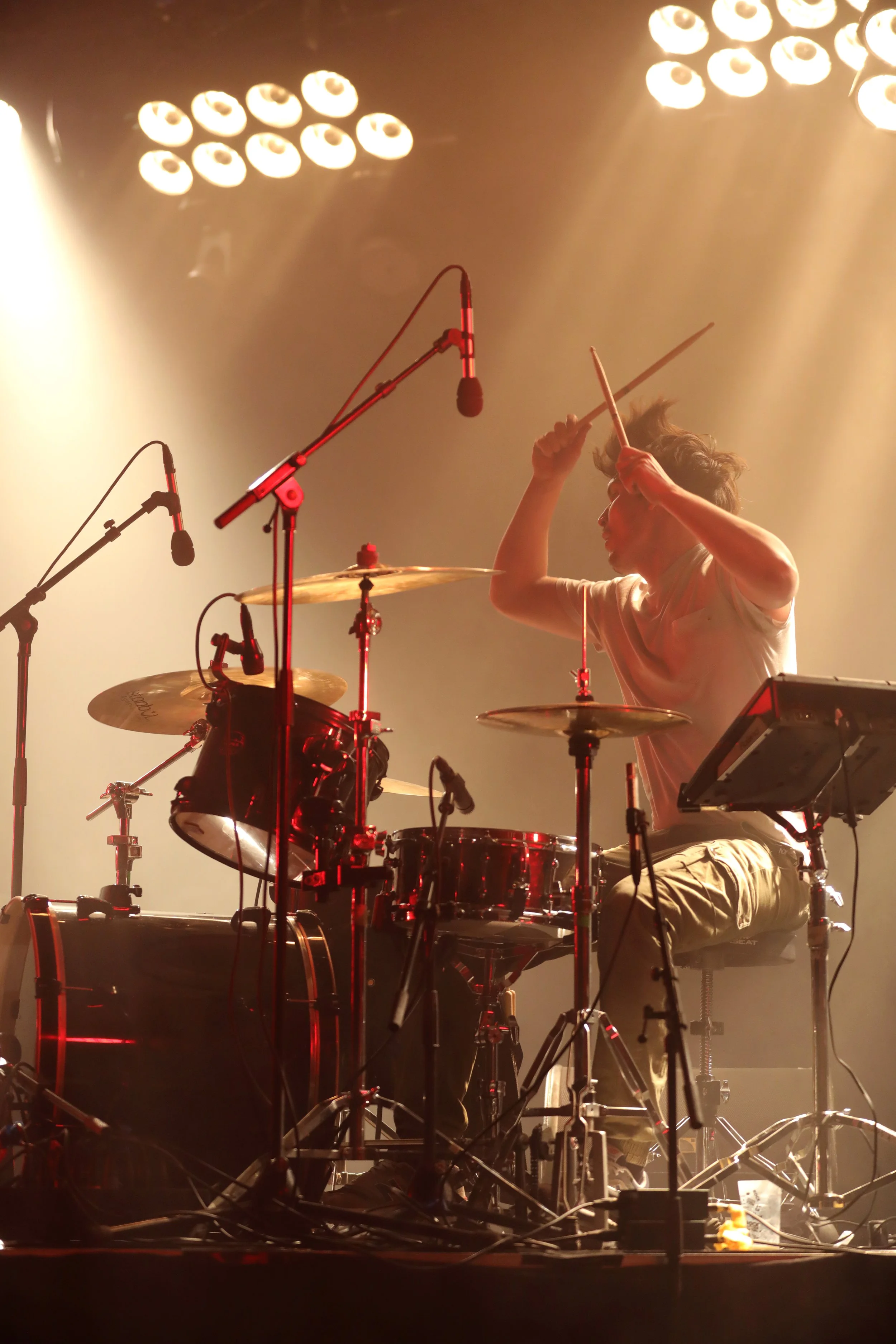
Introduce yourselves – who is in the band? On what instruments? Are you involved in other projects?
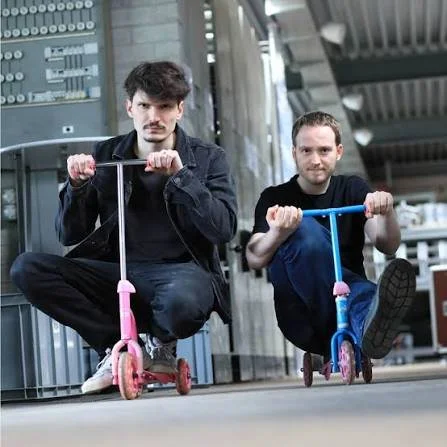
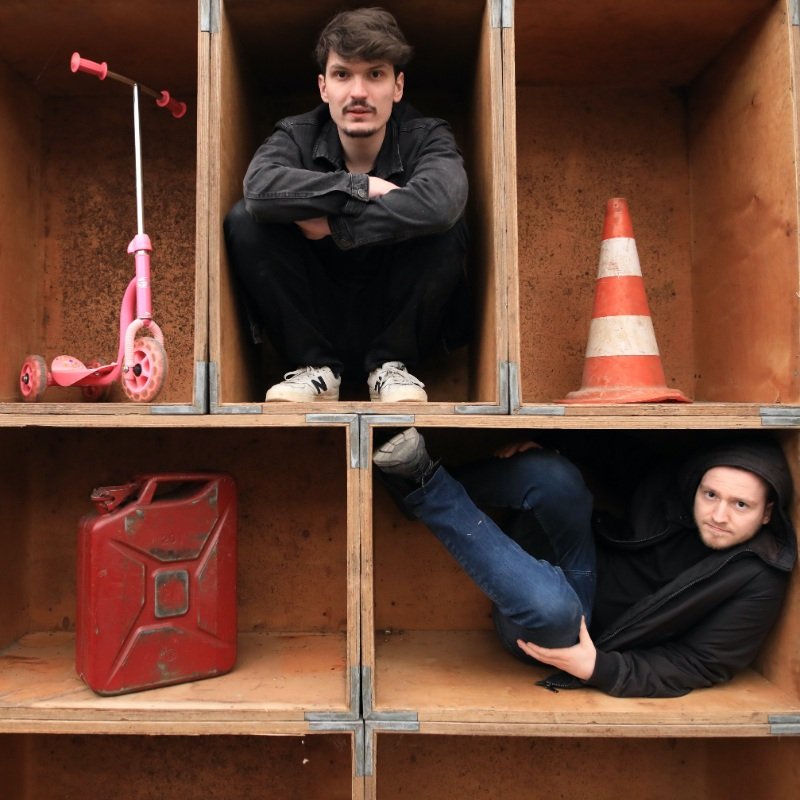
Silas Auderset on drums, no other projects at the moment.
Sébastien Minguely on guitar, other projects: Soubateurs, TAQL.
How did you meet? (What were your initial impressions of each other back then?)
Silas: In primary school, childhood friends—it’s hard to pinpoint the exact moment.
Sébastien: In 3rd grade, our teacher (who was also Silas’s drum teacher) encouraged us to make music together. It’s probably because of him that Mouche-Miel exists today (thanks!). He even recorded us in his home studio. It was pretty much from that moment that we started making music together, became good friends and started hanging out all the time.
What were your first impressions during your earliest rehearsals?
Silas: “Oh wow, we can actually do this when playing with someone else!?” I think we realized right then that this was what we wanted to do: play music in a band.
Sébastien: For me, it was also discovering the electric guitar. I only had a classical guitar, so Silas's dad would lend me his guitar and amp whenever we jammed together.
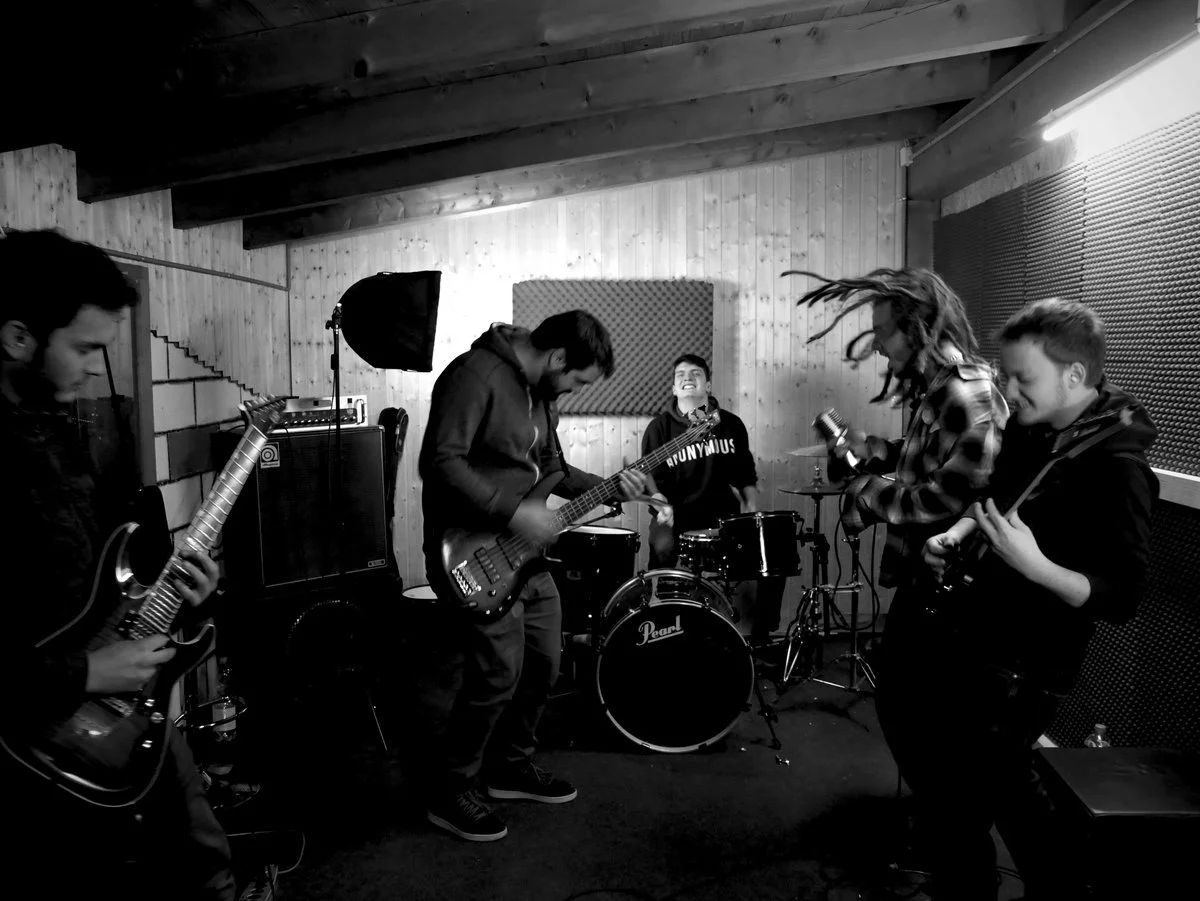
Before Mouche-Miel - Rhumpage
How did you find your sound? Were there specific influences (musical or non-musical)?
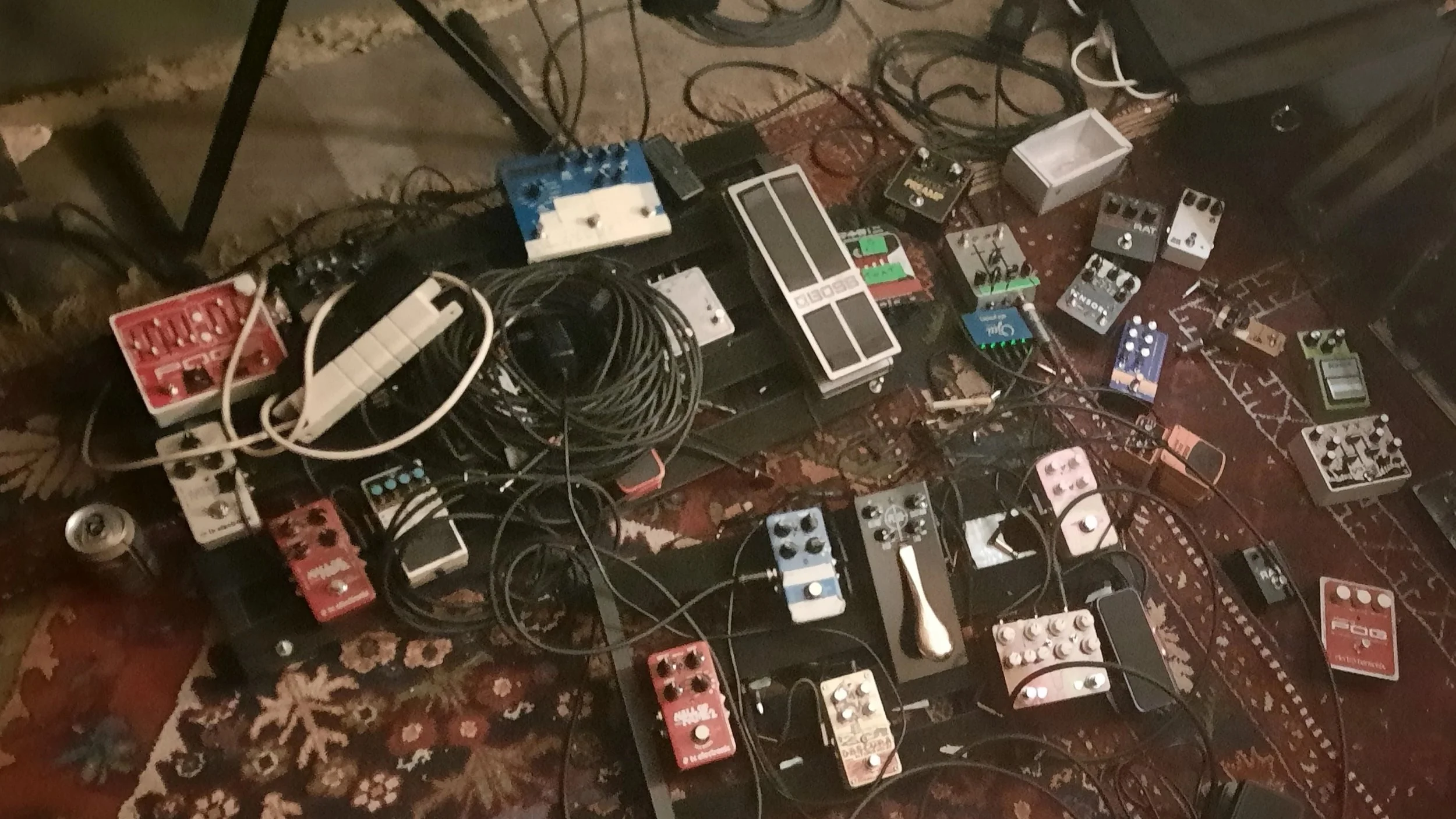
Sébastien: For a long time, we had a metal band, Rhumpage, with three other friends, and most of the time the two of us wrote the songs just by ourselves. To make it sound like there was a bass, I used an octave pedal, and it usually worked pretty well. When that band started running out of steam, we decided to do a two-piece project again, just like when we were 10. I kept the octave pedal idea and added two amps so it would sound more or less like a full band with two guitars and a bass.
Over time, I added other pedals (doubler, freeze, delay, reverb, pitch shifter) to make the illusion of having two guitarists and a bassist even stronger.
Silas: It’s a long process. Naturally, at the start we were trying to sound like the bands we loved, but that wasn't the main priority. We mostly adapted with whatever gear we could get our hands on. Then bit by bit, Sébastien turned into a total guitar-pedal maniac and really started digging deep and searching for unique sounds.
For Mouche-Miel, the idea has always been: our sound has to be as full as possible so no one can say, “there’s a bass missing, or a second guitarist is missing”—even if, obviously, the songwriting plays a huge part in that too.
What are your musical backgrounds? Did you take lessons before (or during) Mouche-Miel?
Silas: Yeah, I took drum lessons at the EMJB (École de musique du Jura bernois) in Saint-Imier and with a few private teachers, basically from age 5 to around 25 (so I was still taking lessons when Mouche-Miel started. I stopped because of money, but working with a teacher is always super rewarding).
Sébastien: I started at age 10 with classical guitar lessons at the music school in St-Imier and played classical until I was 20. I also did a bachelor’s and a master’s in jazz guitar at the Bern University of the Arts.
How did you choose the name?
Silas: Very good question; even we find the reason pretty hazy…
Basically, it was sort of a shout-out to a Creole friend, because “Mouche à Miel” [literally honey fly] means “bee,” and we thought that was a fun piece of trivia. And so we figured it sounded weird enough to pick, hahaha.
We wanted a name that stood out from the crowd—one that makes your brain glitch a little bit. (That way people remember it better, and above all, it's easier to find on the internet.)
The Journey:
At age 11 you recorded with a teacher – tell us the story behind that recording.
Silas: He was our homeroom teacher (Sebi and I went to school together all the way through). His name is Dominique Krähenbühl and as well as being a teacher, he was also a killer drummer, and he had a studio at his place.
Basically, once he saw we were dabbling in music and wanted to form a band together, he invited us over to his house to record some stuff… Mind you, we didn’t have much to play… so I think we did a Nirvana cover and also jammed out some improvisation… But that gave us the hunger to start a band. (We were like 11 at the time.) After that, we did indeed start several bands, eventually ending up with Mouche-Miel.
To this day we’re still super grateful and touched by what he did. So we tracked down his address and sent him our first proper full-length, Satellites. He told us it really moved him.
You started off with the live session Session Mèche de 12. Where did the idea come from to record and release it?
Sébastien: That was right at the very beginning of Mouche-Miel; we hadn’t even decided what we wanted to call ourselves at that point. We did a mini 3–4 day residency in our rehearsal space, and the main goal was just to write tunes. Usually we’d record ourselves with a Zoom field recorder sitting in the middle of the room, just to remember what we’d done. But since we wanted to do this for several consecutive days, we asked a friend to lend us some mics to get a slightly cleaner recording. So we wrote songs during that session and tried to track them as well as we could as we went along. In the end, we felt it didn’t sound half bad, so I mixed it as best I could and we posted it on Bandcamp just to have something to show bookers to find gigs.
Silas: It was day one; we were itching to make our music official.
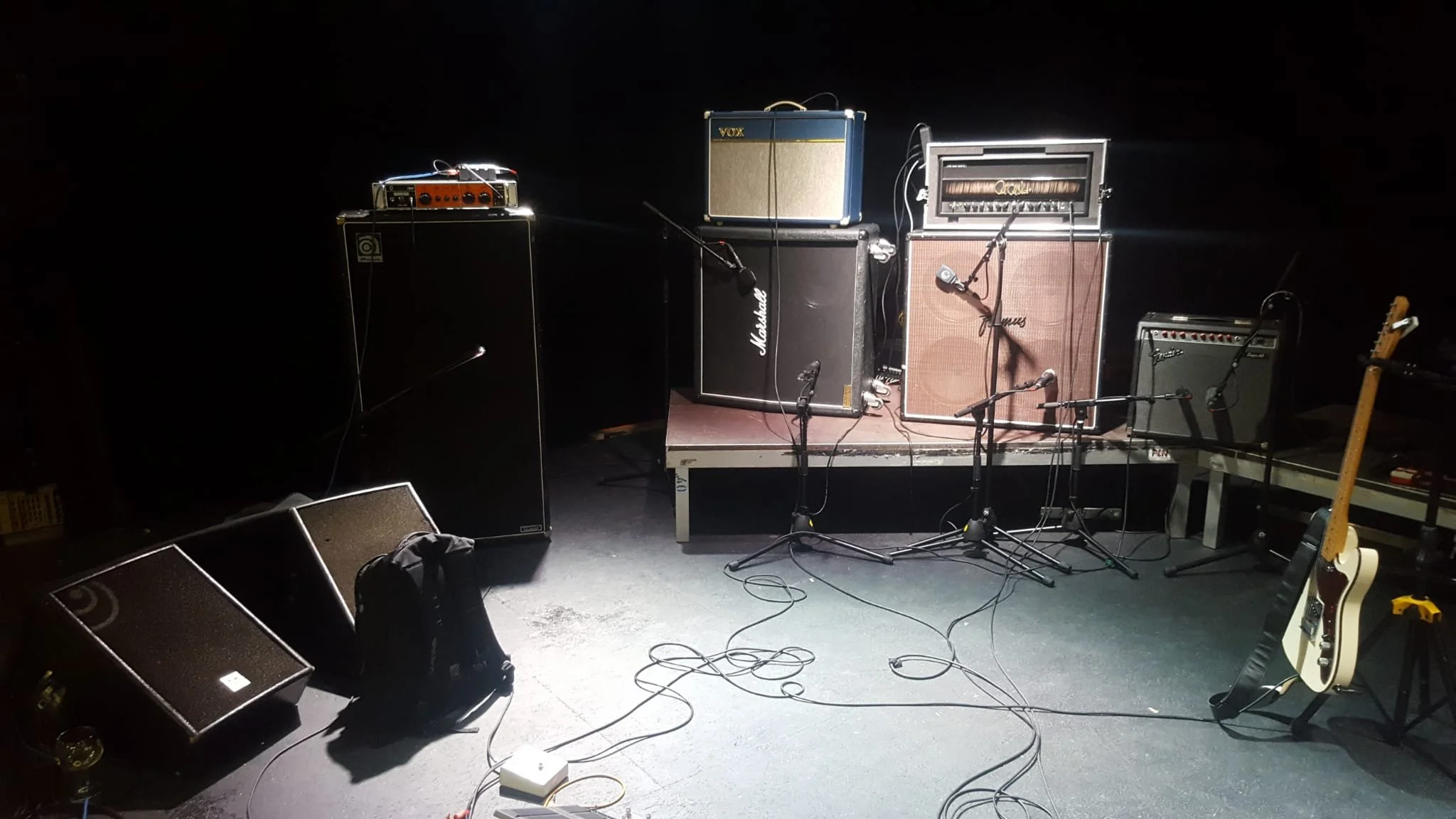
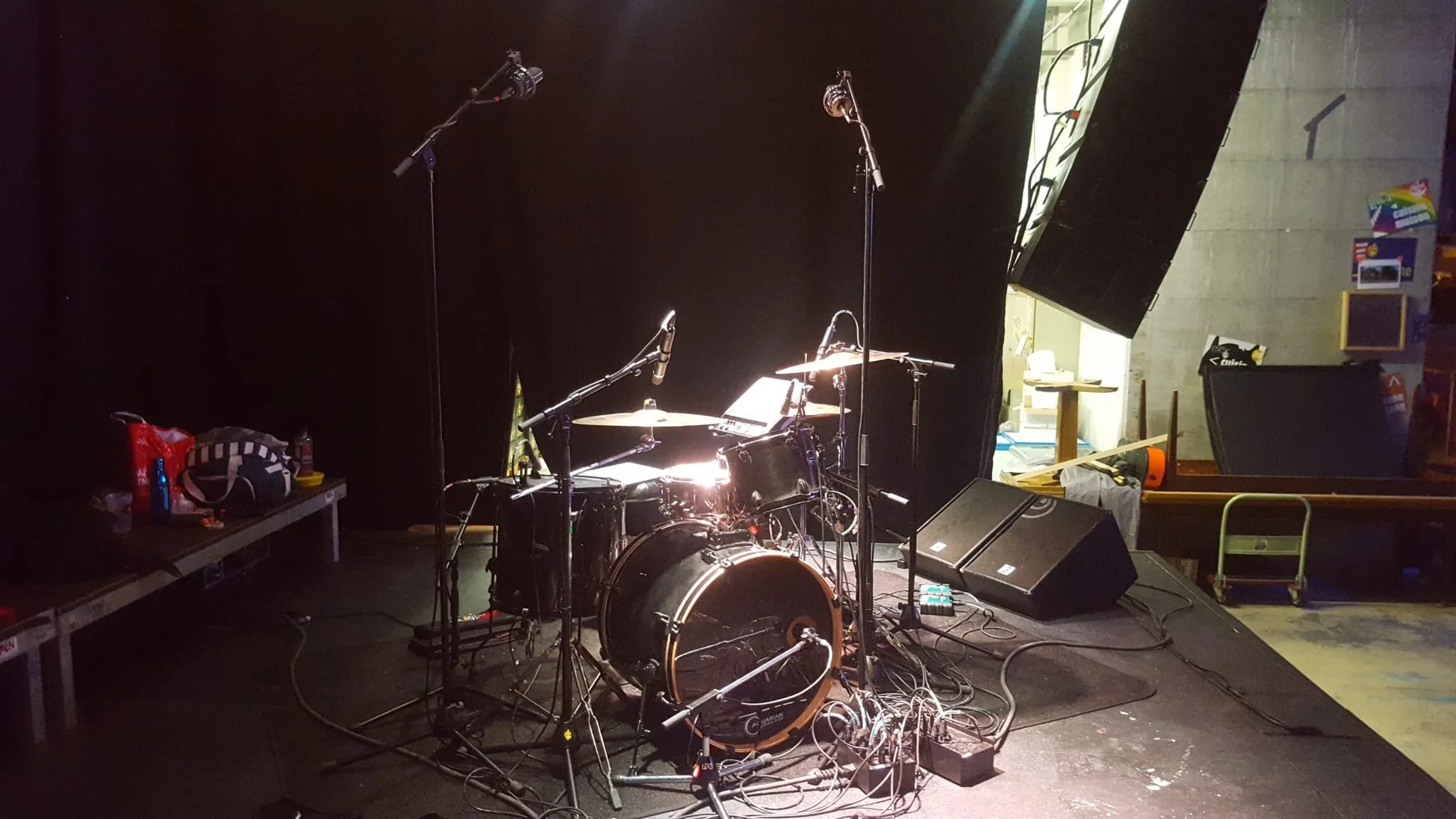
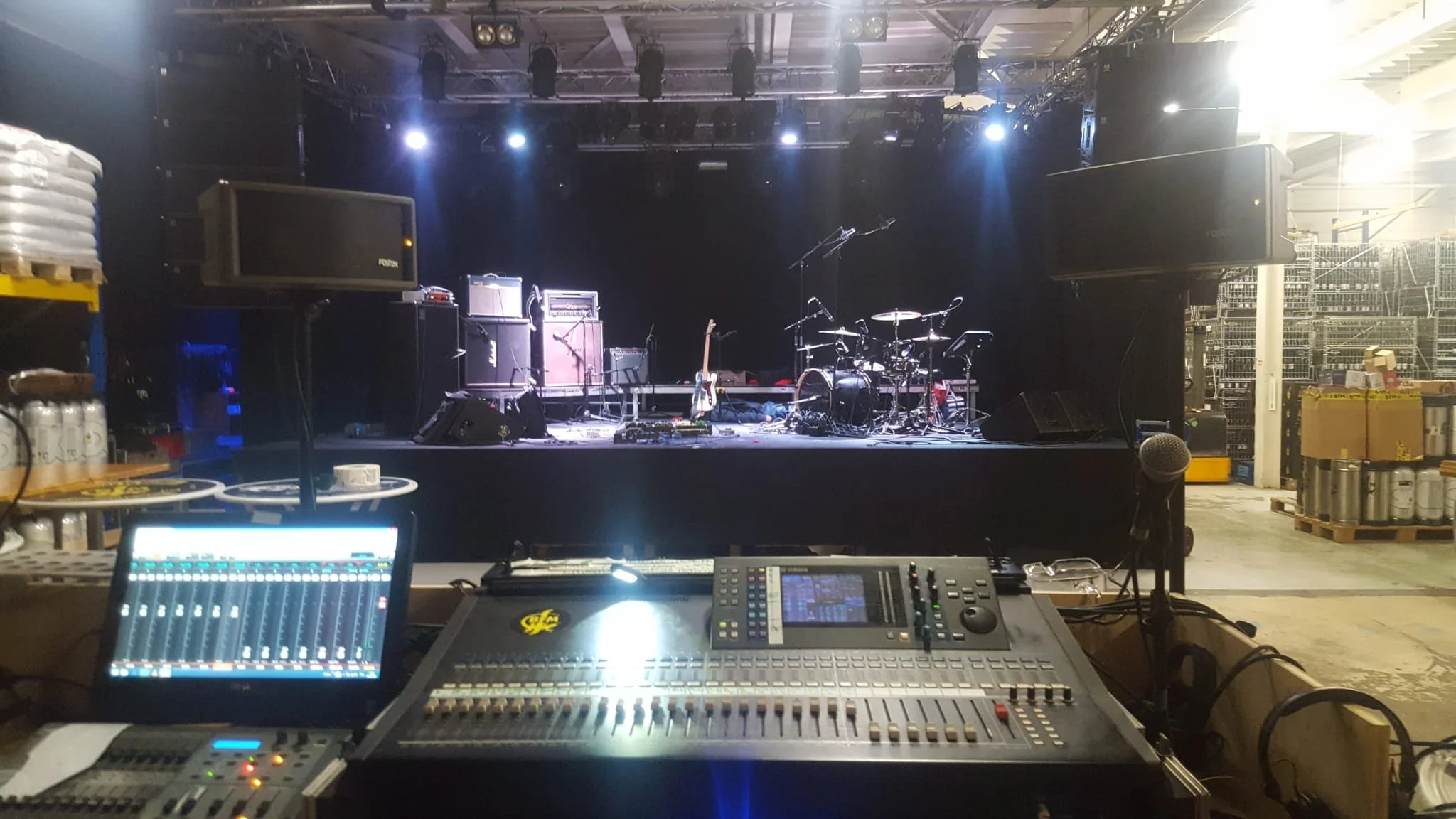
(Recording at BFM)
The two live sessions that followed, Dear Piotr and the one at BFM, were recorded at Studio Mécanique – how did that come together?
Silas: Actually, Dear Piotr was also recorded by us in our practice space and mixed by Sébastien. However, we had it mastered by Gwenaël at Studio Mécanique.
(P.S.: I think that helped get us picked for the Rock Altitude Festival band contest, which gave us a massive boost back then. Because if I’m not mistaken, Gwenn was on the organizing committee for the contest, hehe. So it allowed him to give our music a proper listen before selections, hahaha.)
The BFM session was recorded at the Brasserie des Franches-Montagnes with Arwed Tauran, our official live sound engineer. He mixed it, and unless I'm mistaken, we mastered it at Studio Mécanique.
How did it feel to release Satellites on Humus? How did that come about? What stuck with you from that period? What was it like recording a studio album?
Sébastien: We were thrilled to do that with Humus! We’d known about the label for ages, and everything they were doing was a huge inspiration to us. So “signing” with them for Mouche-Miel felt like a massive milestone. It was largely off the back of Rock Altitude Festival that Jona was down to bring us on board. Apparently a ton of people loved the set and were sending him clips of the show telling him to check us out, haha!
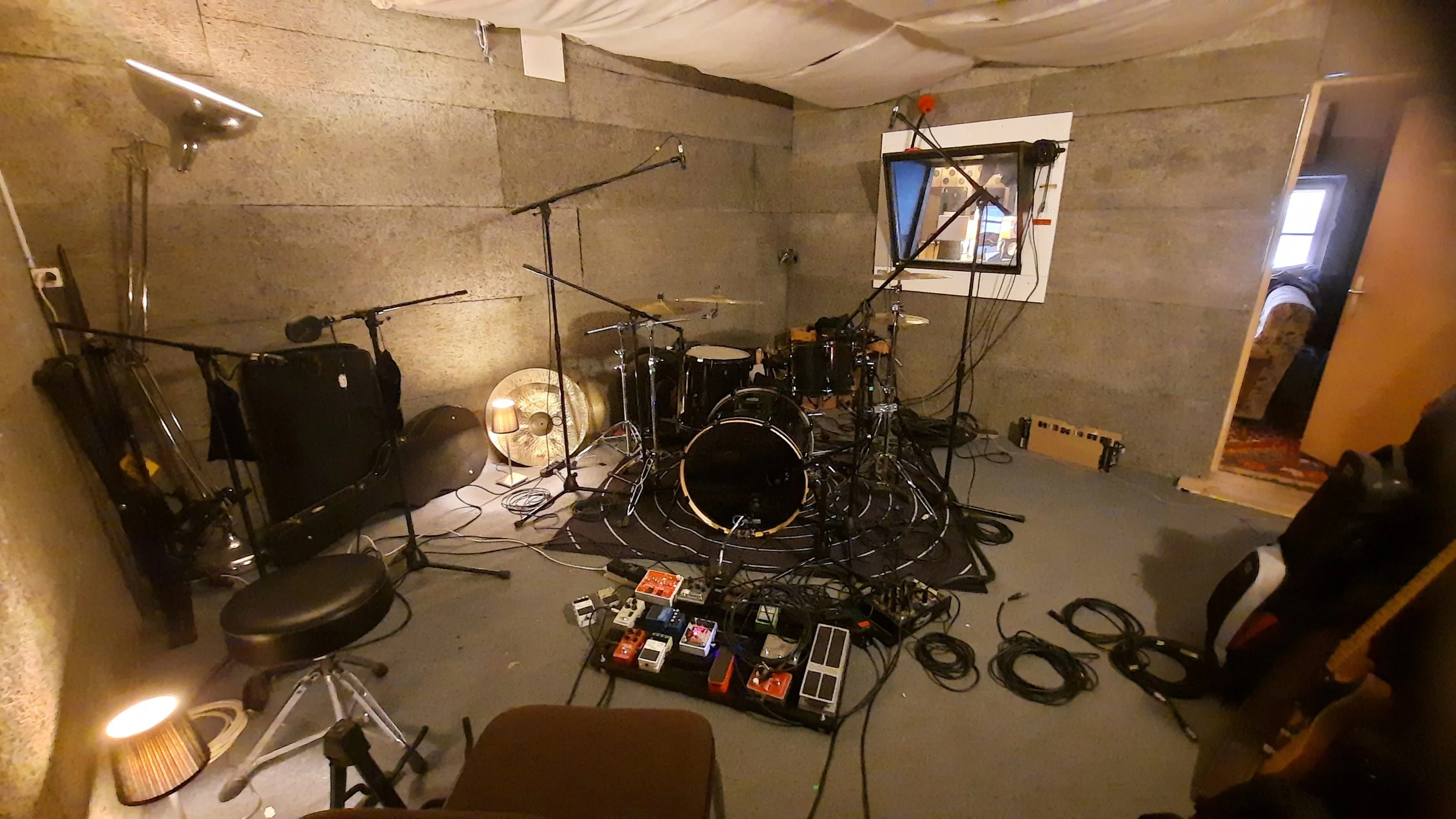
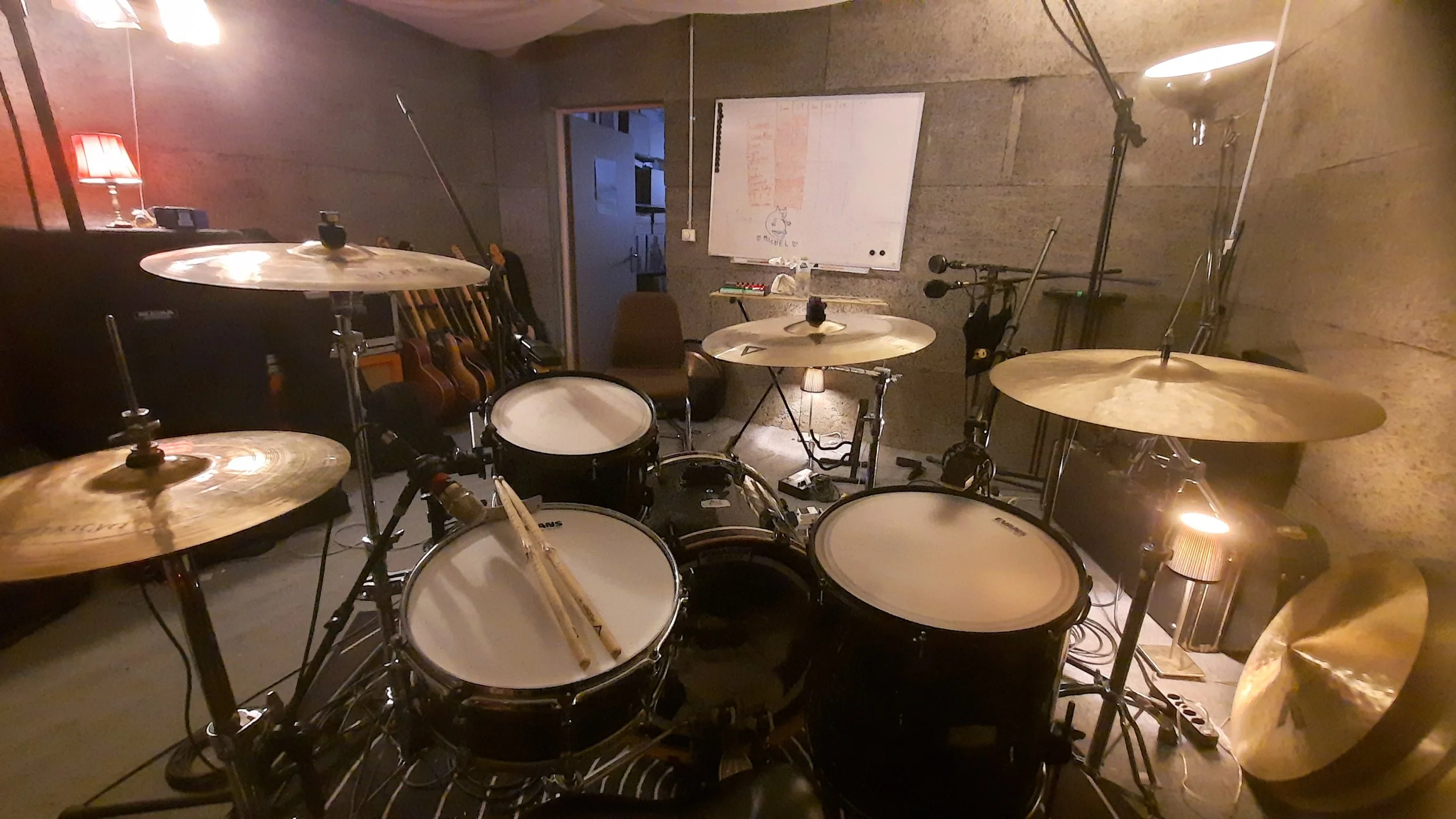
(Recording Satellites)
Silas: It was a brilliant experience with a whole bunch of new friends made along the way. We were eager to record and put our music out more seriously.
One day we saw that Coilguns was looking for a residency space. We offered to let them use our rehearsal room, and they were well up for it because the windows look out onto a field full of deer (true story). So one time we seized the chance to grab a beer with them and asked if they had any recommendations for recording our album. One thing led to another and we met Kevin (bassist in Coilguns), who had tracked loads of stuff for Humus Records.
The studio experience was top-notch. A lot of hard work tracking it all, but an absolute blast experimenting with things—and Kevin is always down to try all kinds of weird stuff, like putting mics in the studio toilet for funny reverb, etc… so much fun. We recorded live as a duo, and afterwards we laid down extra layers of guitar and some percussion to give it even more punch.
You opened for Jane's Addiction at Les Docks in Lausanne – what was that night like for you?
Silas: Awesome. A bit intimidating at first… But then we realized the band members were super nice. We got to chat and hang out with them. It’s amazing to see how a "big band" operates. A genuine well-oiled machine… Their crew took over all the dressing rooms, set up proper office desks… everyone was communicating via walkie-talkies… there were about twenty people swarming around to make sure the show ran smoothly. Extremely impressive.
One standout memory was Dave Navarro filming us from the side of the stage during our set. He looked like he was digging it, and that definitely hyped me up, hahaha.
Tabasco Flash:
How did you approach the album? What was on your mind leading up to the recording?
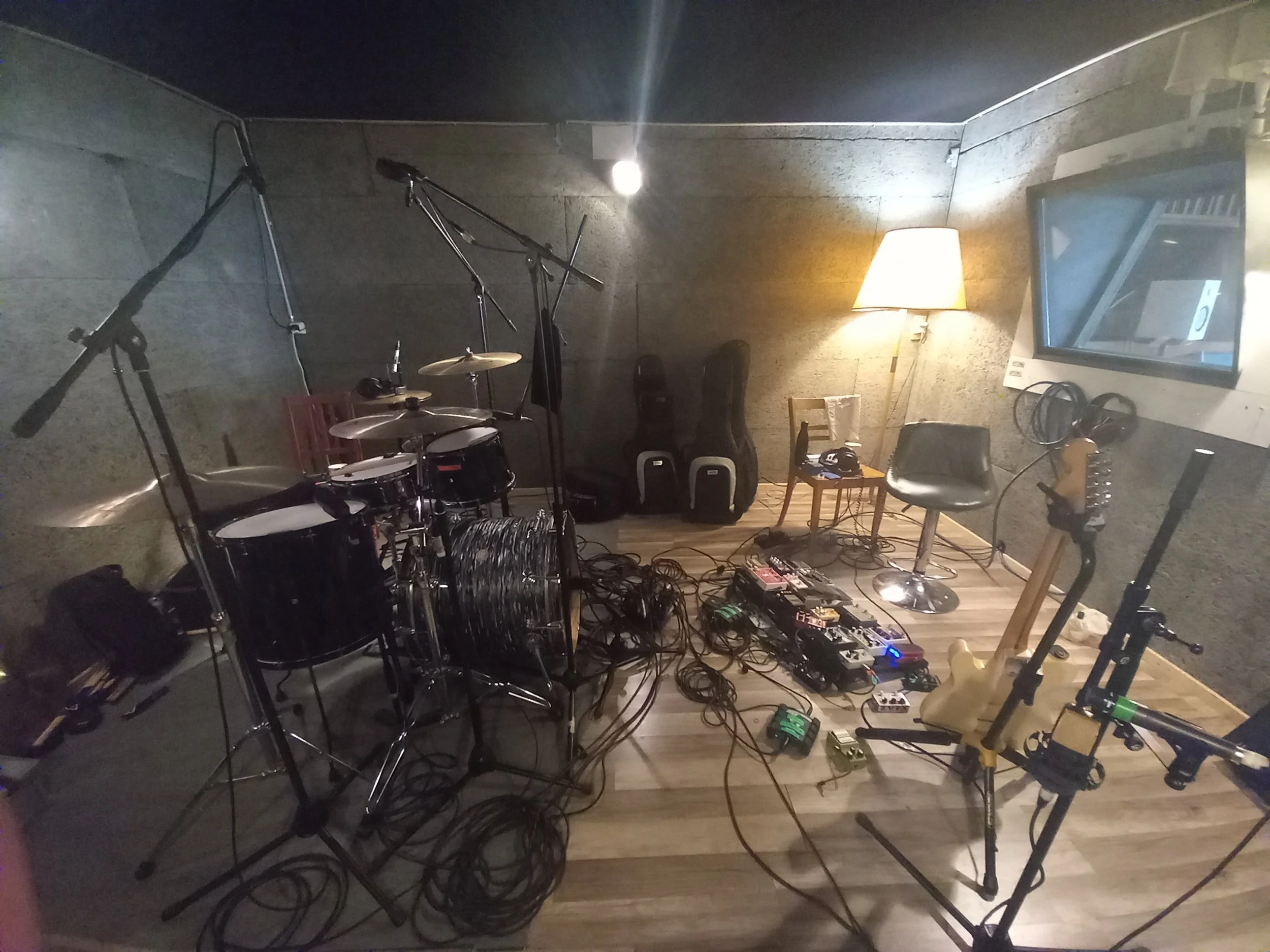
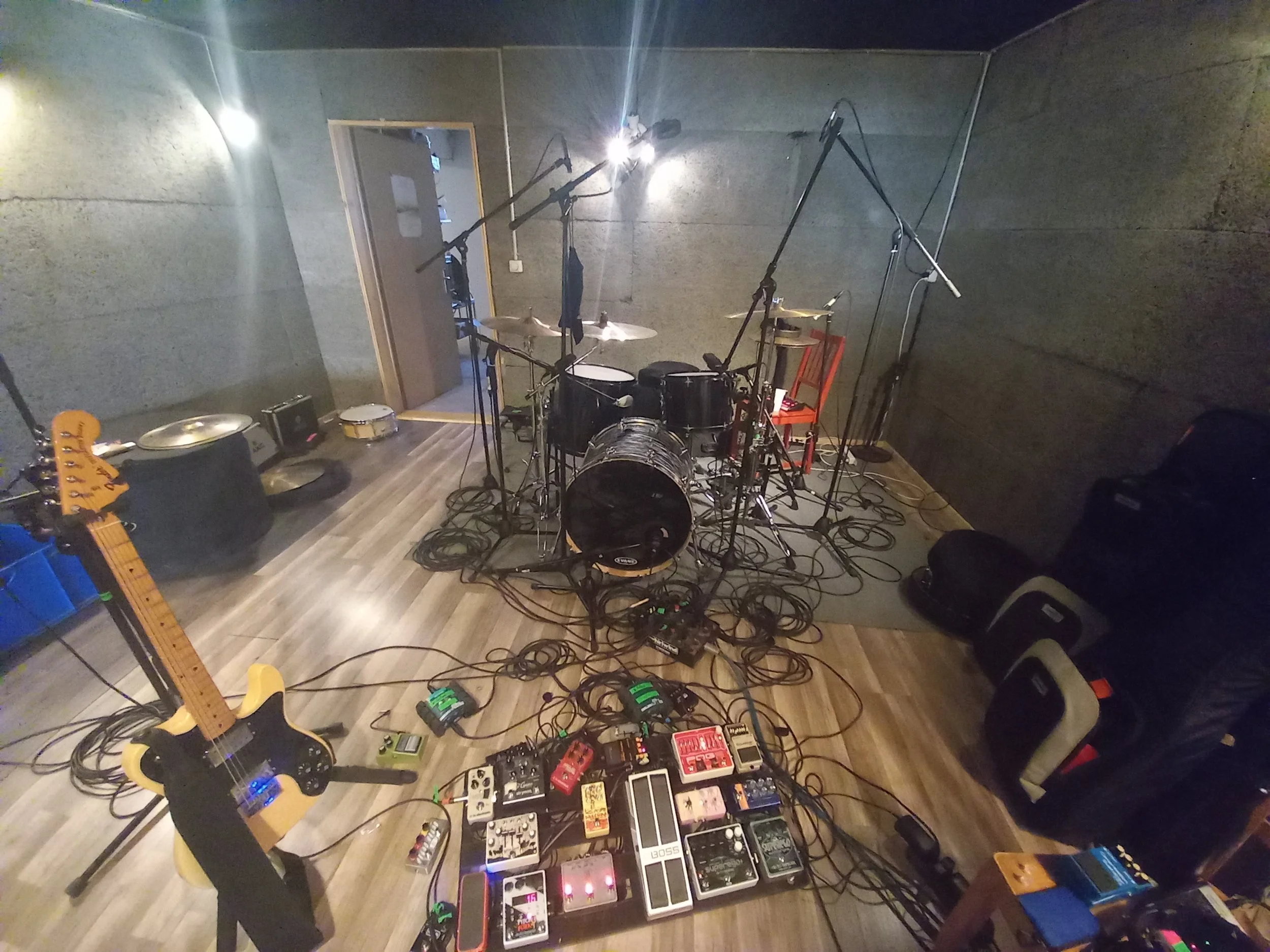
Sébastien: One day we were having a barbecue at Kevin’s place, and we said we wanted to do another record together and that we needed to lock in studio dates right away to make sure it actually happened. That was in July 2024, and we set the recording dates for February 2025. At that point, we had maybe two new songs that weren't even finished, so we did tons of writing sessions in our room to pull off writing the whole thing in such a short window. It was cool because it gave the whole record a great sense of cohesion. We’d tell each other: “Okay, we already have this and that track bringing this kind of vibe; I could see something heading in this other direction to balance things out.”
It was a bit stressful because we didn’t have much time, but it was also super invigorating knowing we were heading into the studio any minute.
Silas: Basically, we were buzzing to have new material and to work with Kevin again.
(Recording Tabasco Flash)
What did you take away from recording Satellites that carried over into making and tracking Tabasco Flash?
Sébastien: We knew for sure that we wanted to track live again, because that had worked so well on Satellites. We also knew we were going to double guitar and bass tracks to make it sound fatter, and also simply because it’s fun to pull out a thousand pedals and amps to layer weird little sounds over certain sections.
How would you describe the evolution since Satellites?
Sébastien: On Tabasco Flash, the song structures are a bit simpler, with slightly longer sections.
For this album, I added “freeze” pedals, which opened up a lot of possibilities and changed the way we wrote. Freezing a note on one amp or another gives the illusion that a third person is playing bass or synth. Because there are multiple layers—rather than just one massive unison blast across three amps—it makes you want to let certain grooves loop and breathe longer.
What was it like working with Kevin again? What does he bring to your sound?
Sébastien: Pure joy! We didn't know each other well before tracking Satellites with him. Now we've become mates, and working with him is also a great excuse to have great food, talk nonsense, and hang out.
Beyond just being a great guy to hang around, he works exceptionally efficiently and we know we can trust his instincts. For instance, if we run five takes of the same song in a row, the moment we walk back into the control room he’ll go: “Take 3 is the one! Because blah blah blah,” and he’ll almost certainly be right. Plus, he'll already have dialed in an insane mix!
He always brings great production ideas to the table that we’d never have thought of. Like using only a room mic on the kit for a specific part, swapping out a cymbal for one track, running just a tiny, ridiculous practice amp with a bit-crusher for five specific guitar notes, keeping the sound of a bottle dropping mid-take, etc… It makes the whole process way more fun!
Is there a storyline or concept tying the songs together on the album?
Sébastien: The entire album revolves around food—and occasionally drinks.
Where did the title come from?
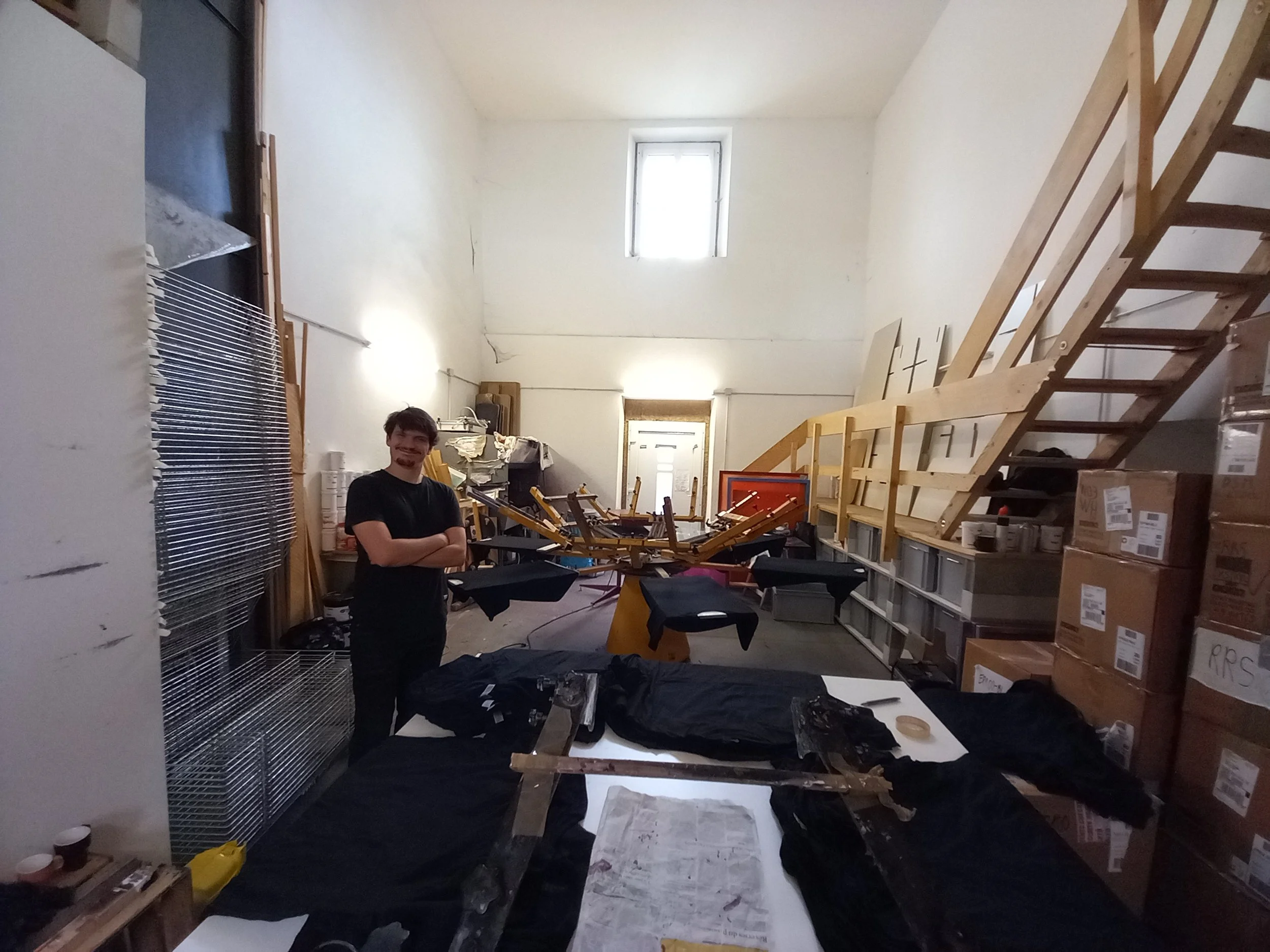
Sébastien: When we were screen-printing t-shirts with our buddy Sylvain, there was a machine with “tabasco flash” written on it. We thought it was hilarious and that it’d make a great track title, or even an album title. In the end, it basically dictated the whole theme of the record.
Do you have any personal favorite moments on Tabasco Flash?
Sébastien: On every track there are little highlights for me. Often there are one or two moments per song that we really wanted to bring forward. If we did our job right, you’ll be able to guess what our highlights are on your own.
What do you think of the finished product?
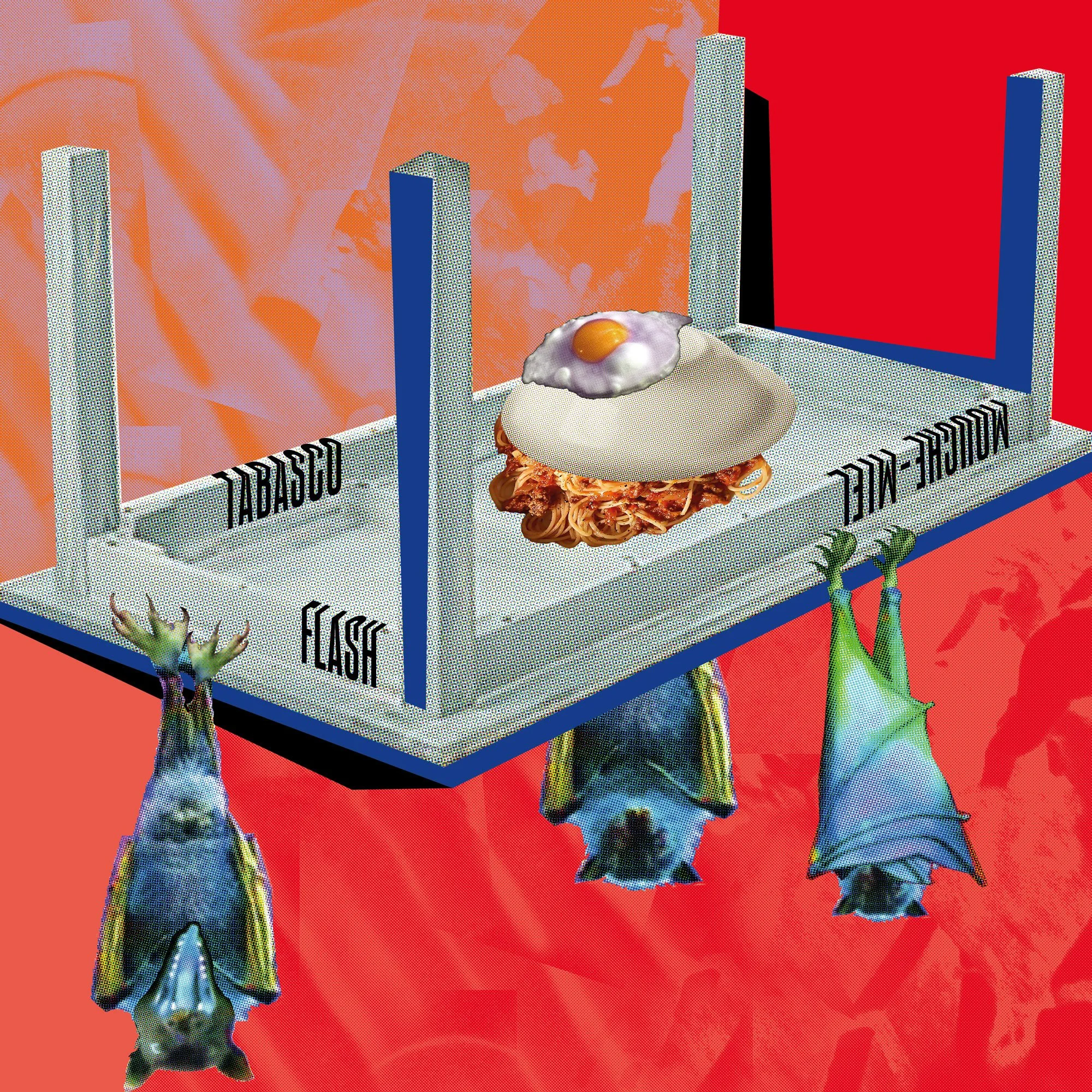
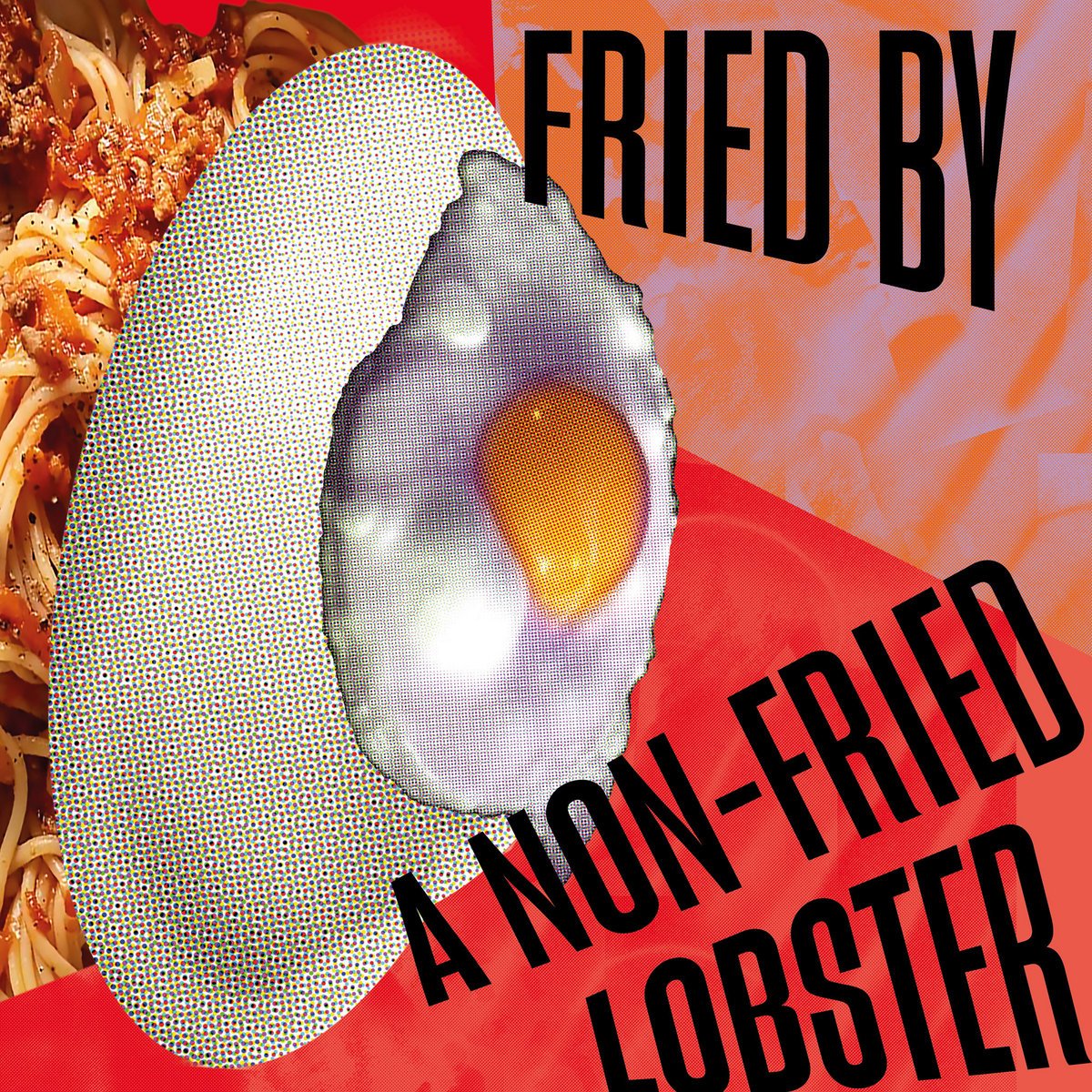
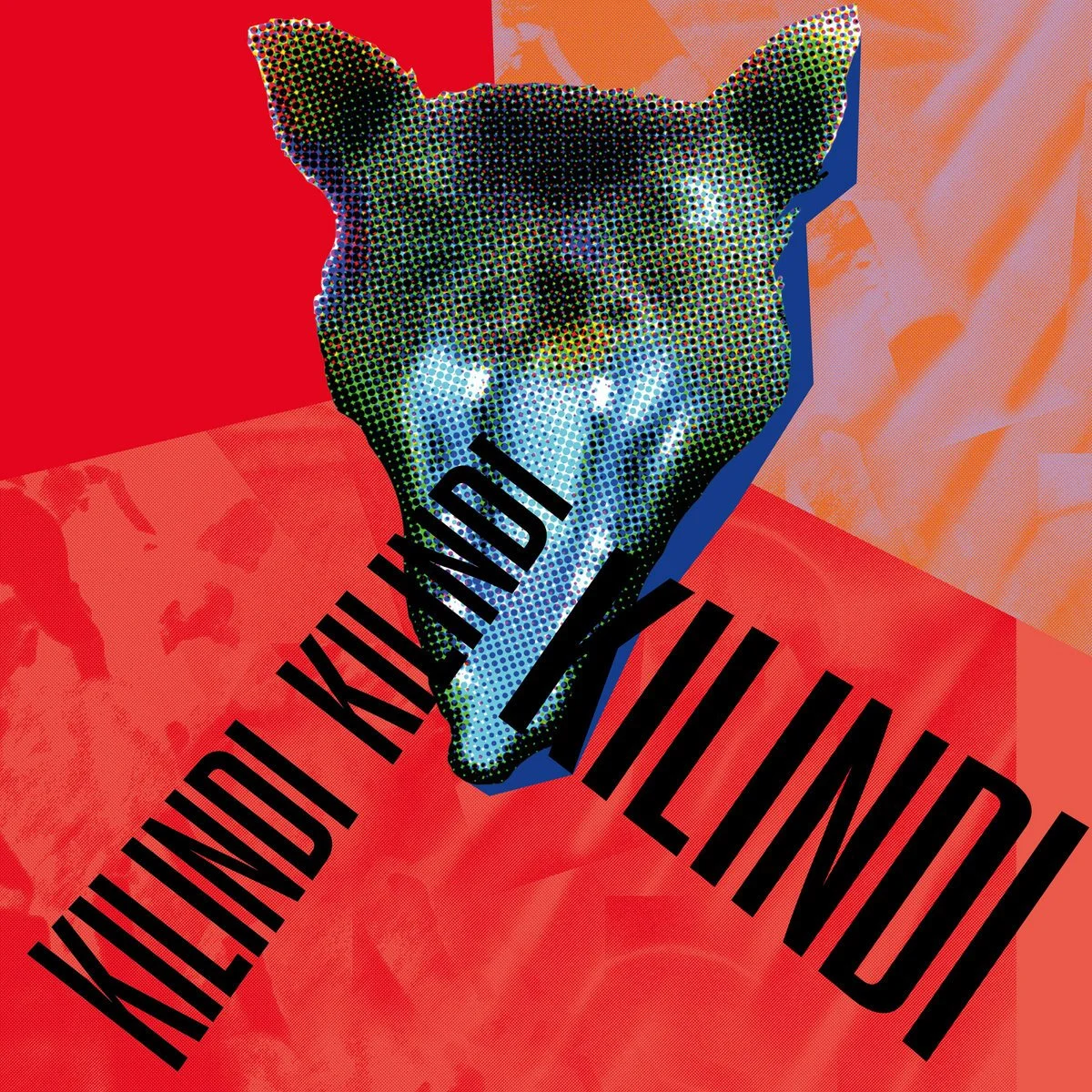
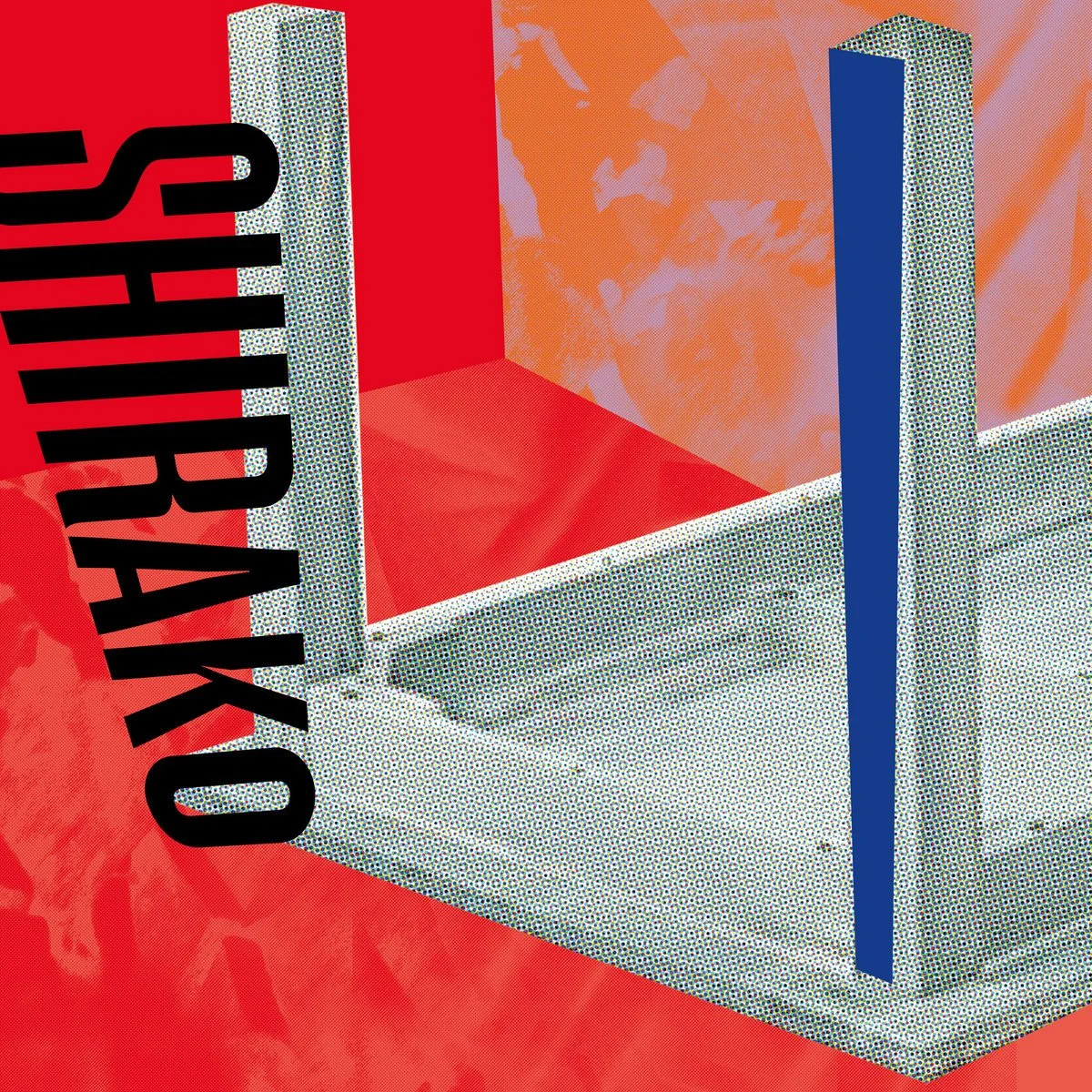
Sébastien: Since there was a year and a half between recording the album and its release, we had enough time to forget what we’d actually made, so right now we’re rediscovering it a bit and every track brings a huge smile to our faces! As of right now, we haven’t seen the final-final product yet, because we’re still waiting on the vinyl shipment, but we cannot wait to hold them in our hands! We had a blast brainstorming with Malaïka Schürch on the artwork and we're super happy with how it turned out.
The album is coming out on Table Basse Records. How did you make that choice? What’s it like collaborating with the label?
Sébastien: Humus Records didn’t have the time anymore to juggle that many artists at once, so we looked for another label. During our search, we stumbled across a Reverb Dream article that happened to be about Table Basse Records, and they seemed like really lovely people, so we got in touch! It’s great working with them; Maxime and Coline are super driven, very responsive, and support us every step of the way while giving us complete freedom to do whatever we want. It’s a dream scenario for us.
On top of that, we were able to do it as a co-release with the Marseille label Coeur sur toi, which broadens our reach even further.

Live / Future / General:
What do you have lined up for the album release?
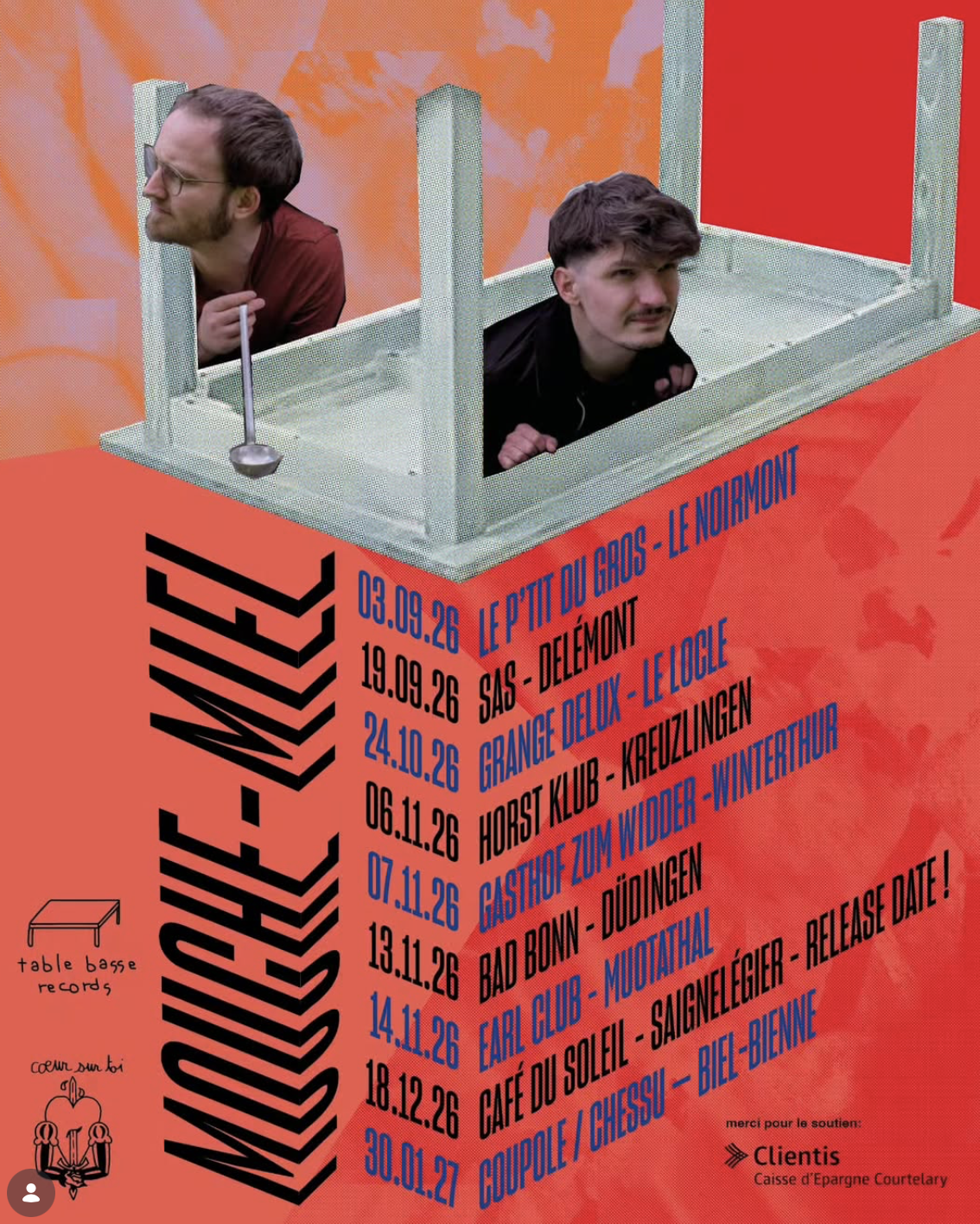
Sébastien: The album on vinyl and cassette, and we'll be playing gigs to promote the music—and mainly just because playing live is fun. We’ll also do some press and media appearances, and we dropped a music video for our track Kilindi Kilindi Kilindi, which is already up on YouTube. And we’ll see what doors that opens; usually one thing leads to another, so we're happy to let the future surprise us.
When I saw you play at Bad Bonn, you had incredible stage chemistry – what goes through your heads during gigs? How does it feel sharing the stage together?
Sébastien: Right before walking on stage, we always remind each other that the most crucial thing is listening to each other and playing together, not each off in our own world. Depending on stage conditions that’s easier said than done, but usually it works out pretty well, and it's a great sign that you felt that vibe! Either way, it’s always an absolute joy to be up there together and see people connecting with what we do.
What is your songwriting approach? Do you write riffs on guitar without drums? Do you use alternate tunings? How do you pick guitar tunings?
Sébastien: We write together all the time. I set up a Zoom mic in the middle of the room, we jam, and we hit record whenever we stumble on a cool idea. Then we sort through what we recorded; we often copy and paste song snippets together to map out an overall structure, and then we fine-tune it. Sometimes I polish riffs on my own at home, but more often it’s Silas watching me test out variations of the same riff for 30 minutes going, “That’s cool! That one, not so much… Oh, remember when you played that one note?” etc… And it’s the exact same for drum grooves. Maybe once every 15 songs someone brings in an idea they came up with entirely on their own.
Yeah, for this record I used a different tuning. After writing around thirty songs as a duo in standard tuning, it felt refreshing to switch to something completely different. One of my favorite bands (Stuck) uses this tuning (tuned down a whole step), so I wanted to give it a shot. I loved writing in that tuning because it stripped away all my familiar reference points, which meant I let myself get surprised and wrote purely by ear. Over time I've gotten a better grip on how that tuning works, so I might have to switch it up all over again for the next record.
How do you choose song titles?
Sébastien: For this one, they had to stick to the food and drink theme. Often we cook up little storylines when writing, which helps us shape the song's arc and come up with names. But sometimes it’s just some dumb working title I slap on in a hurry when saving the jam to my computer. Food was a bit trickier for crafting narratives compared to the animals on Satellites. Eventually, we hosted an evening with friends to help us rename tracks that were still stuck with ridiculous working titles like Crème fraîche 1.
Do you feel St-Imier had a major impact on Mouche-Miel? Has living in two different cities affected your approach to making music?
Sébastien: Definitely, because that’s where we met, and that’s where we met so many of the people we still work with today. Now that we don't live in the same place anymore, we just have to plan things out a bit more whenever we want to make music.
After all these years of making music together, do you still find time to hang out outside of Mouche-Miel?
Sébastien: Yeah, we still have the exact same circle of friends.
What have been your highlights since the start?
Sébastien: The various recording sessions we’ve done, the live shows, and all the people we’ve crossed paths with through our music.
What are your hopes for the future?
Sébastien: Keep going with what we started.
Anything you’d like to add?
Sébastien: Sorry for not answering the first two interview attempts!
Links:
Related articles: