
Interview with John Silvestre (Eckhart, typhon), pt. 1
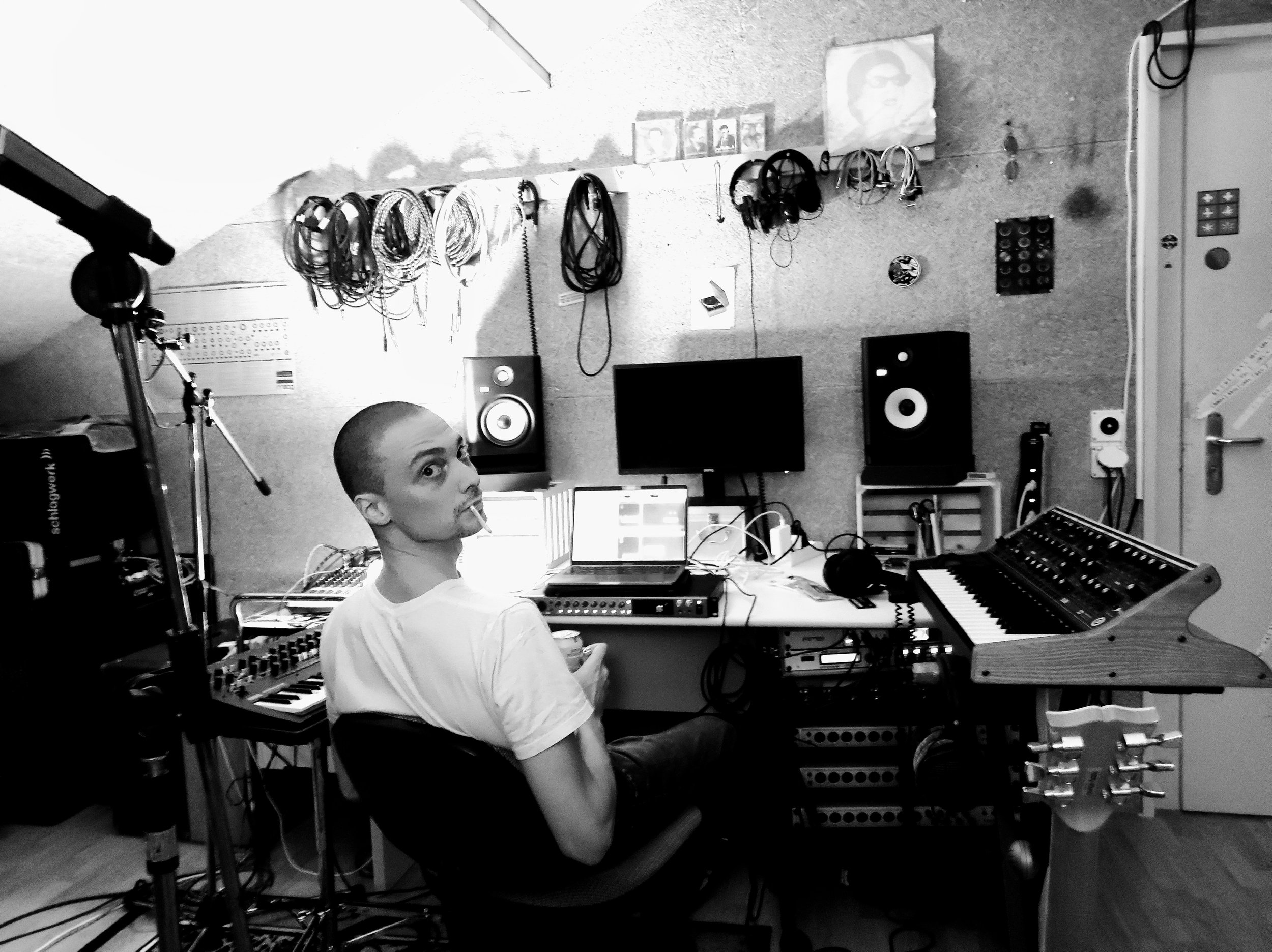
In Autumn last year, I had the possibility to the upcoming album from Eckhart, He's Dancing, He Says He Will Never Die, which will be released on 9th May. It’s a wonderful evolution from Far From God, I have been digging the album a lot and found myself returning to it quite often. Eckhart was originally the solo project of John Silvestre featuring Laurent Glur (Fomies) and Olivia Madhuri for live performances. He's Dancing, He Says He Will Never Die sees the trio working in the studio for the first time together. The band are able to create an even more interesting sound by mixing electronic and acoustic drums across the ten songs.
I had already been following the project created by John Silvestre. In 2025, he won the m4m Demotape Clinic Rock category with the song, Blasted Mirrors, the closing track of the upcoming album. The song, Post-Cum Depression I (Embrace Me Like A Broken Toy), was also mentioned in the article, One of Each: Samuel Riedo as his choice of single.

Whilst researching the interview about Eckhart, I found the background story to John to be very interesting. Born in Paris into an artistic family, passionate by music at a young age, going on to study music, moving to Belgium before settling in Vevey in 2020.
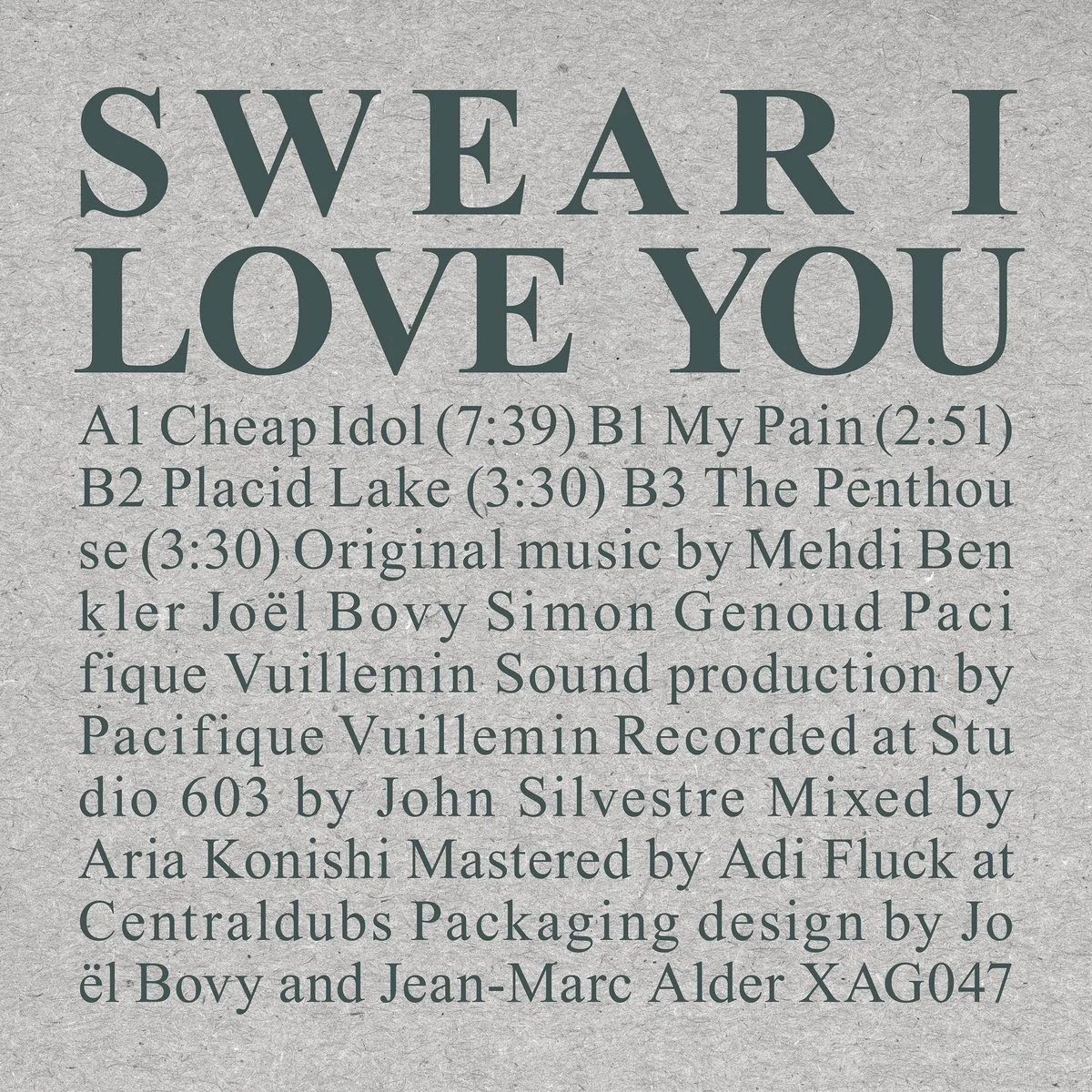
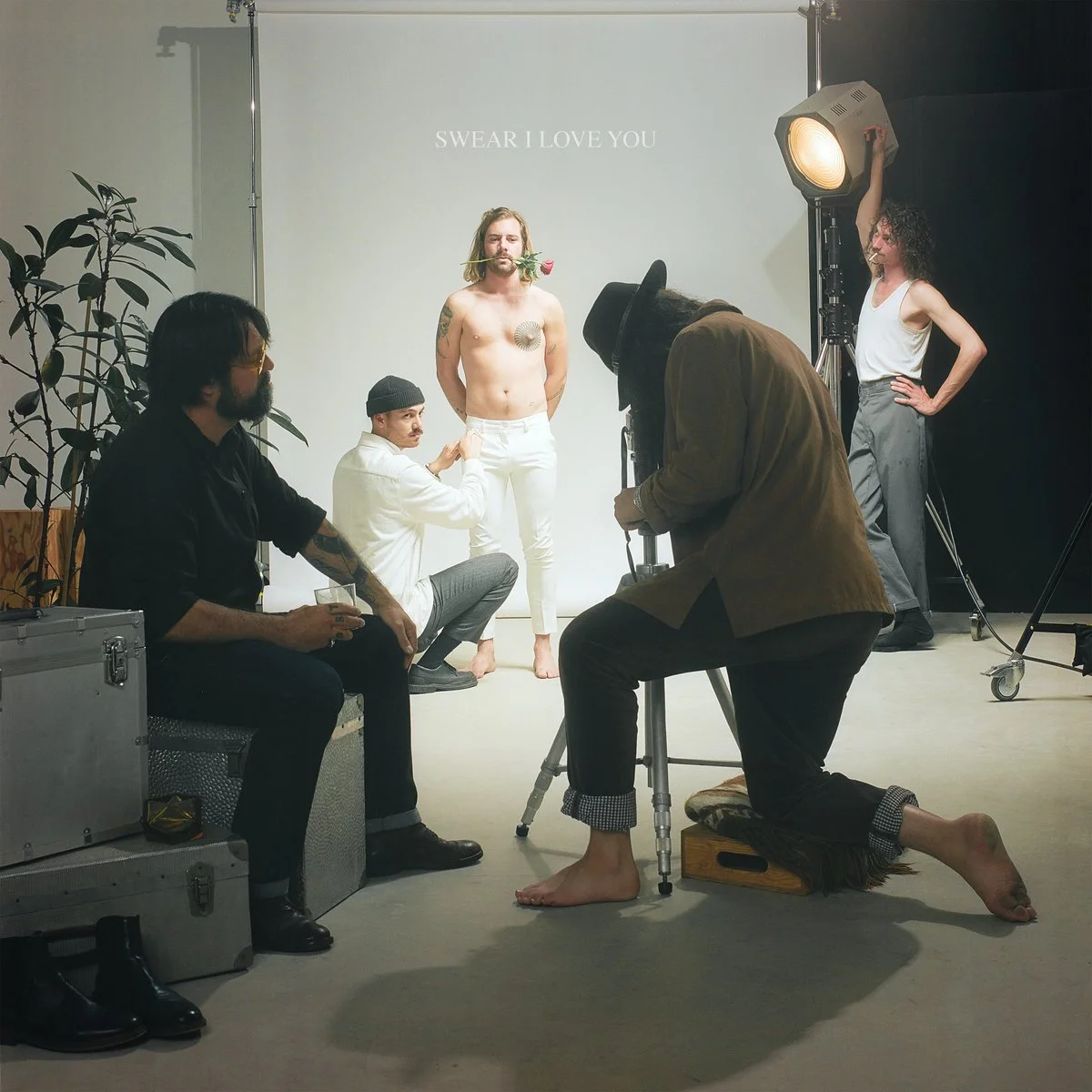
John registered an EP that I have been listening to a lot, Cheap Idol by Swear I love you as well an album that I can also highly recommend, Croisière by Service Fun (also check out their Club Soda Live Session on a tennis court). In Vevey, he set up the cultural association, ÖHRO, and he expanded his long-term solo project, Typhon, into a band and released the superb, L’OR (see the Track by track of it here). Unfortunately, I discovered the band bit too late before the interview to include questions about them.
With such a journey, I found it hard to do a written interview, so one Thursday evening, we had (after some technical difficulties) a two hour conversation by video call. In this first part of the interview, we talk about John’s background and journey.
I would like to thank him for his replies and assistance with the articles.
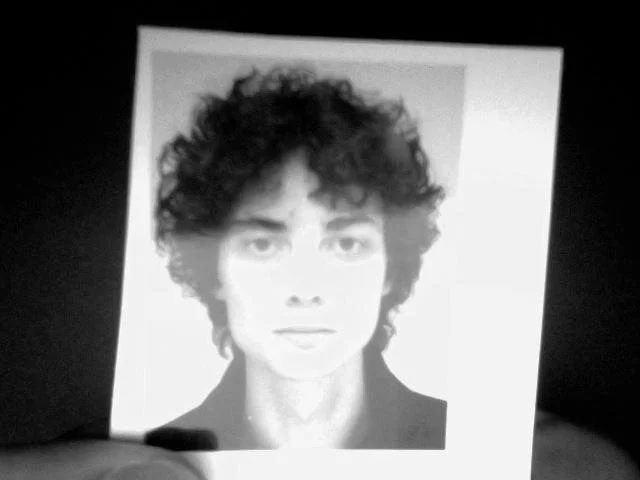
Tell us about your background:
I come from a middle class artistic family. My mother’s parents were farmers from the north of France. She kind of escaped to learn art and eventually went to art school in Paris. My father was from a wealthier family (doctors, psychoanalysts), but he really struggled with the bourgeois mentality. He wanted to work in the film industry making movies.
My parents were the black sheep in their respective families, but at opposite ends of the economic spectrum.
I grew up listening mostly to rock and post-punk. My mother was more into P.J. Harvey, Cat Power and Portishead and my dad had a big collection of records including Joy Division, avant-garde, electronic music, jazz, post-rock like Constellation records and Godspeed You! Black Emperor. They were both in love with art, cinema, paintings, music. I grew up in an underprivileged family, but with a lot of culture and in an interesting household.
Would the record player be constantly on at home? Would there always be music on?
Yeah, my dad was writing a lot of screenplays. He wanted to break through in French cinema and my mother was painting a lot. So there were always activities with music in the background.
It seems that your parents were also quite passionate because some of the bands you mentioned like Godspeed You! Black Emperor was more 2000 as well. Their taste in music also evolved.
Yeah, they were always curious. Godspeed was a huge revelation for me. The first time I listened to their album, F♯ A♯ ∞, which they released in 1997, I was maybe six or seven years old. It was at the time we were living in the suburbs of Paris. I was too young to be really interested in music but I remember that when I was more of a teenager, I spent countless nights falling asleep to their records. I think it was the first band when I was 13 or 14 years old that made me think: this is what I want to do. To make so much beauty with music. It was really an existential experience.
You also grew up with instruments as well. You would play guitar and drums. What came first?
I started with drums. It was my mother who felt I needed to. I wasn't really good at sports, but she felt like I needed to do something with my body and let out all this energy. She enrolled me in drum lessons when I was 12 or 13. Later on, I found my dad's guitar in the attic and I started playing it.
My dad was really supportive of my discovery of music. On my 15th birthday he gave me a loop station and I started composing with it when I was 15-16. When I was 17, he gave me a sound card so I could start recording with GarageBand.
My parents were always behind me when it came to creativity. I was lucky. I think they felt very early that I was creative. I told them after I had my baccalaureate (high school diploma in France) that I wanted to go to art school (Les Beaux Arts) but I knew straight away that I wanted to make music. Due to my parents’ background and experience, they told me that it was going to be very tough but the most important thing is that I do what I want with my life and that I enjoy life. I was warned but in a pragmatic way. They didn't lie to me and they were supportive.
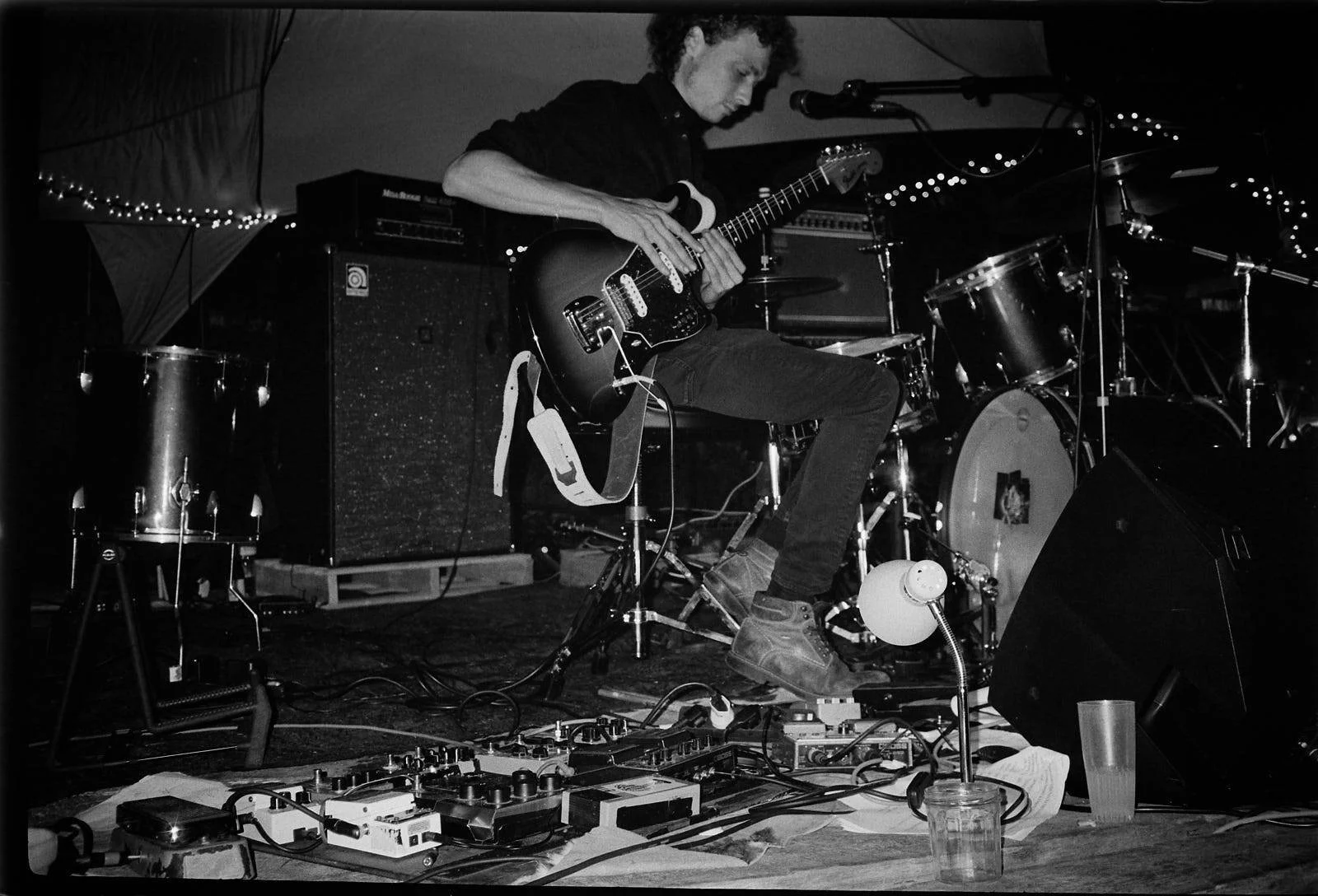
Typhon (solo show), photo copyright: Mehdi Benkler
Did you go on to study music instead of going to art school?
I did one year of painting and drawing at art school first, then I went to a music school in Nancy for one year. It was a private school with professional courses. The lessons were 10 hours a day, 5 days a week.
Was it similar to a conservatoire?
Kind of, but it's five years of conservatoire condensed in one year. It was really intense but amazing. Even after classes, you go back to the shitty condos you share with other students and spend the night drinking beers and listening to all the albums that were released that week. You talk about music, you live music, you exchange music. It was like that for a year, and it was really inspiring. You spend your days with other musicians from different styles. It can be really challenging technically. I never liked this kind of demonstrative music like Van Halen or Stevie Vai, but it was at least challenging and inspiring to spend your time with musicians like that, who can do things that you can't do. It was really fulfilling.
Were you doing a specific instrument, or was it more theory?
It was for the guitar, but we also had theory.
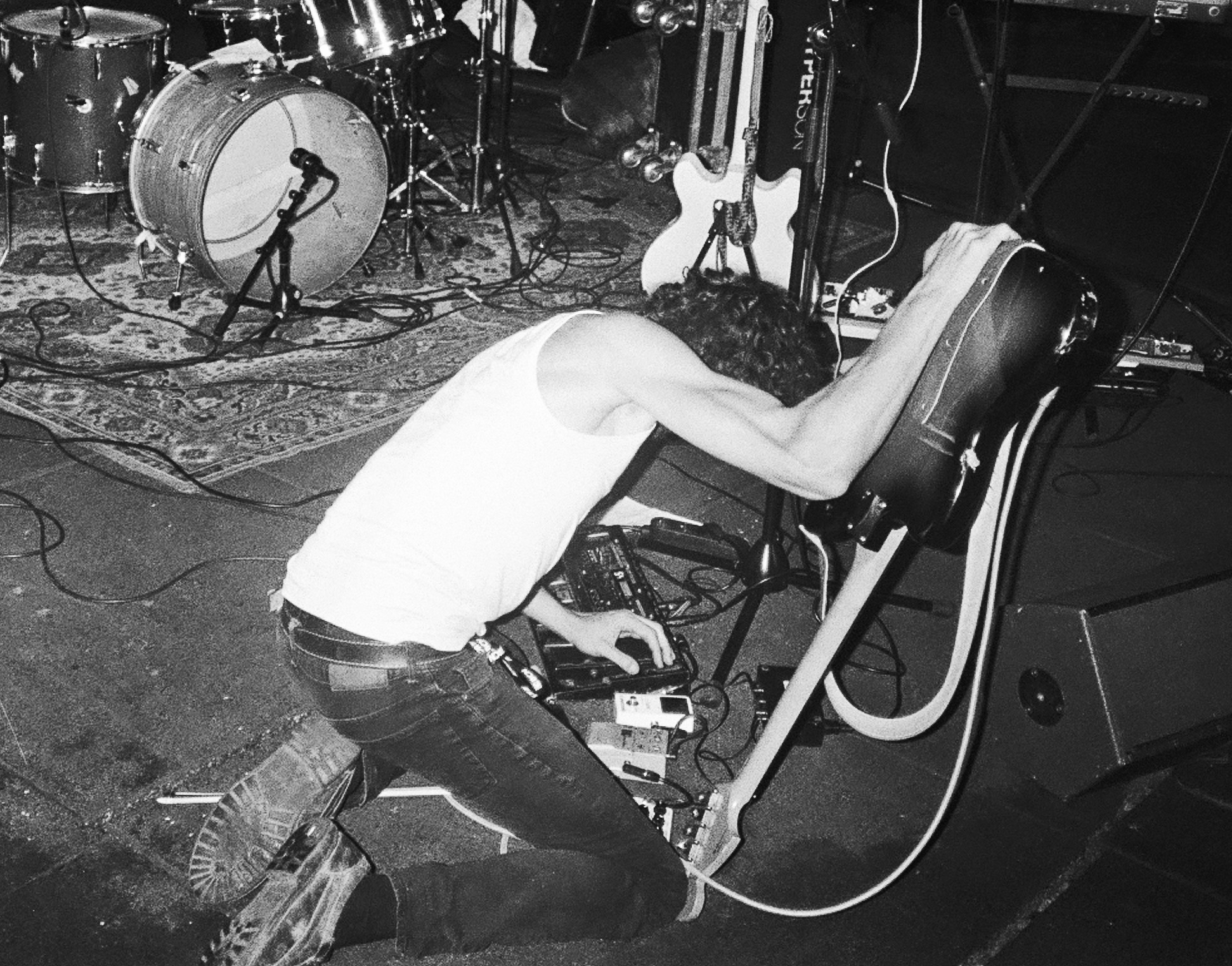
Photo copyright: Mehdi Benkler
What sort of things that you kept in mind from this year? Some hints or tips that you kept, or advice that you kept which you think is still pertinent to today.
Lots of things, but there was one teacher, Richard-Paul Morellini, who was also one of the three founders of the school. He was a drum teacher and he also had a workshop. During the year, you had to choose two mandatory workshops out of four. There was metal, jazz, fusion music and rock and you had to learn one track per week per workshop for the whole year. So we had to learn at least two tracks a week. There was also a bonus workshop with this guy who taught us piano bar music. There were a lot of really different things from all styles but it was really challenging. You couldn't miss one track. For other workshops, if you missed the lesson, you could come back the next week and you would just get a bad mark in music for what it's worth. However, with this guy, if you fucked up, you never came back. He was really military. He was a really rough guy.
But when the guy tells you “that was good”, you know you really did good. You engaged yourself. That was really heartwarming.
I will always remember that from him. You have to engage yourself.
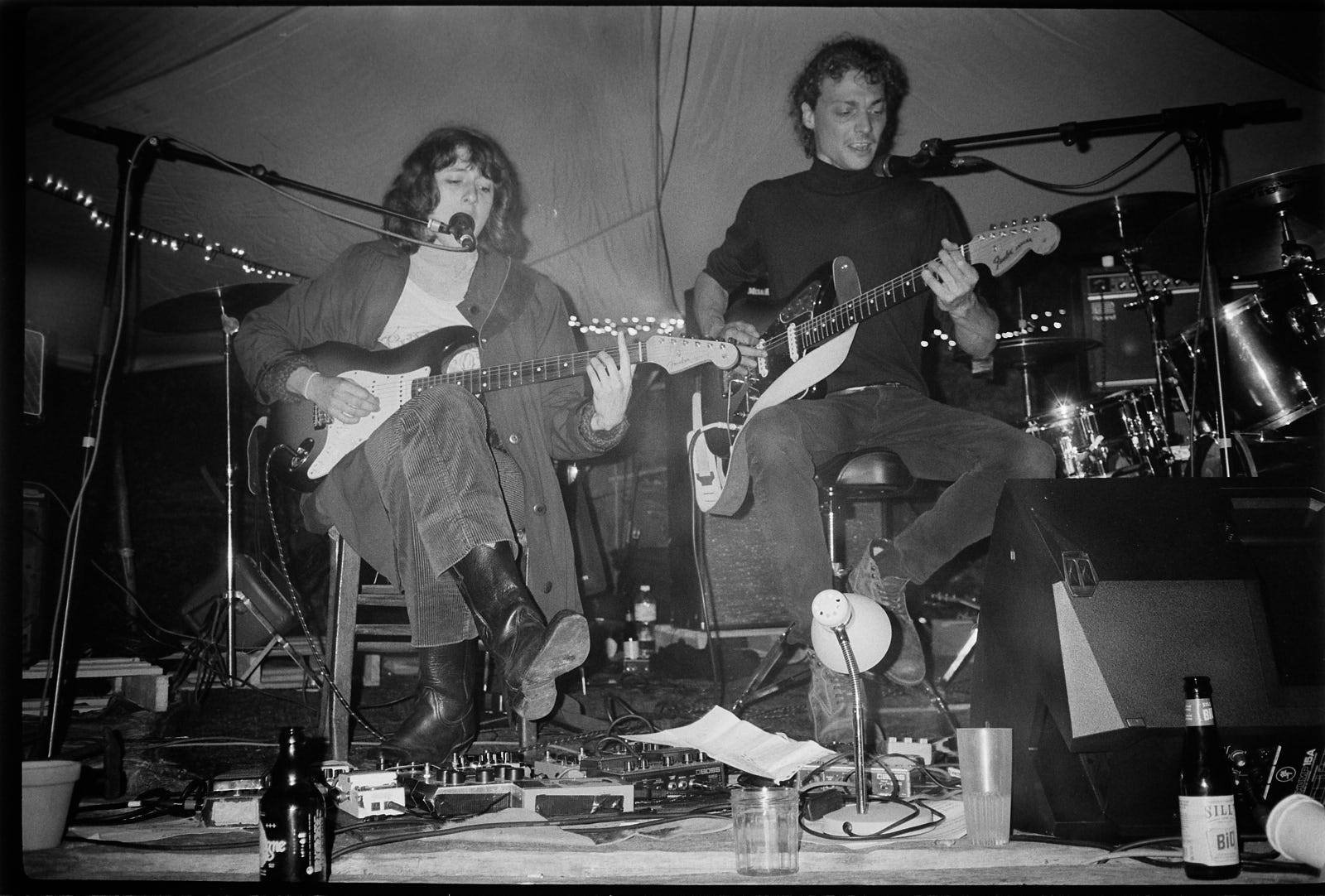
Left: Alice Perez, photo copyright: Mehdi Benkler
What did you do after the year?
After that, I went to Montreal for four months because I wanted to try and meet people from Constellation Records.
A friend of mine, Paul Alkhalaf, who I have known for 20 years now, had already been in Montreal for a year when I met him there. He is a musician/producer in Paris and he has recorded a lot of my work and still helps me with mixing. We had our first band together called Magnolia.
I wanted to play at the Casa del Populo and all these bars in Montreal where there are some musicians from Constellation Records: Godspeed You! Black Emperor, Silver Mt. Zion, Carla Bozulich, these people. I did a couple of gigs during these months.
Afterwards I went to Brussels and stayed there for six or seven years. I went back to art school and made some connections in the music scene.
You also did two years of sound engineering as well in Brussels?
I learned by myself while composing and recording my stuff. Then trying to do it for others and recording albums for friends.
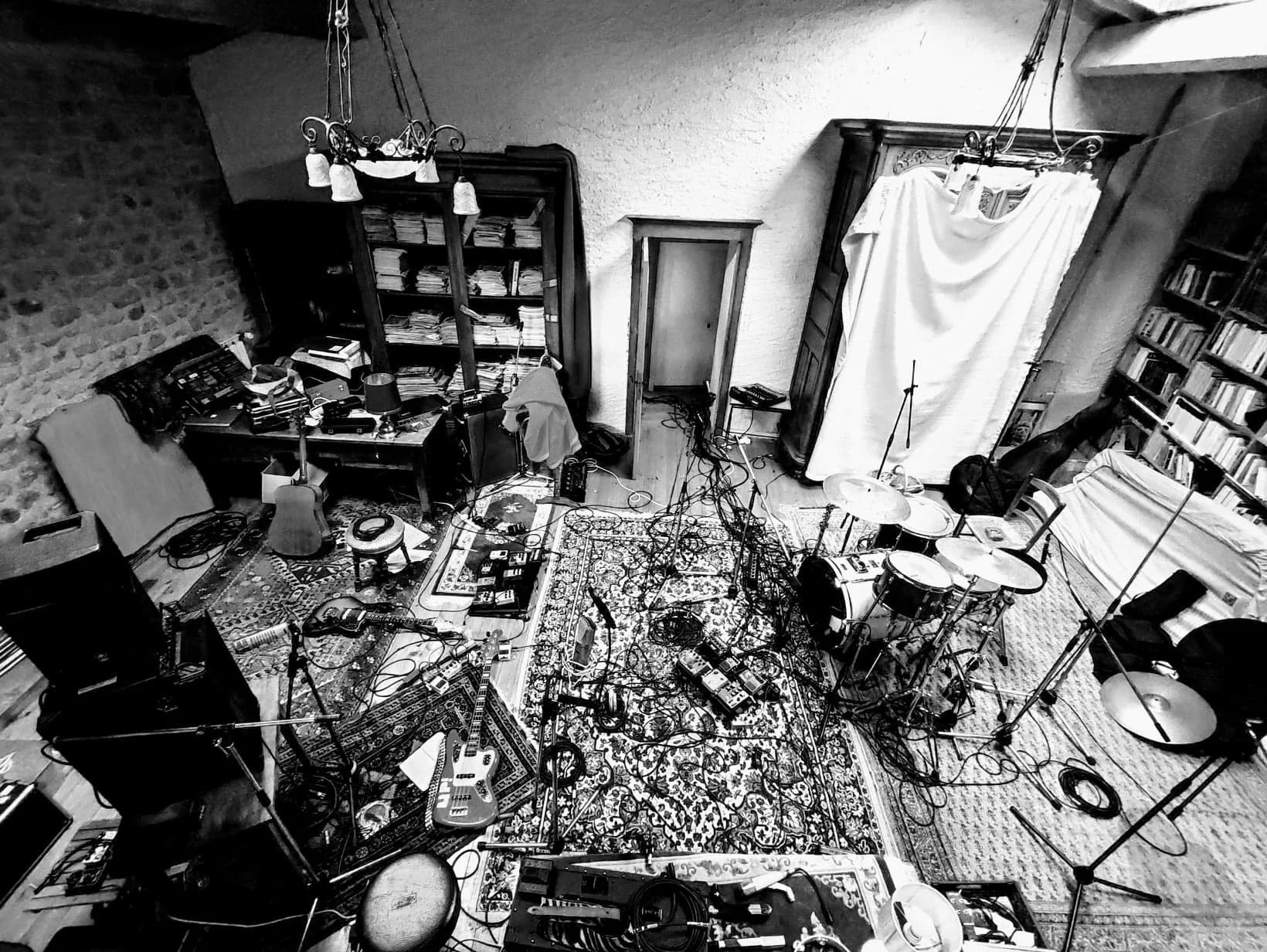
Recording session of L’OR by Typhon
Did you teach yourself about sound engineering?
Mostly, yes but I also had some quick training courses. What was funny about these is that each trainer I had said that the previous one was just talking bullshit.
So you also learn that there is no perfect formula. It’s like a game of chess, you have the opening and the next two or three moves, but afterwards it’s a lot of improvising. It depends on how you manage each instrument, how people play, what the space is like and what aesthetic you’re looking for. There are no rules to follow and that's what makes it always different and inspiring. There’s always something to learn.
Recently I was listening to the last JPEGMAFIA album. He is a hip-hop producer in the States, he made an album with Danny Brown and is currently on AWAL Records. Sometimes there is so much distortion and compression, it's so extreme. And some people would tell you it sounds like crap, or it is too saturated or too compressed. Who gives a fuck? This is where freedom is.
Just like with Death Grips, who are a huge influence for me and for Eckhart. The first time I really connected with their music, it was like freedom. You hear the sound and you feel like you shouldn't be allowed to do this kind of stuff. And that’s what's exciting about it.
All the post-punk era: Joy Division, Velvet Underground, John Cale. you can smell the basement in the sound. It's really interesting. Tago Mago by Can was also a huge experience for me. For example you have Michael Karoli who is playing an amazing guitar solo but it is so far back and behind everything else in the mix. It's so weird to have made this choice but it makes it so singular because you have to listen carefully to hear him. It's unorthodox and not an obvious aesthetic choice but this is where doors open.
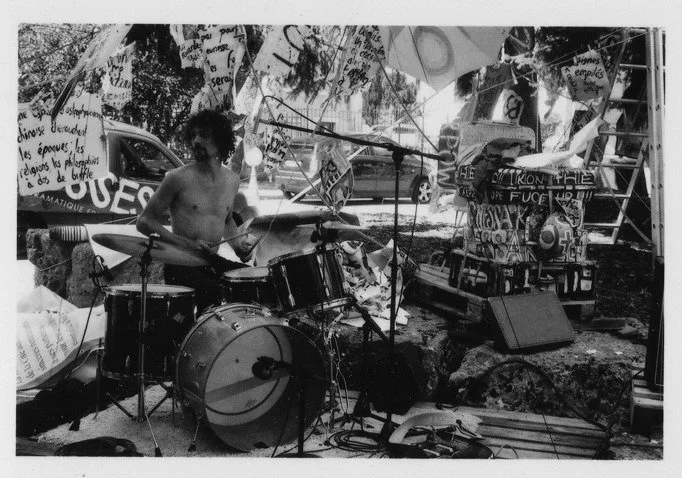
Playing with Kaleidoscope of Nothingness, Plage des 6 Pompes, 2019
You said you started with GarageBand and I saw that you also teach Logic Pro. Did you use any other DAWs?
I used Ableton for a while but I've always felt more confident with Logic Pro. Also because I used to make a lot of film scores. Logic Pro is really fit for film scores.
Did you have lessons in arranging instruments for music?
I had a few lessons for arrangements and production. The most important, what they call in arrangements, is the voicing - the melody, the highest notes. If you have to produce a song with only chords, the melody is always the highest note of the chords and that is called the voicing (in classical arrangements, but that doesn’t restrain you to make melodies in the middle range for example). To me a melody is really engaging. The more notes you put in, the more specific you become in the mode you exploit and what you want to tell. So you have to assume more.
If you make a melody with one or two notes then everything is subject to interpretation. You can make a melody with the tonic and the second or the fourth but you don't know straight away if it is a major or minor progression.
With Eckhart it was really different. Sometimes it was more the rhythm which sometimes gave me the inspiration as it was the main element of certain songs.
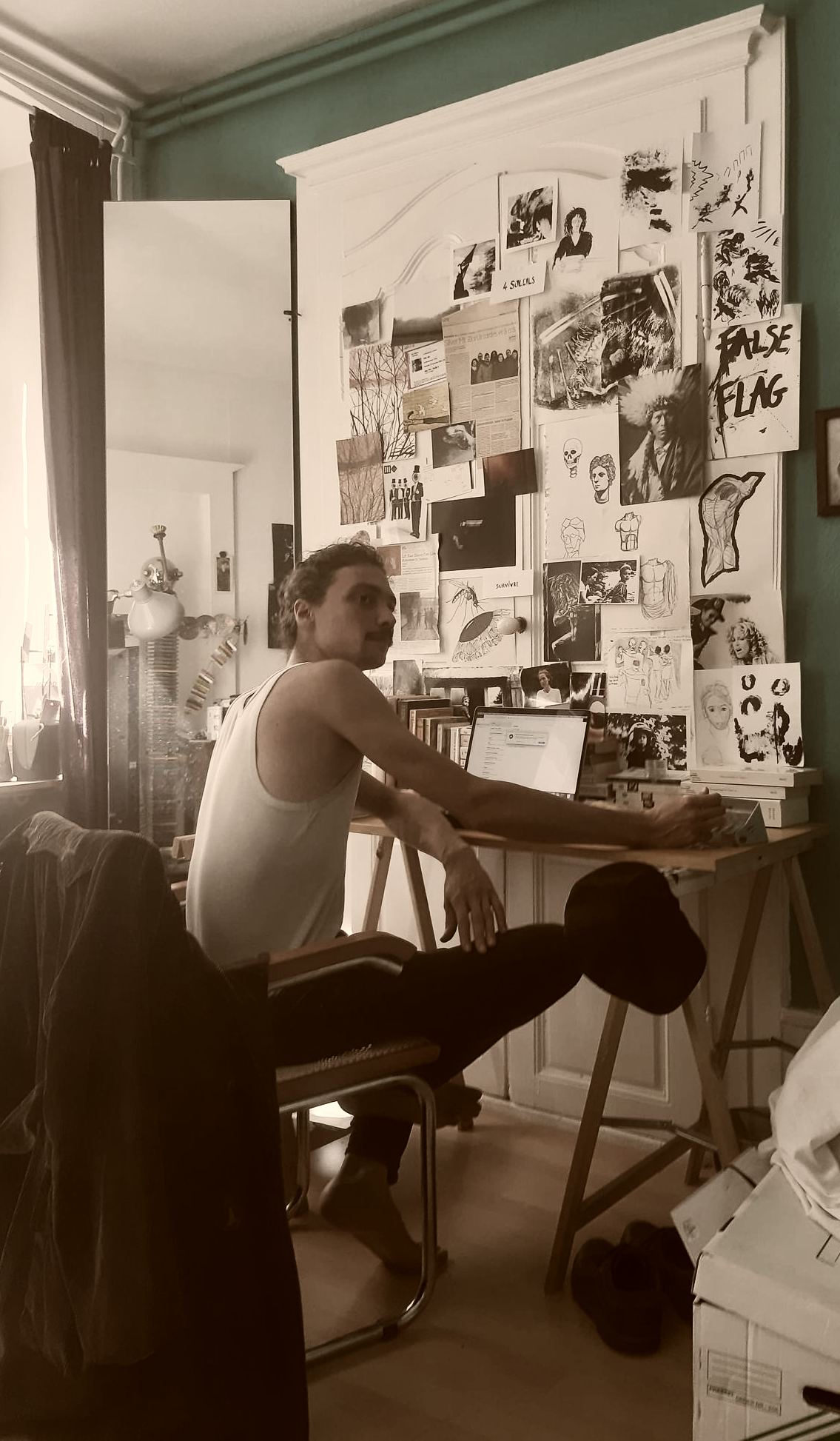
Tell us about your movie soundtrack work. How did you create the music?
I often read the script to get an idea of the movie’s topic. Sometimes I was also working on the set as a sound operator.
Most of these movies were made with my dad. While he was working on the montage, he would show me where he was at with the cut and give me some ideas on how he wanted the track to sound or which bands he had in mind.
I would put forward a theme and the music would give him ideas to modify the cut. Afterwards he would send me the modified cut and so on. It was dialectic and really fun.
How long did you work with your dad for?
Ten years.
(Music video directed by Emmanuel Silvestre, John’s father)
And you also learned a lot from him? He also had a musical background?
It's really another approach to compose for a movie. If you follow too much, it can be boring but if you don't follow enough, it can be weird. So you have different schools. Like David Lynch with Angelo Badalamenti. He was really following all the way. David Lynch wants to make you cry with the picture. Badalamenti is going to make you cry even more.
My favourite film composer is Howard Shore. He did most of David Cronenberg’s scores. He made the film score for Naked Lunch, the book from William Burroughs. Howard Shore composed the music with Ornette Coleman and the Philharmonic Orchestra of London. It's really weird. It follows the picture, but it also gives another perspective. It's really interesting.
Another example is Cosmopolis, starring Robert Pattinson and Howard Shore made the music. There are pieces of music like Georgie Ligeti, weird contemporary classical music and suddenly in the soundtrack you have hip-hop tracks with a rapper. It's really modern.
Of course Morricone’s work with Sergio Leone is also amazing. A master. It's almost experimental. He created a mood, a signature.
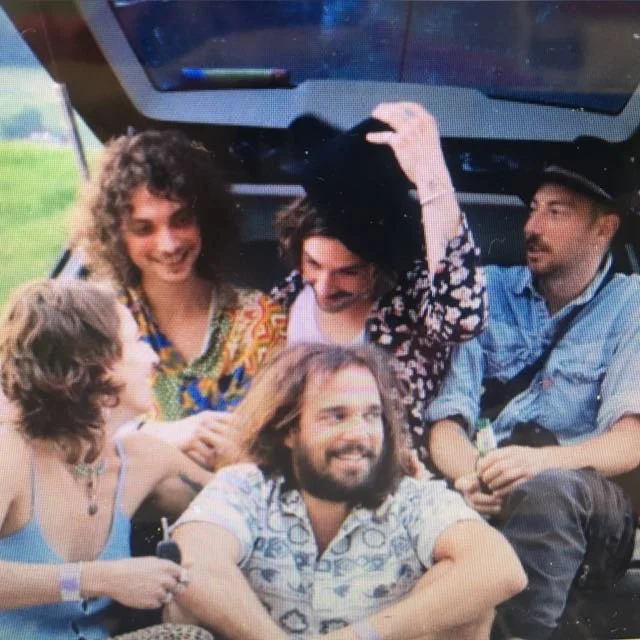
Typhon (from l-r): Cleopatra Malpeli, John Silvestre, Luca Manco, Simon Genoud, Gabriel Goumaz
You said you moved to Vevey after Belgium
I had a group of friends in Belgium, we made music together and organized events in a big beautiful house we called Le Chateau. One of my friends from this group grew up in Switzerland and had a lot of connections with musicians from Vevey, among them were members from Forks and the Nox Orae Festival. They used to come to Belgium in Spring to visit us or help us with our events and we used to do the same in the other way.
Anyway, I was living in a squat in Belgium for the last year there, and my plan was to come to Switzerland after we were kicked out. I wanted to come to Vevey, work for a few months, make a bit of money and go back. Maybe then build a studio, do some artistic projects and produce music.
I moved to Vevey with my girlfriend at the time, who was also a musician. We were heavily involved with her project for a year and a half, we were touring a lot. Then we broke up shortly before Covid. I was in Vevey with no band, no girl, no job but I didn’t want to go back to France and be stuck in Macronland indefinitely. The other option was to stay in Vevey. Within a couple of months I was recording Swear I love you and I had started playing with the band. Typhon, my solo project, evolved into a band and I also found a job as a music teacher. I now had many reasons to stay.
You already knew a bit about Vevey before moving from Belgium?
I knew Vevey had an interesting artistic scene. It's a small town but there is a lot going on: Blue Lagon Records, a lot of bands, nice collectives. I love this place.
Did you ever think that when you came to visit that you would end up living in Vevey?
No but it had crossed my mind. When I came down the motorway from Belgium and suddenly saw the lake, I got out of the car and I asked myself, “What the fuck is this place?”. I thought maybe one day I could live here.
It sounds like you had a really good first impression of the town and people, as well as being quick to discover what Vevey had to offer.
I was lucky because I knew Swiss people before I came to Switzerland. I feel that when you come to Switzerland without knowing anyone here that the Swiss can be very welcoming even if they don’t necessarily open their door or let you into their circle straightaway. Once you make friends here though, they become very good friends.
Did it take much time to discover what Vevey had to offer in terms of music, or was it quite quick because you already knew people here?
Kind of both. I began by working with people I knew. At the beginning I was playing a lot with NÂR. Then I started working with Swear I love you. They asked me to record their first album, then I joined the band to play synths and guitars.
I also wanted to turn my solo project from the last ten years, Typhon, into a band. Except for Simon Genoud and Cleopatre, the first line-up only lasted for a year or so as the other members were busy, so I had to look for a drummer and a guitarist to join the project. I knew Gabriel Goumaz and Luca Manco from Service Fun and I proposed to them to join Typhon. We started making music together and for two or three years I was really focused on the project. We released our latest album, L’OR, a few weeks ago. We had recorded it in a wonderful location in the French countryside.
Since then, it has been a bit difficult to get everybody together, to find gigs and I still had an urge to make music and explore new territories. I felt frustrated. I eventually started composing for Eckhart as I only needed a computer to compose. I thought about asking Laurent to join the project on drums. He’s also a part of Bleu Lagon Records, a label based in Vevey, and this allowed me to make more connections.
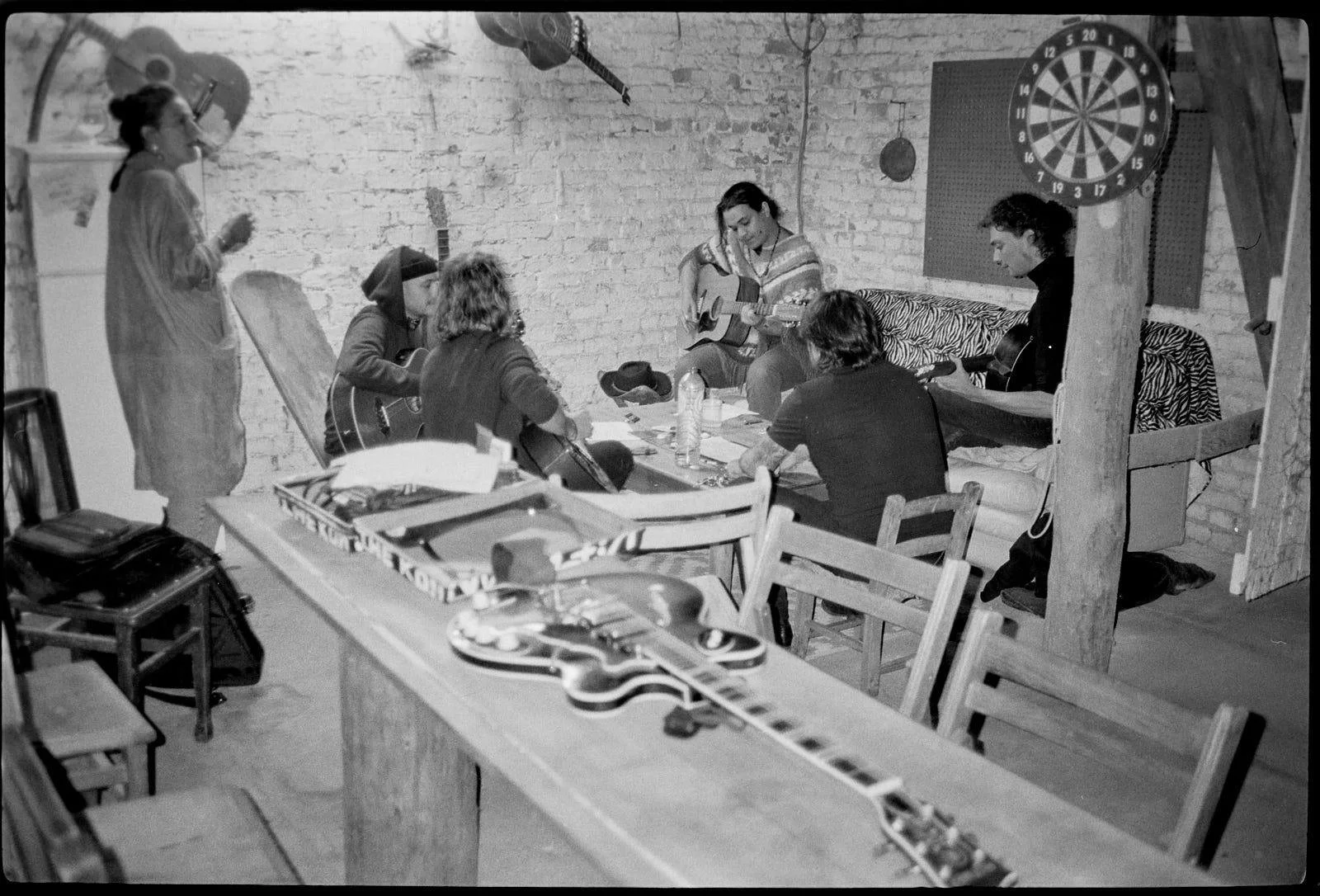
Swear I love you, Belgium, 2021
How did you record Swear I love you?
We recorded all the songs from the first album (self-titled) in one week in a house near Vevey. We had space to record live with a few acoustic treatments, before doing overdubs. We added some keyboards, but as there was no keyboard player and that we got on really well together, they asked me to join as the fifth member of the band. I did a pre-mix of the first album and Jari Antti mixed it. For the EP, Cheap Idol, I recorded it during a studio rehearsal.
How did you record Service Fun?
We did one record, Croisière, together in Sion, and one live session the year after if I remember correctly. Same process as for Swear I love you. Three or four days of recording live, with some overdubs.
You didn’t record each instrument individually?
No. If I can do a live session with a bit of acoustic work to separate each source and to stop the sounds bleeding, it's a lot more fun and you keep the energy of the live performance.
Tell us about OHRO
OHRO is an association we created in 2021 with members from Typhon to be able to ask - support and funding from local organisations and associations. As a Frenchman in Switzerland, I cannot ask for anything from the town or canton as an individual. I could also have joined already existing collectives, like Bleu Lagon (which I joined later) but they usually already have a lot of demands ongoing and are mostly focusing them on creating events. So the more suitable option was to make my own association. Ohro is really focused on production (funds to record, produce records, make videoclips). It helped a lot for Typhon and Eckhart.
How many are there of you in OHRO?
There are five of us.
Have you learnt a bit more about the bureaucracy in Switzerland?
Haha indeed.
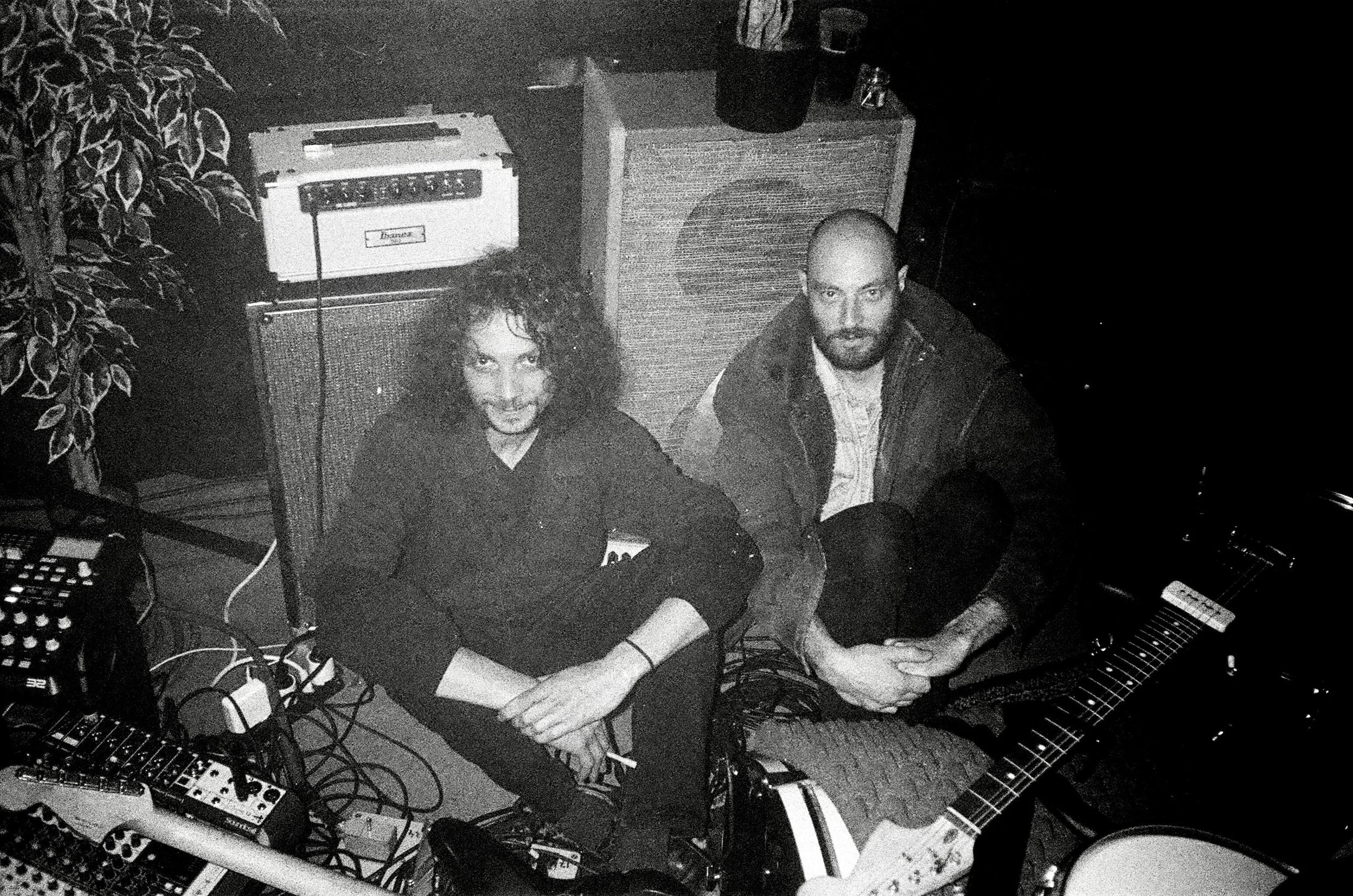
Spare at Rocking Chair, Vevey, 2022
It must have been great to turn your solo project, Typhon, into a band and perform the songs live?
It’s a beautiful experience. To turn these solo tracks into something more orchestral, it allows something different. I still produce myself solo with a loopstation sometimes. Starting from Typhon, we also created a duo at some point, called Spare, with Gabriel Goumaz on drums. The short story is we could play a gig at Rocking Chair, a venue in Vevey, as the opening act for Faust. But they had so much stuff onstage that I was asked to play Typhon solo or only with two people. So with Gabriel we took it as an opportunity to try a new formation, revisit these tracks again, and compose new stuff. Typhon is really multiform.
But it’s a bit frustrating too. I feel like it’s hard to fit the market playing post-rock with long songs which mix folk music and noise. Even if we’ve always had great feedback for our music. And it’s always hard to negotiate a decent fee for the few concerts we had. And you know you can feel guilty when you ask your friends to play for a few hundred bucks, even if it has never really been a topic of argument between us as we love playing this music together. Regardless, we had the opportunity to play in beautiful places and festivals, so I’m not complaining.
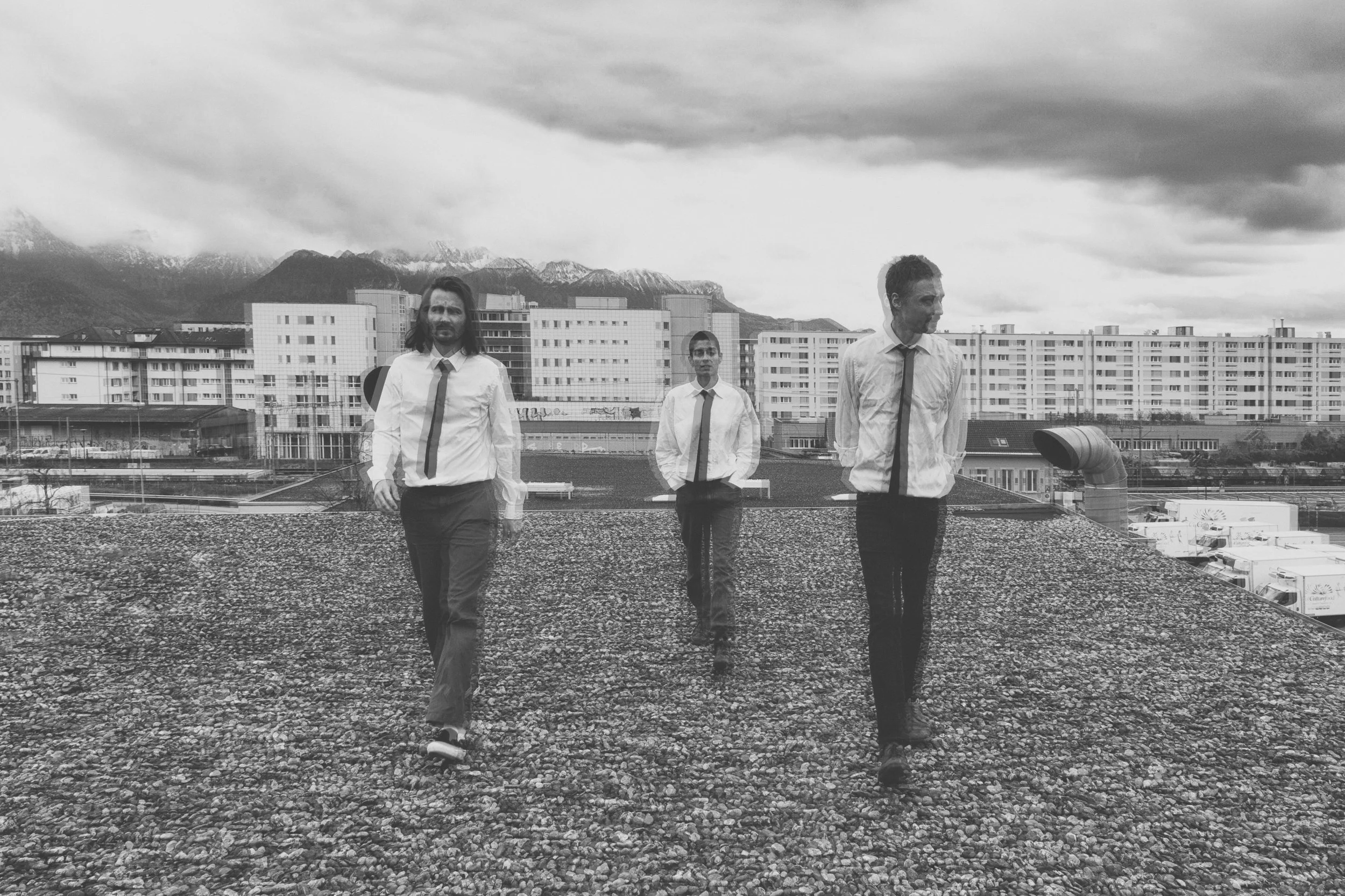
Eckhart, photo copyright: Alessia Olivieri
It seems that also with the possibility of home studios, there are also a lot of projects and less visibility for bands.
Yeah, it’s saturated. It's a long debate, in a way you could say it's good that everybody can make music, but at the same time, I know I go out a lot to listen to music and discover a lot of bands, but I want to feel something and I often don't. Maybe I’m too critical, I can hear it.
There's a lot of people making art and music and I don't want to sound over the top but everybody can say something, but who has really something to say? I sometimes feel that about myself. “Fuck, what do I have to say?” It’s a painful frustration, as I’ve always used and needed my music and my imagination to reflect on myself, to surprise myself, to allow myself to change and transform. Feeling unable to express or create is to feel unable to evolve.
I know what you mean. When I create music, I often think about other people’s potential reactions to the music and to the lyrics.
For me, the worst judge is myself. I don't even mind if other people aren’t at ease with my music. A lot of great musicians or great artists, like the industrial movement (e.g. Throbbing Gristle), were making music especially to make people feel uneasy.
If I'm not satisfied or aligned with what I'm doing, it's not worth it. I want to have a good day. I could have a shitty day, but if I spend one or two hours in the studio and I leave the studio with a smile on my face or air in my chest, that's all that matters.
Links:
Related articles: