
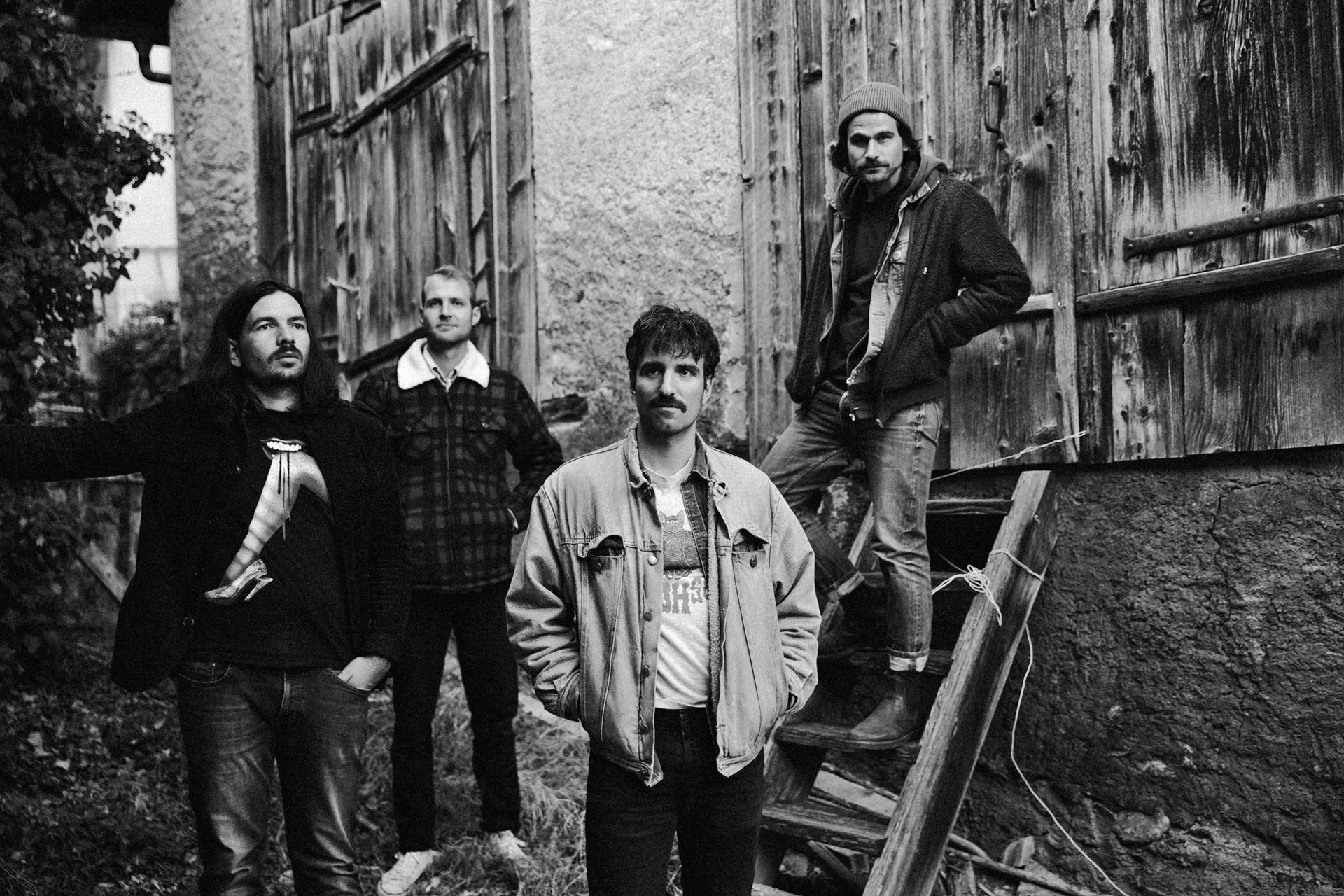
(Photo copyright: Nikita Thévoz)
It didn’t take too long to discover Harvey Rushmore & the Octopus after starting the blog. I was instantly a big fan through their latest album at the time, Freedomspacecake. The band from Basel bring together a lot of elements which I enjoy - krautrock, psychedelic rock, surf rock - to make their own trademark sound. Next to the solid rhythm section, the synths add an extra dimension to the atmosphere of the songs, as well as the really impressive guitar playing (including Wooden Shjips-style fuzzy solos).
On the latest album, Mindsuckers, which was released in March on Taxi Gauche Records, it’s an interesting evolution and showcases a darker side to their music. The album is a fantastic listen from start to finish, it seems to be my favourite release from the band so far (and made me want to delve into the back catalogue even more) and one of my favourite releases of 2026. Bitterkraut has been stuck in my head for the last few weeks and the videos for the singles, Acid River and Mindsucker accompany the music wonderfully.
I wanted to know more about the band’s journey, their new musical direction and their live shows. I would like to thank Massimo Tondini (“MT”) (Voc, Git, Songwriting) who answered all the questions except the last two from Stefan Cecere (“SC”) (Key + Synths, Git).
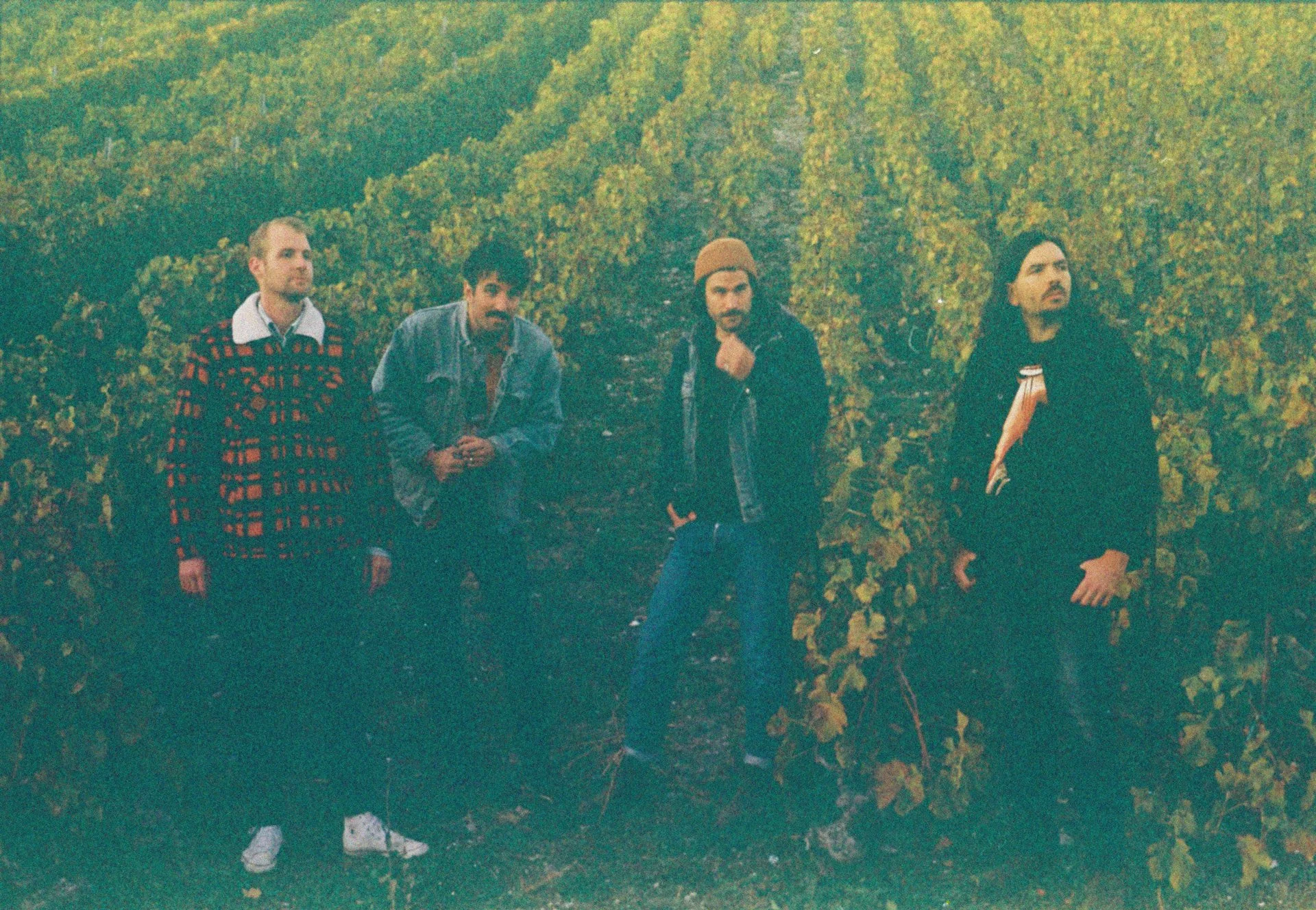
(Photo copyright: Marisa Nef)
History
Tell us about yourselves (Who’s in the band and on which instrument(s)? Are you in other projects?)
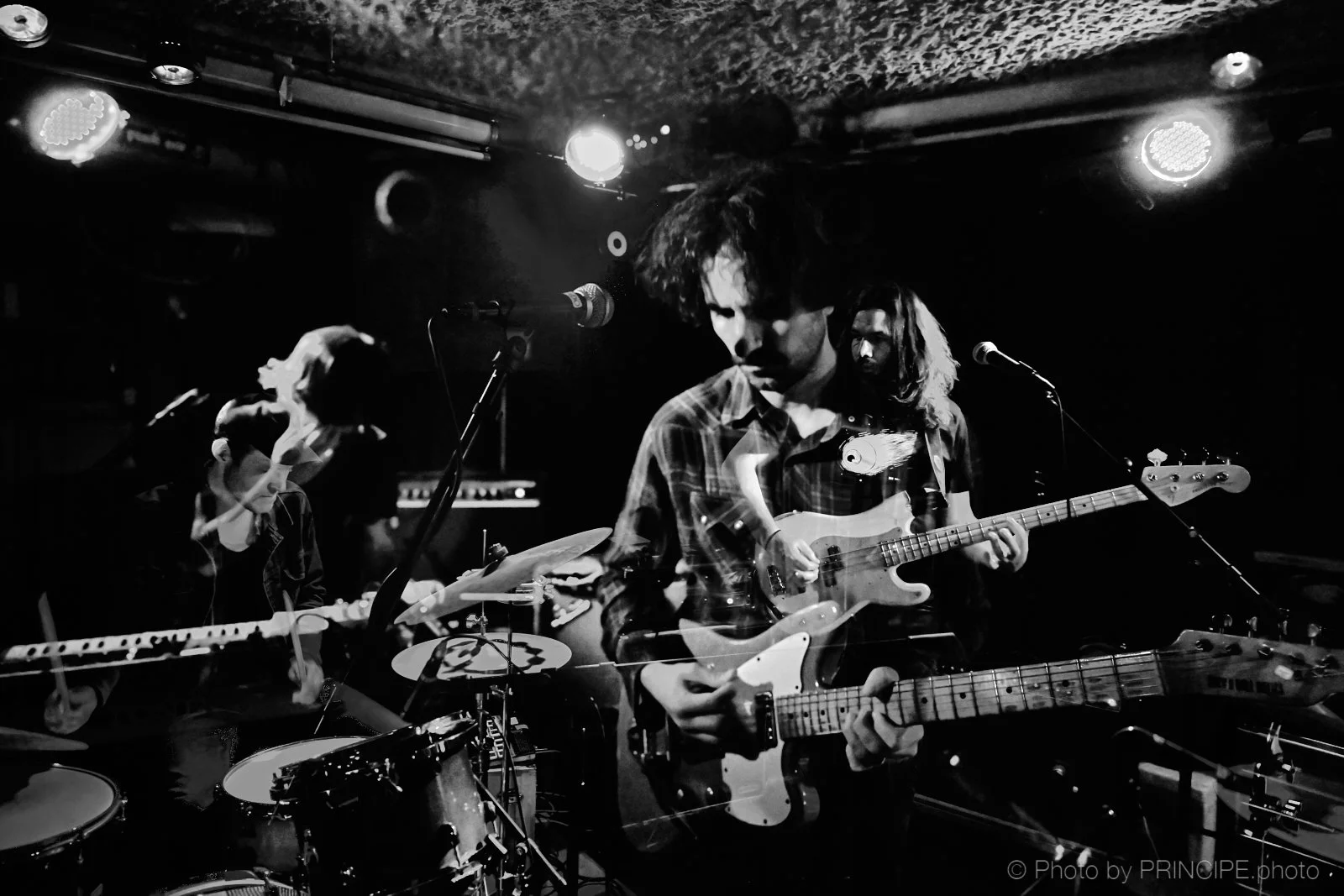
MT: We’re four people who’ve known each other for what feels like a lifetime. Jonathan Meyer plays bass, Jakob Läser is on drums, Stefan Cecere handles keys, synths and guitar, and I’m on vocals and guitar.
Stefan also plays in EYE‑O and Polar Klub, the rest of us currently have no other musical projects. This band is the place where we process life without having to explain every detail, some sort of a creative refuge.
How did you meet/form the band?
MT: Most of us met in school more than twenty years ago, and we’ve been playing together in different constellations ever since. We started with Harvey Rushmore & the Octopus back in 2014 with a spontaneous jam at an art gallery opening in Basel. Back then we had no real songs and no lyrics, everything was built on a beat and pure improvisation. That sense of coincidence and spontaneity still shapes us today, even though the songs have become much more structured and defined.
Where did the idea come from for your sound? How did you find the direction for your sound?
MT: Our sound grew very naturally out of what each of us brought to the band — our personal taste, our musical abilities, and the things we were obsessed with at the time. At the beginning it was a mix of 60s and 70s blues‑psychedelic rock, combined with the aesthetics of repetition from krautrock and surf. I’ve always been drawn to loud, reverb‑drenched guitars, and playing through two amps became a key part of our floating stereo sound.
Jakob shaped the direction massively with his drumming. Rhythmic, powerful, almost kraut‑like, sometimes blended with a beat machine so it feels like two kits playing at once. The bass is full and repetitive, Stefan adds layers of unique sounds and psychedelic drones that glue everything together.
Over the years we figured out what feels right for all of us and what we don’t want to do anymore. The direction wasn’t planned, it emerged from playing, experimenting, and following the sounds that made us feel something.
What are your influences (musically and non-musically)?
MT: Our influences are a mix of everything we love, without trying to limit ourselves to one direction.
Musically it’s a lot of garage, psychedelic and neo‑psychedelic bands like The Black Angels, Night Beats, Oh Sees but also Iggy Pop, Muddy Waters, and even the melodic simplicity of Townes Van Zandt or certain country lines. We’ve always been drawn to music that creates atmosphere and tension, whether it’s loud, hypnotic, blues‑soaked or minimal.
Non‑musically, a lot comes from imagery and mood like old movies, surreal aesthetics, repetition, and the feeling of being pulled into a world that’s slightly off‑axis. All of that blends into how we write and shape our sound together.
Where does the name come from?
MT: The name actually started as a quick, almost accidental decision. We had about ten minutes to come up with something for a flyer, so it was somehow the first thing that came in my mind. Later on we built a story around it: Harvey on the deep blue sea, alone and confronted with the forces of nature, meeting the Octopus.
Tell us a bit about the history of the band
MT: We started with long, improvised sessions that slowly turned into songs. Our first album The Night was a cosmic, drifting journey. Futureman expanded that psychedelic world, Freedomspacecake brought more energy and structure, and now Mindsuckers dives into darker, more dystopian territory.
Over the years we’ve played more than 400 shows across Europe, mostly small DIY spaces, art venues, basements, festivals here and there. The live energy, the unpredictability of the road, and the strange sense of mystery that comes with traveling together have always been a major source of inspiration. It’s what kept us moving forward and shaped who we became as a band.
According to your website, your studio is an abandoned car park - it sounds like very big? How did you find it? What’s it like to rehearse and record there?
MT: It was back in the day when we recorded Futureman and Freedomspacecake, we had a nice rehearsal space on the outskirts of Basel close to the border to France. The acoustics were wild, there was concrete everywhere, a variety of strange abandoned rooms, long reverb tails, a sense of emptiness that was inspiring. The new album Mindsuckers has been recorded with Jari Antti (Navel, Mr. Ray, Jari and the Mirrors) in his new studio in Erschwil, a peaceful forgotten far away of the city.
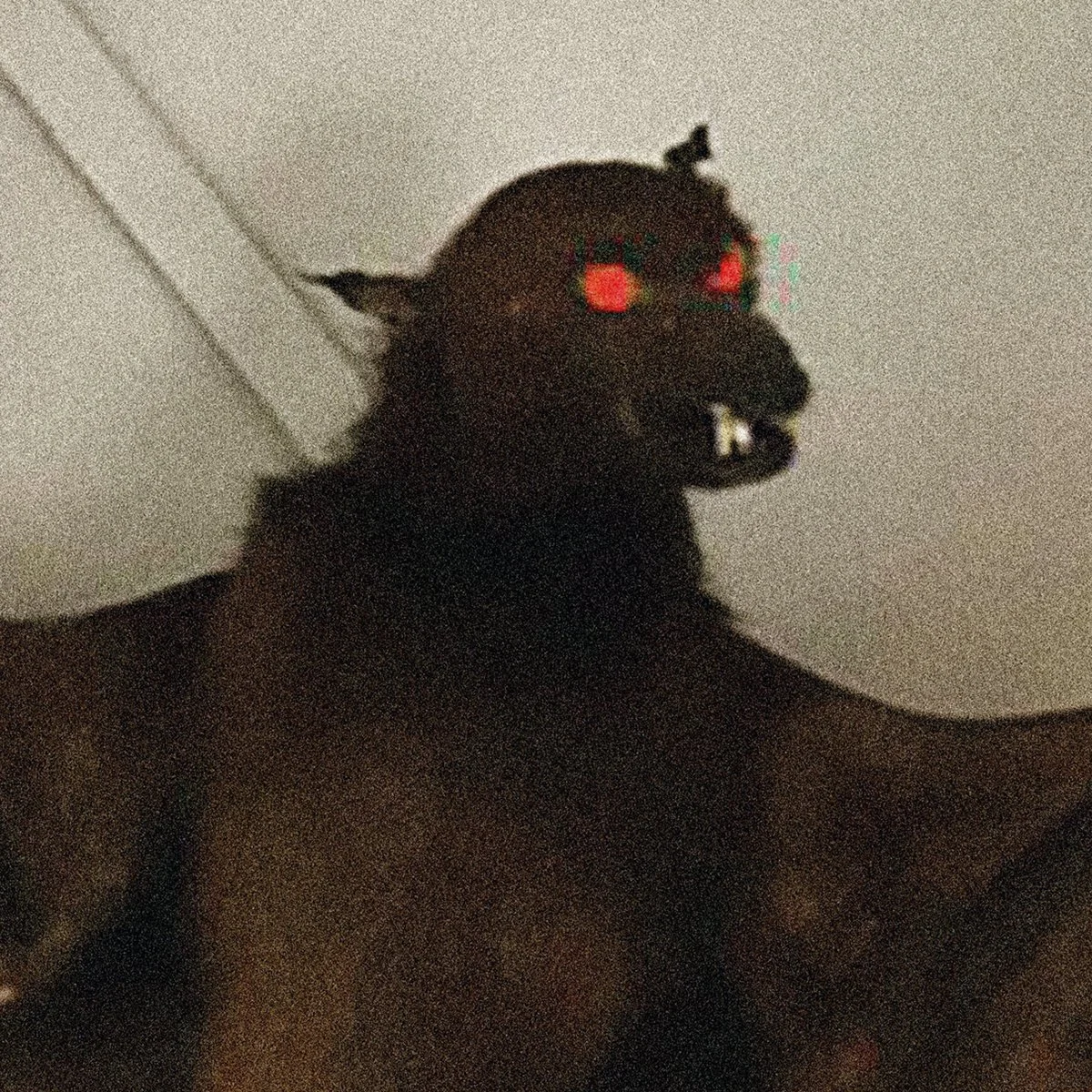
Mindsuckers
How did you approach the writing of this album? What was behind the change of direction?
MT: We wanted to focus more on songwriting and less on endless jams. We approached the writing of this album with a clearer focus on songwriting and changed the way of how we worked before. The world around us felt darker, faster and more overwhelming, and that inevitably seeped into the music. The change of direction wasn’t something we planned. It was a reaction to everything happening at the time: political tension, rapid developments in AI, personal shifts, and the constant flood of unsettling information. All of that shaped the mood of the album and pushed us toward a more defined, more intense sound.
How would you describe the concept of this album?
MT: Mindsuckers is some sort of a sonic dystopia. It’s about forces, real and imagined, that hijack your attention, distort your perception, and pull your mind away for unhealthy reasons. We gave these forces a trashy, B‑movie‑style name: the Mindsuckers.
How were the new songs received in concerts? Did playing them live allow you to adapt them?
MT: The new songs work well live. Cosmic Waves especially becomes a hypnotic, unpredictable creature on stage. Even though we still mix them with our older songs. It’s nice to have a variety of material that came together in the last few years.
What had you learnt from previous recordings and brought to the approach for Mindsuckers.
MT: We learned to say “no” more often, to cut things that don’t serve the song. We also learned to trust space, to let melodies stand on their own, and to avoid too many repeating patterns from earlier albums.
I also worked a lot on my voice, exploring new textures and colours.
Is there a connection between Rainbow Machine and Cloud Driver?
MT: There is a connection, but it’s more atmospheric than narrative. Both songs explore emotional states through abstract imagery. Cloud Driver is about a love that couldn’t happen, expressed through the idea of “a palace built too close to the sun.” Rainbow Machine deals with illusions and the fading of intense emotions. They share a similar mood, some kind of dreamy, fragile tension, even though they tell different emotional stories.
The album sees you collaborate again with Jari Antti. What does he bring to the band’s sound?
MT: Jari knows us better than anyone, we’ve worked with him on all four of our albums. He understands our ideas about sound instinctively and helps shape them into something coherent. He’s a master at capturing feedback, atmosphere and raw energy. On this album he also stepped in as a co‑producer, guiding us whenever we got stuck with arrangements or small details. It’s a rare thing to work with someone you’ve known for so long, someone who understands what you mean, especially in music when it’s sometimes difficult to explain.
What are your thoughts about the video to Acid River?
MT: I like how the video captures the surreal, fever‑dreamish atmosphere of the song. The seagulls, which were part of the original demo, play a symbolic role. It’s a drifting, melancholic trip that fits the music. It was a lot of fun to work on it, especially with Maksim who did a very nice job.
What is your opinion about the Mindsucker video?
MT: It embraces the B‑movie spirit of the album. It’s trashy, exaggerated and slightly absurd, exactly what Mindsuckers should look like. I’d always wanted to make a video with our bass player Jonathan, and I’m really happy with the result. I love his acting, the car, and the whole trashy attitude. The shoot itself was a lot of fun, and we were lucky to catch the perfect foggy weather which gives the song its atmosphere. Simon, who produced the video, did an amazing job. It’s fun and unsettling at the same time.
How does it feel to be releasing your second album with Taxi Gauche? What’s it like collaborating with the label?
MT: Releasing our second album with Taxi Gauche feels great. The label gives us a lot of freedom and Piet loves our music, which means a lot to us. His support is huge, and we always enjoy it when he comes to our shows. To see him dance in the crowd is always our highlight.
(Photo copyright: Patrick Principe)
Live/future
How did you celebrate the release of Mindsuckers?
MT: We had a couple of very nice release shows. Unfortunately I was getting sick at that time and we did not have a lot of opportunities to celebrate. But being on tour together felt like coming home.
How has the reception been for the album?
MT: I think it was very positive. We received a couple of really nice reviews and the people coming to our shows seem to be very into it.
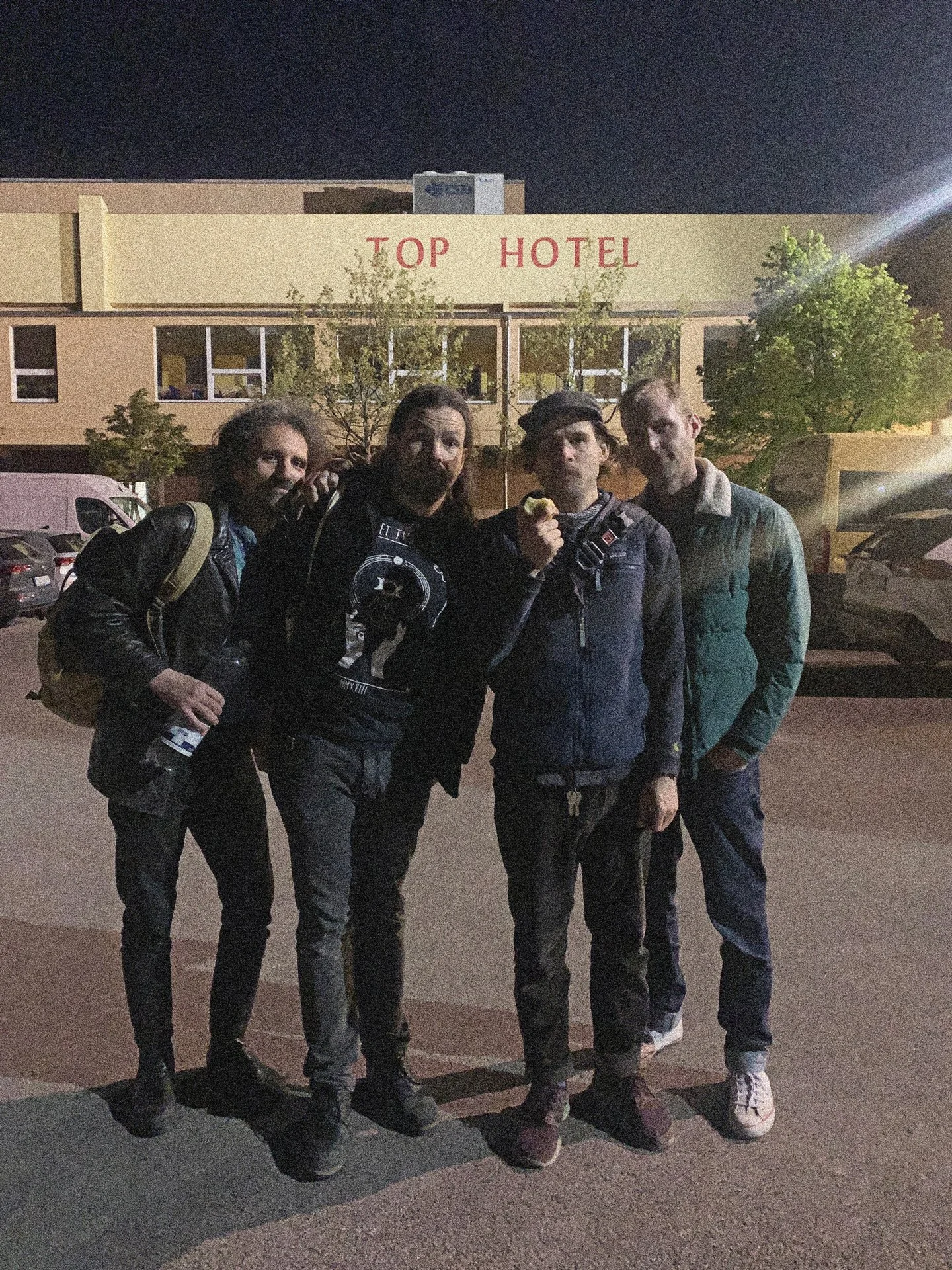
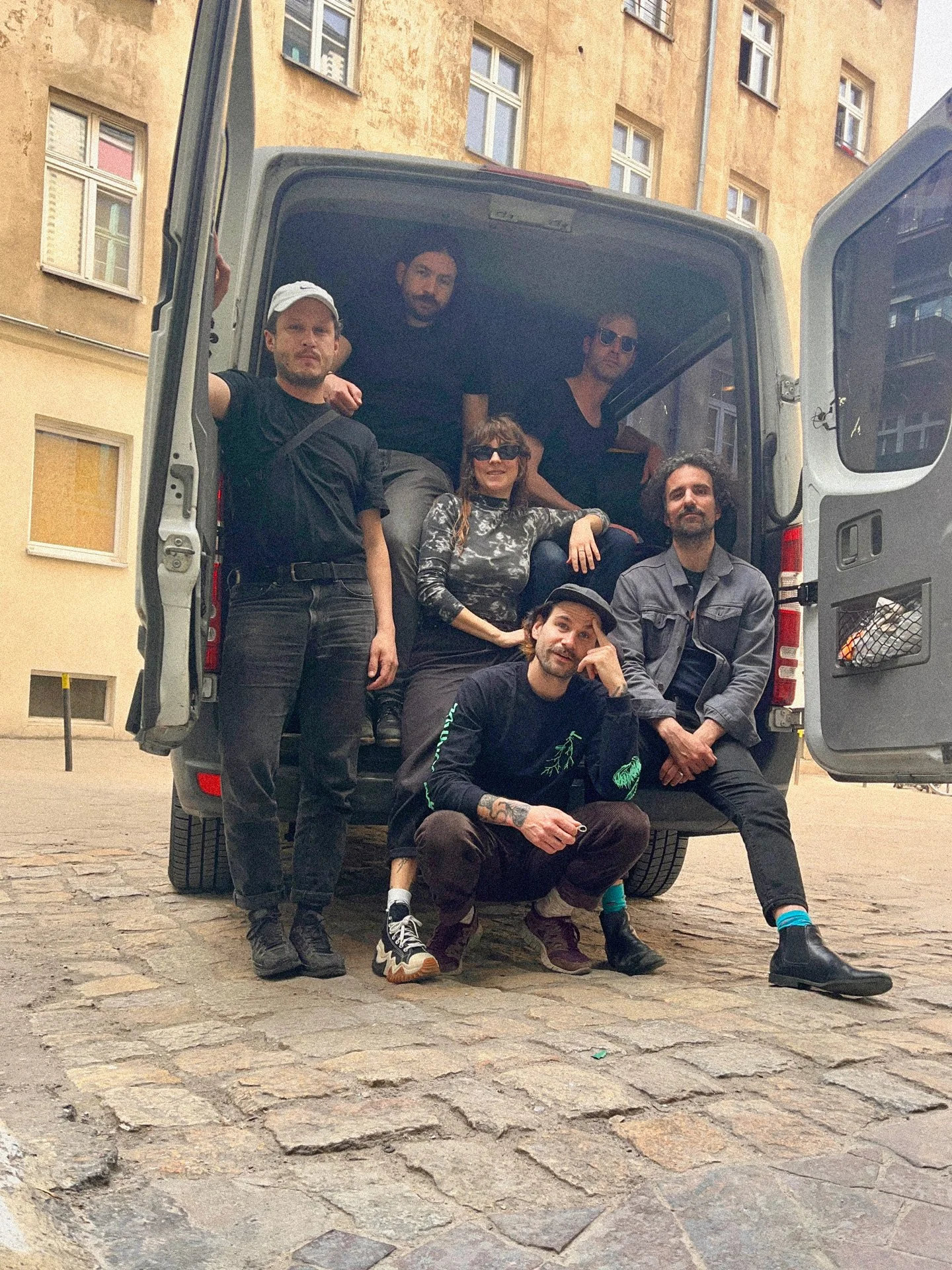
(Photo copyrights: Sophia Vrbaski)
As a band which performed live over 400 times, what have been the most memorable moments?
MT: Some of our most memorable moments come from simply spending time together. After many shows you collect a whole universe of strange, funny and beautiful experiences. I’ve always loved the unexpected things, like the smoke machine filling the room so completely that you can’t even see your own instrument anymore. Or the guy from the venue, walking on stage in the middle of the set to hand us pizza, unaware that it might not be the perfect moment. It’s those absurd situations, the people you meet, and the shared chaos that stay with you the longest.
What did you look forward to the most with your tour in Europe?
MT: What I looked forward to the most, was traveling to countries we had never played before. The tour is over now, but exploring a bit East-EU felt incredibly exciting. The history, the buildings, the food, the conversations with people whose backgrounds are so different from ours. Lithuania, Vilnius especially left a strong impression. The people were incredibly sweet and genuinely thankful that we came all the way to play there, because it doesn’t happen there very often with the kind of music we do. It was mindexpanding to discover new places. Poland and Lithuania were completely new to me, and I definitely want to return and learn more about them.
What are your memories of the Confederation Music Session?
The Confederation Music Session was a very unusual setting for us. It required a lot of concentration, and you constantly felt observed. There were many cameras, and we didn’t have much time to repeat the takes.
It’s not easy to feel comfortable and free in a moment like that, but the experience taught us a lot. I’m happy with the result, but I definitely prefer playing live in front of an audience that lets itself fall into the music.
What are your other highlights/favourite moments from Harvey Rushmore & the Octopus?
SC: Doing music together just like that. And still doing it in the same formation since the start of Harvey Rushmore & the Octopus. I can’t really think of one particular moment. Every time we play or rehearse together there are funny or sometimes weird moments, misunderstandings and happy accidents. I hope we can keep it going like this.
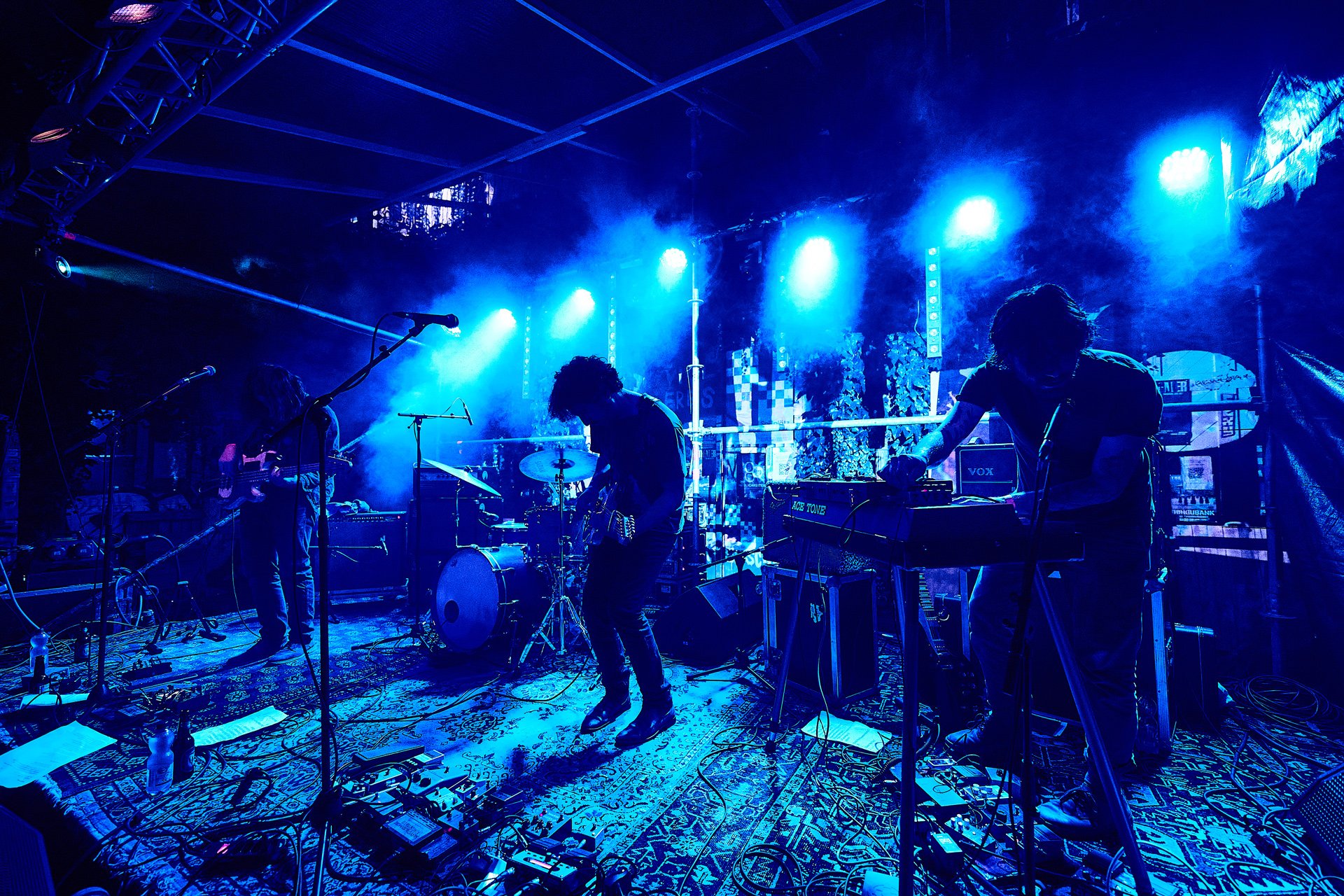
(Photo copyright: Patrick Principe)
What are your thoughts about the music scene in Switzerland?
SC: I think we are very fortunate to have such a great alternative musical scene here in Switzerland. There are tons of very creative musicians and groups out there creating beautiful and inspiring works.
I also like to mention all the people who are organizing shows in the DIY way and also more professional settings and clubs. A great number of people work here barely doing it for nothing, but still doing it because they like it. For me this is a form of community and connection we all should strive to go back to. I don’t like big festivals and massive concert halls. That just doesn’t give me anything I personally can relate too.
So, I really hope that all the people and collectives working hard and still organizing shows and festivals keep on doing it. And there will also be spaces and rooms for creative, experimental, weird things in the future, even though it is getting more difficult to find such places.
As an organizer of shows myself, I really love to meet and encounter people and bands from Switzerland and beyond. And I believe that is a good thing and holding people together.
So, to finalize this: Go to shows, support other artists (people), buy their music, and merchandise directly from them. Visit your local record store rather than buying things online or streaming it. And lastly, take care of each other!
Links:
Related articles:
Taxi Gauche:
Cities:
Related bands:
Playlists/live sessions: